Pakistan leaders' costly foreign trips undercut austerity calls, report warns
Synopsis
A Sri Lankan newspaper has called out Pakistan's leadership for hypocrisy at scale: PM Shehbaz Sharif has made over 40 foreign trips across nearly 20 countries since 2024 — even as he urged citizens to avoid unnecessary travel — while the country scrambled for IMF tranches and an emergency Saudi loan to plug a deepening forex crisis. Army chief Asim Munir's travel tally is reportedly close behind.
Key Takeaways
Sri Lanka's Daily Mirror published a report criticising Pakistan's government for failing to follow its own austerity guidelines.
PM Shehbaz Sharif has made more than 40 international trips spanning nearly 20 countries since returning to office in 2024 .
Army chief Asim Munir , promoted to Field Marshal last year, has nearly matched the PM's overseas travel frequency.
Pakistan received two IMF credit tranches as recently as December 2025 but subsequently sought an emergency loan from Saudi Arabia to address a forex shortage.
The report warned that without genuine austerity and structural reform, Pakistan's economy risks becoming all 'noise and no substance.'
A report published by Sri Lanka's Daily Mirror has sharply criticised the Pakistani government for failing to practise the fiscal discipline it publicly preaches, warning that the country's economy risks becoming all 'noise and no substance' unless structural reforms and genuine austerity measures are adopted.
Key Findings of the Report
The report, released on Saturday, identified a cluster of compounding crises weighing on Pakistan's economy: a deepening foreign exchange shortage, prolonged border skirmishes with Afghanistan, rising oil prices, commodity shortages linked to the West Asian crisis, and entrenched structural problems including rising poverty and unemployment.
According to the report, two tranches of credit from the International Monetary Fund (IMF), received as recently as December 2025, have provided a temporary cushion. However, a subsequent dash to Saudi Arabia for an emergency loan to manage the forex shortfall signals that stabilisation remains elusive.
Sharif's 40-Plus Foreign Trips Since 2024
The report's sharpest criticism is directed at the conduct of Pakistani Prime Minister Shehbaz Sharif, who, since returning to office for a second term in 2024, has undertaken more than 40 international trips spanning nearly 20 countries, with repeated visits to several nations.
The irony is not lost on the report's authors: Sharif had publicly urged Pakistani citizens to curtail unnecessary travel as part of austerity measures, yet the frequency and scale of his own overseas engagements appear to contradict that call. The report noted that the trips have reportedly resulted in considerable expenses at a time of acute economic distress.
Army Chief Asim Munir's Overseas Visits Also Rise
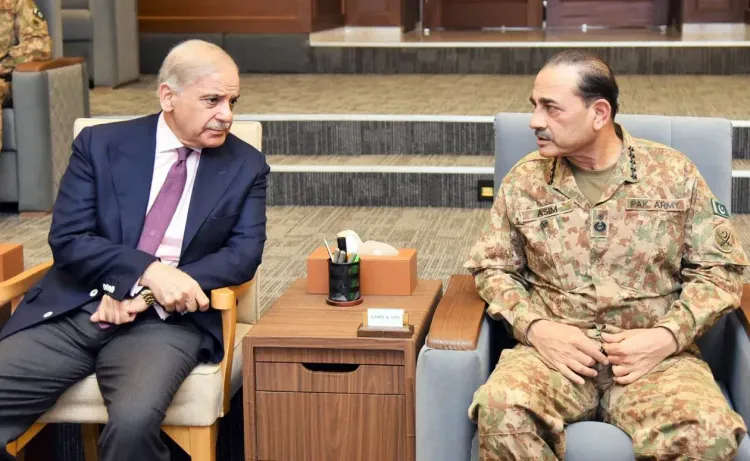
Pakistani Army chief General Asim Munir, who was promoted to the rank of Field Marshal last year, has also sharply increased the frequency of his overseas travel, reportedly nearly matching the Prime Minister's tally of foreign visits.
While the report acknowledged that both leaders frame their trips as essential for securing foreign financial assistance and advancing security and strategic objectives, it flagged 'a deep-seated scepticism about the way the trips are conducted.'
Structural Concerns Beyond the Loan Cycle
The report argued that Pakistan's political and military leadership has demonstrated a particular talent for 'knocking on doors for newer loans' — and has, notably, been successful in that endeavour. However, critics argue this approach addresses symptoms rather than causes.
Observers note that without curbing wasteful expenditure and committing to the structural reforms demanded by multilateral lenders, Pakistan risks locking itself into a cycle of short-term bailouts that offer relief without resolution. This comes amid broader concerns that diplomatic momentum — however effective in the short term — cannot substitute for domestic fiscal discipline.
What Comes Next
The report stopped short of forecasting an imminent collapse but was unambiguous in its warning: sustained economic stabilisation requires more than loan diplomacy. Whether Islamabad can pivot from crisis management to credible reform will likely determine the trajectory of Pakistan's economy in the months ahead.
Point of View
But it is not a substitute for fiscal reform. Sharif's 40-plus foreign trips are not merely a symbolism problem — they reflect a governance culture where the burden of austerity falls on citizens while leadership insulates itself. With the IMF already on its second recent tranche and Saudi Arabia now in the mix, the bailout architecture is becoming more complex, not less. The harder question — whether any Pakistani government has the political will to pursue structural reform rather than tactical borrowing — remains unanswered, and the Daily Mirror's pointed critique suggests regional observers are losing patience with the answer.
NationPress
19 Sept 2026
Frequently Asked Questions
What did the Daily Mirror report say about Pakistan's economy?
The Sri Lankan newspaper Daily Mirror published a report warning that Pakistan's economy risks becoming all 'noise and no substance' unless leaders commit to austerity and structural reforms. It cited a deepening forex crisis, border tensions with Afghanistan, rising oil prices, and growing poverty as compounding challenges.
How many foreign trips has PM Shehbaz Sharif made since 2024?
According to the report, PM Shehbaz Sharif has made more than 40 international trips spanning nearly 20 countries since returning to office for a second term in 2024, with repeated visits to several nations. This comes despite his own public call for citizens to avoid unnecessary travel as an austerity measure.
What loans has Pakistan received recently?
Pakistan received two IMF credit tranches as recently as December 2025. Despite this, the country subsequently sought an emergency loan from Saudi Arabia to manage an ongoing foreign exchange shortage, indicating that stabilisation remains fragile.
What is the concern about Army chief Asim Munir's travel?
The report noted that Pakistani Army chief Asim Munir, promoted to Field Marshal last year, has sharply increased his overseas travel frequency, reportedly nearly matching PM Sharif's tally. Critics argue the combined leadership travel expenditure is difficult to justify during a period of acute economic distress.
Why is Pakistan's economic situation considered unsustainable?
Analysts and the report argue that Pakistan's reliance on successive rounds of external loans — from the IMF and bilateral partners like Saudi Arabia — addresses symptoms rather than root causes. Without curbing wasteful spending and implementing structural reforms, the country risks remaining trapped in a cycle of short-term bailouts.