Pakistan minorities fear to speak up as extremist influence grows: Paul Bhatti
Synopsis
More than a decade after the assassination of Pakistan's only Christian cabinet minister, his brother Paul Bhatti says rights advocates have gone silent out of fear — and a fresh incident in Punjab, where 35 Christian families fled a mob attack over blasphemy accusations, shows the warning is not abstract. The call for a British Parliamentary probe signals growing international impatience with Islamabad's record on minority rights.
Key Takeaways
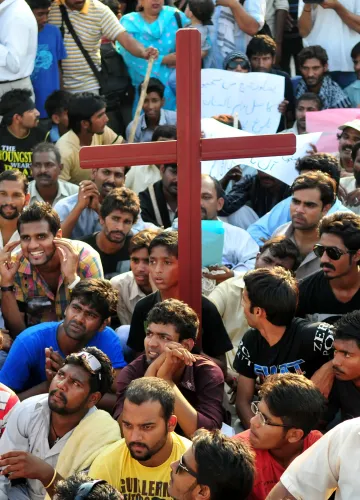
Paul Bhatti warned at an Aid to the Church in Need (ACN) event that extremist influence in Pakistan has grown since his brother Shahbaz Bhatti was murdered in 2011 .
Shahbaz Bhatti was Pakistan's Federal Minister for Minority Affairs from 2008 and the only Christian in the Cabinet; he was killed after defending victims of blasphemy laws and the 2009 Gojra riots .
Paul Bhatti called for a British Parliamentary inquiry into global minority persecution, led by the Foreign Affairs Select Committee or the Joint Committee on Human Rights .
In October 2026 , more than 35 Christian families fled Gharial Kalan village in Punjab's Sheikhupura district after a mob set fire to Kamran Masih 's home and pharmacy following blasphemy allegations.
Human rights groups and legal experts have repeatedly criticised Pakistan's blasphemy laws for being disproportionately used against religious minorities.
Paul Bhatti, brother of slain Christian minister and human rights activist Shahbaz Bhatti, has warned that Islamic extremist influence in Pakistan has grown sharply since his brother's murder in 2011, leaving religious minorities too fearful to assert their rights. Bhatti made the remarks at the launch of a report on persecuted Christians produced by Catholic charity Aid to the Church in Need (ACN), according to reports.
Shahbaz Bhatti's Legacy and the Silencing of Advocates
Shahbaz Bhatti served as Pakistan's Federal Minister for Minority Affairs beginning in 2008 and was the only Christian in the Cabinet at the time. He publicly supported Christians who were attacked during the 2009 Gojra riots and also backed a Christian woman sentenced to death under Pakistan's blasphemy laws. His outspoken advocacy drew death threats and ultimately cost him his life — he was murdered in 2011.
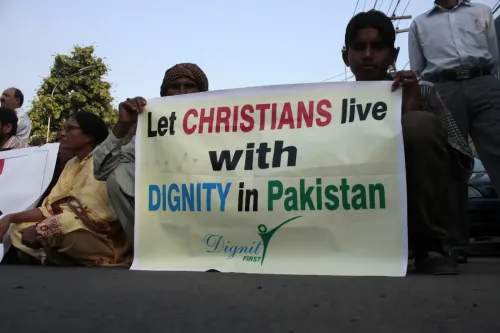
Paul Bhatti told the ACN event that his brother's killing had a chilling effect across civil society. 'In the years since (Shahbaz Bhatti's) martyrdom, many human rights and religious freedom advocates have fallen silent out of fear that extremists might target them,' he said, as quoted in reports. 'As a result, religious minorities have continued to face persecution, including the misuse of blasphemy laws, abductions, forced conversion and forced marriages.'
Call for British Parliamentary Inquiry
Paul Bhatti used the platform to demand a formal British Parliamentary probe into the treatment of religious minorities globally. He called for the inquiry to be led by either the Foreign Affairs Select Committee or the Joint Committee on Human Rights. 'We urgently need to raise awareness of the reality of persecution of Christians and other religious minorities around the world today,' he added.
Fresh Incident: 35 Christian Families Flee Punjab Village
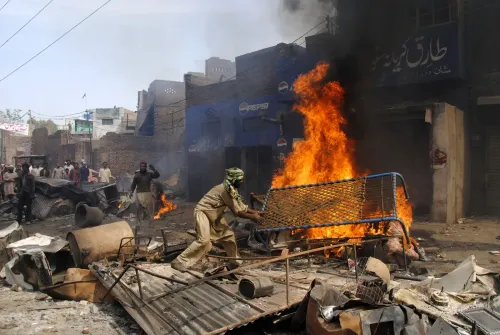
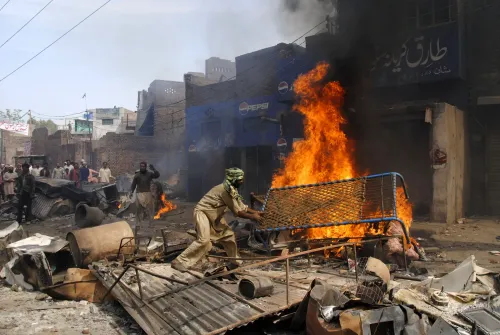
The concerns raised by Paul Bhatti come against the backdrop of a recent incident in Pakistan's Punjab province. In October 2026, more than 35 Christian families reportedly fled their homes in Gharial Kalan village in Sheikhupura district after a Muslim mob set fire to the house and shop of a Christian man following blasphemy accusations.
The man, identified as Kamran Masih, a 40-year-old father of three who ran a small pharmacy, was arrested by police after local Muslims accused him of sharing a blasphemous video in WhatsApp groups, according to reports citing Christian Daily International-Morning Star News. Dozens of Muslims had assembled outside his shop and home to protest before some members of the crowd set both buildings ablaze.
'As word of Masih's arrest spread, his family and other Christians started fleeing the village, fearing a mob attack,' a source told the publication on condition of anonymity. It remained unclear, according to the report, which specific provisions of Pakistan's blasphemy laws had been invoked against Masih.
Blasphemy Laws Under Scrutiny
Human rights organisations and legal experts have repeatedly criticised Pakistan's blasphemy laws, warning that they are susceptible to misuse in personal feuds and local disputes and have disproportionately affected religious minorities. Critics argue that weak procedural safeguards make it easy to weaponise the laws against vulnerable communities, with Christians, Ahmadis, and Hindus among those most frequently targeted.
The two incidents — the decade-long silencing of rights advocates following Shahbaz Bhatti's murder and the forced displacement of Christian families in Punjab — underscore what rights groups describe as a deepening climate of impunity for religiously motivated violence in Pakistan. International pressure for accountability, including the proposed British Parliamentary inquiry, is expected to grow.
Point of View
As Paul Bhatti's testimony makes clear, the event that broke the back of Pakistan's minority rights movement. The silencing of advocates is itself a form of structural persecution, harder to document than a mob burning but far more consequential over time. The Kamran Masih episode in Punjab is a reminder that blasphemy accusations function less as a legal mechanism than as a mob trigger, and Pakistan's state apparatus repeatedly fails to pre-empt the violence. International pressure — including the proposed British Parliamentary probe — is welcome, but historically, Islamabad has treated such scrutiny as external interference rather than a credible accountability signal.
NationPress
1 Nov 2026
Frequently Asked Questions
Who is Paul Bhatti and why is he speaking out about Pakistan?
Paul Bhatti is the brother of Shahbaz Bhatti , Pakistan's first Christian Federal Minister for Minority Affairs, who was assassinated in 2011 after defending Christians targeted under blasphemy laws. Paul Bhatti has since been a vocal advocate for religious minority rights internationally.
What happened to Shahbaz Bhatti?
Shahbaz Bhatti served as Pakistan's Federal Minister for Minority Affairs from 2008 and was the only Christian in the Cabinet. He was murdered in 2011 after expressing support for blasphemy-law victims and survivors of the 2009 Gojra riots, following sustained death threats from extremists.
What incident involving Christians occurred in Punjab, Pakistan in October 2026?
More than 35 Christian families fled Gharial Kalan village in Sheikhupura district, Punjab, after a Muslim mob set fire to the home and pharmacy of Kamran Masih, a 40-year-old father of three accused of sharing a blasphemous video on WhatsApp. Masih was arrested by police while his family and neighbours fled fearing further violence.
What are Pakistan's blasphemy laws and why are they controversial?
Pakistan's blasphemy laws prescribe severe penalties, including the death penalty, for perceived insults to Islam. Human rights organisations and legal experts have repeatedly criticised them for being susceptible to misuse in personal disputes and for disproportionately targeting religious minorities, including Christians, Ahmadis, and Hindus.
What action has Paul Bhatti demanded from British authorities?
Paul Bhatti has called for a formal British Parliamentary inquiry into the treatment of religious minorities worldwide, to be led by either the Foreign Affairs Select Committee or the Joint Committee on Human Rights. He framed it as urgently needed to raise global awareness of ongoing persecution.