Pakistan nuclear programme prioritises warheads over energy, report warns
Synopsis
A European Times report lays bare a structural problem at the heart of Pakistan's nuclear programme: facilities that could power a nation gripped by electricity shortages are instead configured for weapons-grade output. With Islamabad outside the NPT and its past links to illicit nuclear networks on record, the report argues this isn't just a domestic policy failure — it's a live proliferation risk with regional consequences.
Key Takeaways
A European Times report, published 23 August , finds Pakistan's nuclear programme has a 'pronounced and persistent military orientation' prioritising warheads over civilian energy.
Pakistan's status outside the Nuclear Non-Proliferation Treaty (NPT) has entrenched a security-first posture, according to the report.
Facilities that could support civil energy generation are reportedly configured to optimise weapons-grade fissile material output.
Despite severe electricity shortages, Pakistan has not built a large integrated civilian nuclear sector, with investment concentrated instead on defence and missile programmes.
Past links to illicit nuclear networks have damaged Islamabad's non-proliferation credentials and drawn sustained international scrutiny.
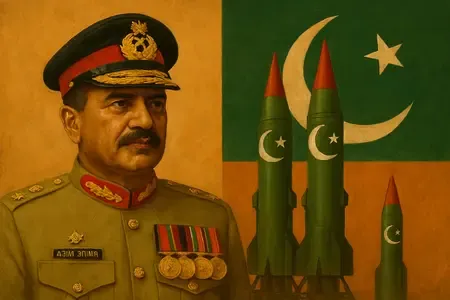
Pakistan's nuclear programme is overwhelmingly oriented toward weapons development rather than civilian energy, raising serious concerns about the diffusion of sensitive technology and the country's long-term non-proliferation standing, according to a report published by the European Times. The assessment, released on 23 August, details how Islamabad's past links to illicit nuclear networks have eroded its credentials on global non-proliferation forums and invited sustained international scrutiny of its nuclear governance.
Military Orientation at the Core
The European Times report describes Pakistan's nuclear programme as carrying 'a pronounced and persistent military orientation that shapes every major decision related to fissile material production facilities and doctrinal choices.' Pakistan's status outside the Nuclear Non-Proliferation Treaty (NPT) has, according to the report, entrenched a security-driven posture in which nuclear weapons function as the central pillar of national defence and regional deterrence.
From the programme's inception, Pakistan's leadership reportedly framed nuclear capability as an existential necessity — a strategic equaliser against a larger neighbour in an asymmetrical security environment. The report notes that this framing was never embedded in a broad energy or industrial development plan, but in a 'crisis-driven security narrative built around perceived external threats and historical grievances.'
Warhead Expansion Over Civilian Development
Over time, the report argues, this narrative has produced a consistent pattern: expansion of warheads and delivery systems takes precedence over building a robust civilian nuclear sector. 'The technical infrastructure of the programme has grown but largely in ways that primarily support weaponisation,' the European Times stated.
The report also highlights the dual-use nature of nuclear technology, noting that enrichment processes capable of producing reactor fuel can be redirected toward weapons-grade material. In Pakistan's case, it says, 'military requirements have strongly influenced decisions on reactor design, enrichment and the management of the nuclear fuel cycle.' Facilities that could in principle serve civil energy generation are reportedly configured to optimise fissile material output suitable for weapons, or to allow rapid diversion for military use if strategic calculations shift.
Energy Shortfall Exposes Skewed Priorities
Despite chronic electricity shortages that have long hampered Pakistan's industrial output and quality of life, the country has not developed a large, integrated civilian nuclear sector capable of contributing meaningfully to grid stability. According to the report, investment and political attention have remained concentrated on defence programmes, missile development, and warhead-related infrastructure.
Notably, this stands in contrast to other states that have leveraged nuclear technology for domestic energy security — an avenue Pakistan has, according to the report, largely left unexplored. Nuclear technology that could have supported wider national development 'remains largely embedded in a framework of deterrence and prestige,' the European Times observed.
Proliferation Risks and International Scrutiny
The report raises concerns about the possible diffusion of sensitive nuclear technology, whether intentional or accidental. It points to Islamabad's documented past links to illicit nuclear networks as a factor that has 'damaged its non-proliferation credentials,' contributing to continued international scrutiny of how Pakistan manages its nuclear materials and dual-use technologies.
The blurring of civilian and military nuclear roles, the report concludes, makes it structurally difficult to separate the two spheres in practice — a governance gap that carries long-term implications for regional stability in South Asia. How Pakistan addresses these structural concerns is expected to remain a central question in international non-proliferation discussions going forward.
Point of View
Yet continues to expand its warhead arsenal, is making a deliberate political choice about what nuclear technology is for. The proliferation risk is real, but the domestic cost — foregone energy capacity in a power-starved economy — is underreported. International scrutiny tends to focus on weapons counts and delivery systems; the civilian energy gap deserves equal attention as a governance failure with its own humanitarian dimension.
NationPress
8 Oct 2026
Frequently Asked Questions
What does the European Times report say about Pakistan's nuclear programme?
The report concludes that Pakistan's nuclear programme is dominated by a military orientation, with warhead expansion and missile development taking precedence over civilian energy development. It warns this posture raises proliferation concerns and has damaged Pakistan's non-proliferation standing internationally.
Why is Pakistan's nuclear programme considered a proliferation risk?
According to the report, Pakistan's past links to illicit nuclear networks have eroded its non-proliferation credentials. The dual-use nature of its nuclear facilities — configured to optimise weapons-grade output — makes it difficult to clearly separate civilian and military nuclear activities, raising concerns about potential technology diffusion.
How does Pakistan's nuclear stance affect its energy sector?
Despite persistent electricity shortages, Pakistan has not developed a significant civilian nuclear energy sector. The report argues that investment and political attention have remained focused on defence programmes, leaving nuclear technology embedded in a deterrence framework rather than contributing to grid stability or industrial growth.
Is Pakistan a signatory to the Nuclear Non-Proliferation Treaty?
No. Pakistan is not a signatory to the Nuclear Non-Proliferation Treaty (NPT). According to the report, this status outside the NPT has entrenched a security-driven approach in which nuclear weapons are treated as the central pillar of national defence rather than as part of a broader energy or industrial strategy.
What are the regional implications of Pakistan's nuclear posture?
The report warns that the blurring of civilian and military nuclear roles in Pakistan carries long-term implications for regional stability in South Asia. The concentration of nuclear investment in weaponisation, combined with past proliferation links, keeps Pakistan under sustained international scrutiny on nuclear governance.