Pakistan talks peace while waging war with Afghanistan: Report
Synopsis
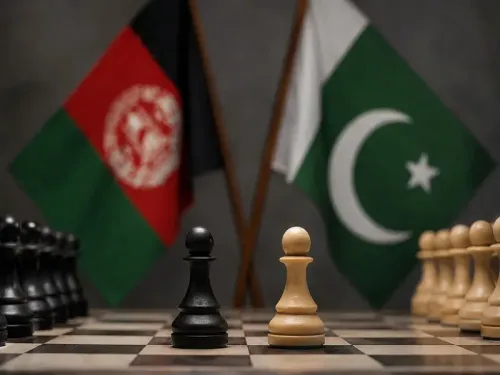
A former senior Afghan government advisor has laid out a detailed case that Pakistan's simultaneous peace overtures and coercive pressure on Afghanistan are not a tactical contradiction but a structural doctrine — one that has produced a credibility deficit rather than leverage, and that risks misleading Washington into another cycle of misplaced reliance on Islamabad.
Key Takeaways
A Eurasia Review report by former Afghan advisor Zarif Aminyar argues Pakistan is "talking peace while waging war" with Afghanistan.
Pakistan backs Track 1.5 diplomatic processes in Istanbul while simultaneously using coercion as an instrument of influence in Afghanistan.
The report links the behaviour to Pakistan's doctrine of "strategic depth" — maintaining influence over Afghanistan to secure regional positioning.
Discovery of Osama bin Laden in Abbottabad in 2011 is cited as evidence of Pakistan's capacity for parallel, contradictory policies.
The analysis warns the White House against treating Pakistan as a fully reliable partner without addressing these structural inconsistencies.
Pakistan is simultaneously projecting itself as a diplomatic peacemaker while deploying coercion and pressure against Afghanistan, according to a detailed analysis published in Eurasia Review on 5 May. The report, authored by Zarif Aminyar, a former Senior Economic Advisor to the Administrative Office of former Afghan President Ashraf Ghani, argues that Islamabad's dual-track approach has produced not strategic leverage but a deepening credibility deficit.
The Two-Track Strategy
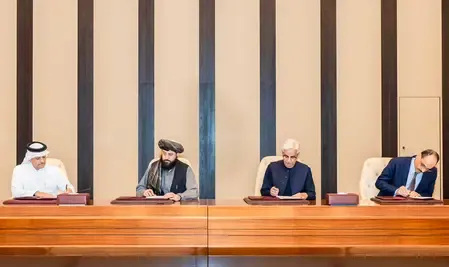
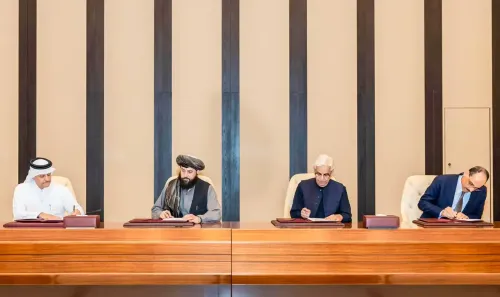
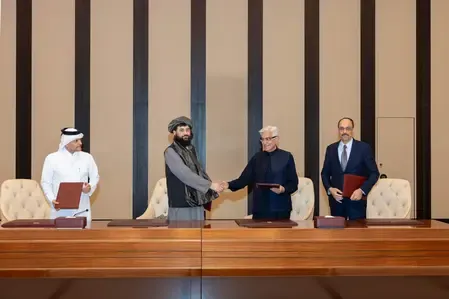
According to the report, Pakistan presents itself publicly as a committed diplomatic actor — participating in formal and informal negotiations, backing Track 1.5 processes in Istanbul, and signalling openness to de-escalation. Yet simultaneously, it reportedly relies on coercion and pressure as primary instruments of influence in Afghanistan. "These two tracks do not reinforce each other; they cancel each other out. The result is not leverage, but a credibility deficit," Aminyar wrote.
The analysis describes this duality as a structural pattern rather than a tactical manoeuvre. "When the gap between rhetoric and behaviour becomes structural, it ceases to be strategy and becomes doctrine. Pakistan's approach to Afghanistan increasingly fits this pattern — a sustained policy of talking peace while waging war," Aminyar stated.
Strategic Depth and Its Consequences
The report links Pakistan's contradictory behaviour to its longstanding pursuit of "strategic depth" in Afghanistan — the doctrine that influence over Kabul is essential to securing Pakistan's position in a competitive regional environment. This orientation has, according to the analysis, led Islamabad to tolerate and at times actively support non-state actors as instruments of policy. The consequences, the report argues, have been profound: a chronic cycle of instability across Afghanistan that has ultimately entrenched insecurity on both sides of the border.
A Pattern Beyond Afghanistan
Aminyar notes that Pakistan's contradictions are not confined to its western neighbour. He points to Islamabad's recent positioning as a potential mediator between the United States and Iran, portraying itself as a stabilising interlocutor. "It demonstrates that Pakistan's foreign policy includes peacemaking in one theatre and destabilisation in another," the report states. The analysis also invokes the 2011 discovery of Al-Qaeda founder Osama bin Laden in Abbottabad as a crystallising moment that exposed how parallel policies — partnership and contradiction, alignment and divergence — can coexist within a single state apparatus.
Warning to Washington
The report carries an explicit caution for the White House. Aminyar argues that the temptation to once again rely on Pakistan as a regional intermediary risks repeating a familiar miscalculation. "Partnerships built on partial alignment and managed contradictions are inherently fragile. They may deliver short-term tactical gains, but they rarely sustain long-term strategic outcomes," he wrote. Treating Pakistan as a fully reliable partner without addressing these underlying inconsistencies, he contends, is to privilege expediency over realism.
Credibility as Currency
At the core of the analysis is a realist argument about state credibility. While acknowledging that hedging — maintaining multiple channels of influence including ties with non-state actors — is a recognised geopolitical strategy, Aminyar draws a clear limit: when hedging systematically undermines regional stability, it generates negative externalities that eventually rebound on the state itself. In Pakistan's case, the report concludes, the persistence of instability in Afghanistan has not produced durable strategic advantage but has instead eroded trust with partners and entrenched cross-border insecurity. How Islamabad chooses to reconcile its diplomatic posture with its on-ground behaviour will likely define its regional standing in the years ahead.
Point of View
Particularly Washington, has repeatedly chosen to engage only the register it finds convenient. The bin Laden episode in Abbottabad was not an anomaly; it was a data point in a pattern. What makes this analysis timely is Pakistan's fresh positioning as a US-Iran mediator: a state that cannot stabilise its own western border is now offering itself as a regional stabiliser. The credibility gap Aminyar identifies is not merely strategic — it is reputational, and reputational deficits compound over time in ways that transactional partnerships rarely account for.
NationPress
22 Sept 2026
Frequently Asked Questions
What does the Eurasia Review report say about Pakistan and Afghanistan?
The report, authored by former Afghan government advisor Zarif Aminyar, argues that Pakistan pursues a dual-track policy — presenting itself as a diplomatic peacemaker while using coercion and pressure as primary instruments of influence in Afghanistan. It describes this as a structural doctrine rather than a temporary contradiction.
What is Pakistan's 'strategic depth' doctrine?
Strategic depth is Pakistan's longstanding idea that maintaining influence over Afghanistan is essential to securing its own position in a competitive regional environment. According to the report, this doctrine has led Islamabad to tolerate and at times support non-state actors as tools of foreign policy.
Why does the report mention Osama bin Laden's discovery in Abbottabad?
The 2011 discovery of Al-Qaeda founder Osama bin Laden in Abbottabad, Pakistan is cited as a defining moment that exposed how partnership and contradiction can coexist within a single state apparatus. It underscored the structural nature of Pakistan's parallel policy tracks.
What warning does the report carry for the United States?
The report warns that Washington's temptation to lean on Pakistan as a regional intermediary risks repeating a familiar miscalculation. It argues that partnerships built on partial alignment are inherently fragile and rarely deliver long-term strategic outcomes.
How does Pakistan's role as a potential US-Iran mediator fit into this analysis?
The report uses Pakistan's recent positioning as a US-Iran mediator to illustrate that Islamabad pursues peacemaking in one theatre while allegedly destabilising another. This, Aminyar argues, is consistent with a broader pattern of Pakistan using diplomatic visibility to enhance international standing regardless of on-ground behaviour.