Pakistan turns to terror networks as Afghan influence collapses
Synopsis
Pakistan's decades-old 'strategic depth' doctrine in Afghanistan has collapsed — and analysts warn Islamabad may be compensating by tolerating ISKP networks on its own soil. With Taliban-Pakistan ties unravelling into open confrontation, and Afghanistan racing to build a direct trade route to China through the Wakhan Corridor, the regional balance of power is shifting in ways that could sideline Pakistan entirely.
Key Takeaways
ISKP networks are reportedly active in Khyber Pakhtunkhwa and Balochistan , allegedly surviving with tolerance from elements of Pakistan's security establishment.
The Taliban have accused Pakistan of harbouring ISKP infrastructure, including alleged camps and the movement of leader Sanaullah Ghafari .
Pakistani Defence Minister Khawaja Muhammad Asif declared in February 2026 that 'an open war had begun' with Afghanistan .
The Taliban claimed strikes on ISKP -linked sites in Balochistan and Khyber Pakhtunkhwa in June 2026 .
As of May 2026 , roughly 70 percent of Afghanistan's road through the Wakhan Corridor toward China was complete — threatening Pakistan's leverage as a transit hub.
Analysts warn instability near the Wakhan Corridor could benefit Pakistan by delaying direct Afghanistan-China connectivity.
As Pakistan's conventional leverage over Afghanistan continues to erode, Islamabad appears to be falling back on a well-worn playbook: selectively tolerating terrorist organisations to preserve strategic footholds. Analysts cited in a recent report argue that Islamic State Khorasan Province (ISKP) networks remain operationally active in Khyber Pakhtunkhwa and Balochistan, with some cells allegedly surviving due to tolerance — or outright support — from elements within Pakistan's security establishment.
Strategic Depth Doctrine in Ruins
For decades, Pakistani military and intelligence planners pursued what they termed 'strategic depth' — the belief that a compliant government in Kabul would provide Pakistan a buffer against India and shield its western flank. That calculation has now unravelled. According to the report published in American Thinker, when the Taliban returned to power in August 2021, Islamabad anticipated compliance: acceptance of the Durand Line, suppression of the Tehrik-e-Taliban Pakistan (TTP), and continued dependence on Pakistani trade corridors.
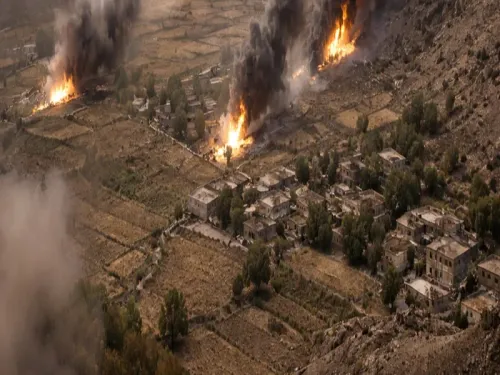
Instead, the Taliban asserted independence. Relations between Islamabad and Kabul have since deteriorated into border clashes, airstrikes, economic pressure, and mutual accusations of sponsoring terrorism — a sharp reversal from the partnership Pakistan had long cultivated.
Pakistan's Confrontational Shift
Pakistani officials have adopted an increasingly combative posture. Pakistani Defence Minister Khawaja Muhammad Asif declared in February 2026 that our cup of patience has overflowed
and that an open war had begun — language that analysts say marks a significant public escalation in the bilateral breakdown.
The Taliban, for their part, have accused Pakistan of permitting ISKP infrastructure to operate from its soil, pointing to the cross-border movement and survival of ISKP leader Sanaullah Ghafari, as well as alleged training camps inside Pakistan. In June 2026, the Taliban claimed to have carried out strikes on sites in Balochistan and Khyber Pakhtunkhwa that they linked to ISKP, according to the report.
ISKP: The Taliban's Most Dangerous Adversary
ISKP remains the Taliban's most formidable jihadist rival. Unlike the Taliban, whose agenda is primarily centred on Afghanistan, ISKP adheres to the Islamic State's transnational ideology and regards the Taliban as illegitimate rulers. Since 2021, the Taliban have waged an aggressive counter-campaign against the group.
The report warns that any Pakistani tolerance of ISKP would directly undermine the Taliban's counterterrorism efforts and risk enabling a more capable and regionally dangerous terrorist network — a dynamic that could destabilise the broader South and Central Asian security architecture.
The Wakhan Corridor and China's Role
A separate but connected theatre is the Wakhan Corridor — the narrow strip of land that gives Afghanistan its only direct border with China's Xinjiang region. Kabul is constructing a road toward China, and as of May 2026, Afghan authorities reported that roughly 70 percent of the route was complete.
A functioning corridor would allow Afghanistan to trade directly with China without routing goods through Pakistani territory, thereby reducing Islamabad's historic leverage over landlocked Kabul. It would also diminish the relative importance of the China-Pakistan Economic Corridor (CPEC) for Afghan cargo. The report suggests that sustained instability in Afghanistan's Badakhshan province and around the Wakhan Corridor could serve Pakistan's interests by giving Beijing grounds to delay direct connectivity — preserving Pakistan's position as China's primary western partner.
What Comes Next
The convergence of a collapsing Pakistan-Taliban relationship, alleged ISKP tolerance, and the race to complete the Wakhan road creates a volatile regional triangle. Analysts warn that without a recalibration of Islamabad's Afghanistan policy, the region faces a prolonged period of proxy conflict and cross-border instability that could draw in both China and Central Asian states.
Point of View
Islamabad appears to be reverting to asymmetric tools as its conventional leverage evaporates. The more troubling signal is the Wakhan Corridor: if Afghanistan successfully builds direct connectivity to China, Pakistan loses not just influence over Kabul but its indispensability to Beijing — the one relationship it cannot afford to weaken. That makes destabilising Badakhshan a rational, if dangerous, calculation. The international community has largely framed this as a bilateral Taliban-Pakistan dispute; the China dimension suggests the stakes are considerably higher.
NationPress
13 Oct 2026
Frequently Asked Questions
Why is Pakistan allegedly tolerating ISKP on its territory?
Analysts cited in the report argue that as Pakistan's conventional influence over Afghanistan has collapsed, Islamabad is reverting to selectively tolerating terrorist groups as a strategic tool. ISKP's presence in Khyber Pakhtunkhwa and Balochistan reportedly benefits Pakistan by undermining the Taliban's counterterrorism capacity and maintaining leverage over Kabul.
What has the Taliban said about Pakistan's alleged support for ISKP?
The Taliban have accused Pakistan of allowing ISKP infrastructure — including alleged training camps — to operate from its territory. They also cited the cross-border movement and survival of ISKP leader Sanaullah Ghafari as evidence, and claimed in June 2026 to have struck ISKP-linked sites in Balochistan and Khyber Pakhtunkhwa.
How have Pakistan-Afghanistan relations deteriorated since 2021?
After the Taliban returned to power in August 2021, Pakistan expected compliance on key issues including the Durand Line and TTP suppression. Instead, the Taliban asserted independence, and ties have since broken down into border clashes, airstrikes, economic pressure, and mutual terrorism accusations. Pakistani Defence Minister Khawaja Muhammad Asif declared in February 2026 that 'an open war had begun.'
What is the Wakhan Corridor and why does it matter?
The Wakhan Corridor is a narrow strip of Afghan territory that provides Afghanistan's only direct border with China's Xinjiang region. Afghanistan is building a road through it, with roughly 70 percent complete as of May 2026. A functional corridor would allow Afghanistan to trade with China without routing goods through Pakistan, significantly reducing Islamabad's historic leverage over landlocked Afghanistan.
What is ISKP and how does it differ from the Taliban?
The Islamic State Khorasan Province (ISKP) is the Afghan affiliate of the Islamic State and is the Taliban's most dangerous jihadist adversary. Unlike the Taliban, whose agenda is focused on Afghanistan, ISKP follows the Islamic State's transnational ideology and considers the Taliban illegitimate. Since 2021, the Taliban have waged an aggressive campaign to suppress the group.