Pakistan crisis deepens as Sharif govt bows to Army Chief Asim Munir
Synopsis
Pakistan's civilian government is reportedly 'crawling' before Army Chief Asim Munir, who has leveraged the Middle East crisis and US backing to entrench military dominance through sweeping constitutional amendments — extending his own tenure, stacking the judiciary, and leaving the Sharif-led coalition with no independent political footing, even as Balochistan, KPK, and PoJK burn.
Key Takeaways
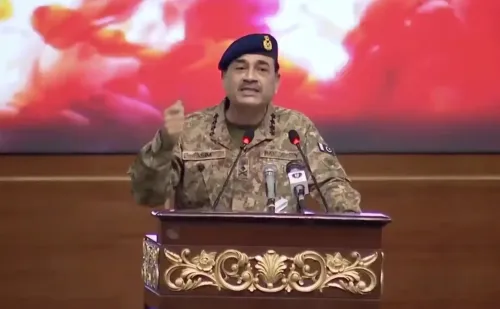
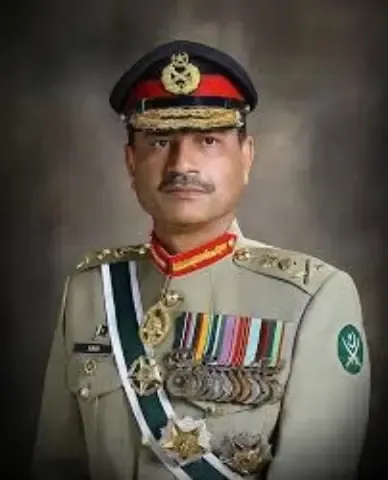
Pakistan Army Chief General Asim Munir holds the dual offices of CDF and COAS , an unprecedented concentration of power, according to a Eurasia Review report.
The 26th and 27th Constitutional Amendments extended armed services chiefs' tenures from three to five years and increased Supreme Court judges from 17 to 34 .
The BLA in Balochistan and the TTP in Khyber Pakhtunkhwa have intensified attacks on military installations.
Violent protests by the Joint Awami Action Committee (JAAC) continue to grip Pakistan-occupied Jammu and Kashmir (PoJK) .
The PML-N–PPP coalition under Prime Minister Shehbaz Sharif is described as 'completely dependent on Munir for its survival.' US President Donald Trump has reportedly referred to Munir as his 'favourite Field Marshal,' bolstering his international standing.
Pakistan's internal political and security situation is continuing to deteriorate, even as Islamabad's politico-security establishment attempts to position itself as a mediator in the broader Middle East crisis. According to a report published this week in Eurasia Review, the country's provinces of Balochistan and Khyber Pakhtunkhwa (KPK), along with Pakistan-occupied Jammu and Kashmir (PoJK), remain deeply troubled, with no credible signs of economic recovery or meaningful governance improvement.
Militant Pressure on Two Fronts
The Baloch Liberation Army (BLA) in Balochistan and the Tehreek-e-Taliban Pakistan (TTP) in Khyber Pakhtunkhwa have intensified attacks on military installations, placing Pakistan's security establishment under mounting pressure in both provinces. The situation in PoJK has further compounded the crisis, with violent protests and clashes erupting as the Joint Awami Action Committee (JAAC) confronts Islamabad over a range of unresolved grievances, according to the report.
Asim Munir's Consolidation of Power
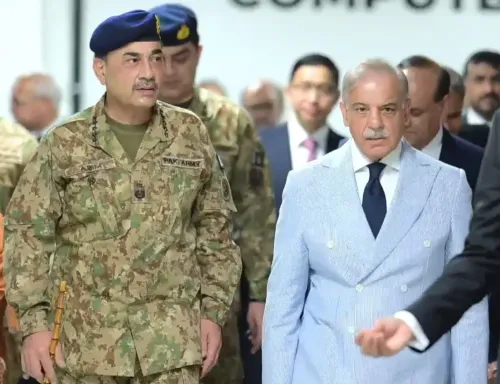
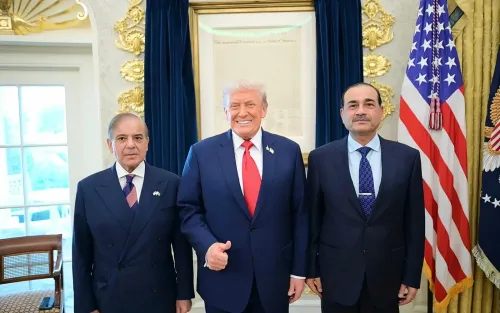
The geopolitical turbulence triggered by the Middle East crisis has, according to the Eurasia Review report, handed Pakistan Army Chief General Asim Munir a strategic opening to consolidate power while steadily eroding the authority of Pakistan's civilian leadership. His position was reportedly reinforced after he found favour with US President Donald Trump, who has referred to him as his 'favourite Field Marshal' — a designation that has lent Munir heightened international visibility and domestic confidence.
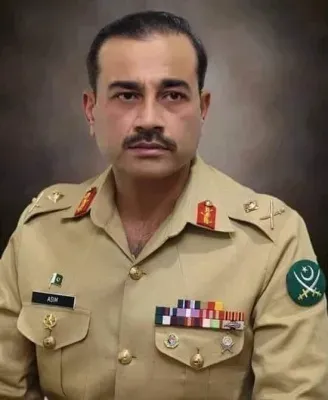
Munir currently holds the dual offices of Chief of Defence Forces (CDF) and Chief of Army Staff (COAS), an unusual concentration of institutional authority. He was also, according to the report, instrumental in facilitating the passage of the 26th and 27th Constitutional Amendments through both Pakistan's National Assembly and the Senate.
Constitutional Changes That Tilted the Balance
The 26th Constitutional Amendment allowed a parliamentary committee to appoint the Chief Justice of Pakistan, bypassing the established seniority principle. Subsequent legislation increased the number of judges in the Supreme Court from 17 to 34 and in the Islamabad High Court from 9 to 12, reportedly to ensure a more favourable judicial composition. The amendments also extended the tenures of all armed services chiefs from three to five years. As the Eurasia Review report noted, this was 'akin to giving Asim Munir an extension before his original tenure was set to end.'
The report observed that these moves have 'undoubtedly strengthened Asim Munir's grip on the country's political system and undermined important democratic institutions, including parliament and the judiciary,' while simultaneously generating 'significant unease within society, as people's hopes for good governance, economic growth, and development have remained unfulfilled.'
Civilian Government's Diminished Standing
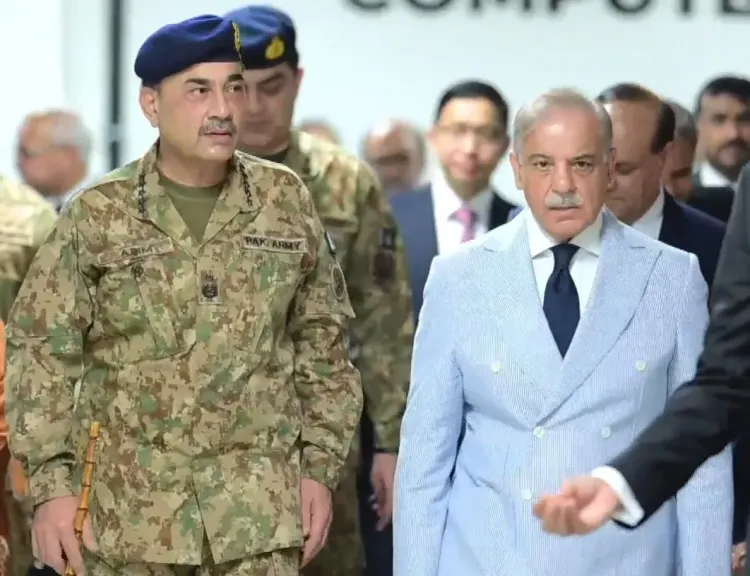
The coalition government led by Prime Minister Shehbaz Sharif — comprising the Pakistan Muslim League-Nawaz (PML-N) and the Pakistan People's Party (PPP) — is described in the report as 'completely dependent on Munir for its survival.' The civilian dispensation 'appears to be crawling' before the army chief, according to the Eurasia Review analysis, reflecting the degree to which democratic authority has been subordinated to military power.
The report also flagged an inherent tension in Munir's approach: 'The military in Pakistan is an image-conscious institution, as it knows very well that with a dented image it may not be in a position to dictate terms.' Growing public discontent over constitutional overreach and stalled economic progress could, analysts suggest, test the limits of that image management in the months ahead.
What Comes Next
With the BLA and TTP showing no signs of de-escalation, and PoJK simmering with civil unrest, Pakistan faces a compounding internal crisis with few visible off-ramps. The civilian government's dependence on military backing leaves little room for independent political manoeuvre, while the constitutional changes have narrowed judicial checks on executive and military power. How Munir navigates the widening gap between institutional control and public legitimacy will likely define Pakistan's political trajectory through the remainder of 2025.
Point of View
Executed through parliamentary majorities that the army effectively controls. The 26th Amendment's judicial appointments clause and the tenure extension for service chiefs are not isolated reforms; they are the architecture of long-term military supremacy dressed in civilian procedure. The Sharif government's complicity is the most telling detail: a coalition that won an election now 'crawling' before a general it cannot afford to lose. Pakistan's democratic institutions have survived coups before, but an institutional erosion this methodical — with judicial, legislative, and executive levers all tilted in one direction — is arguably harder to reverse than an outright takeover.
NationPress
22 Aug 2026
Frequently Asked Questions
Why is Pakistan's internal situation described as a deepening crisis?
Pakistan faces simultaneous security threats from the Baloch Liberation Army in Balochistan and the Tehreek-e-Taliban Pakistan in Khyber Pakhtunkhwa, alongside violent civil unrest in Pakistan-occupied Jammu and Kashmir. These pressures are compounded by a stalled economy and the erosion of democratic institutions through recent constitutional amendments, according to a Eurasia Review report published this week.
How has Army Chief Asim Munir consolidated power in Pakistan?
General Asim Munir has used geopolitical shifts, US backing, and his dual role as Chief of Defence Forces and Chief of Army Staff to push through the 26th and 27th Constitutional Amendments. These changes extended armed services chiefs' tenures from three to five years, altered judicial appointments, and expanded the Supreme Court from 17 to 34 judges — effectively entrenching military influence across Pakistan's institutions.
What do the 26th and 27th Constitutional Amendments change in Pakistan?
The 26th Amendment allowed a parliamentary committee to appoint the Chief Justice of Pakistan, bypassing the seniority principle. Together, the amendments increased Supreme Court judges from 17 to 34, expanded the Islamabad High Court from 9 to 12 judges, and extended the tenures of all armed services chiefs from three to five years — a change that effectively gave Munir a tenure extension before his original term expired.
What is the role of the Shehbaz Sharif government amid this power shift?
The PML-N and PPP coalition government led by Prime Minister Shehbaz Sharif is described in the Eurasia Review report as 'completely dependent on Munir for its survival' and as 'appearing to crawl' before the army chief. The civilian government has little independent political authority and has facilitated rather than resisted the constitutional changes that have strengthened military dominance.
How does US President Trump's stance affect Pakistan's internal dynamics?
US President Donald Trump has reportedly referred to Army Chief Asim Munir as his 'favourite Field Marshal,' lending Munir significant international visibility and domestic political capital. According to the Eurasia Review report, this external validation has emboldened Munir to pursue sweeping institutional changes with greater confidence, further weakening Pakistan's civilian and democratic structures.