PoJK crackdown: Pakistan withholding bodies of slain protesters, report finds
Synopsis
Pakistan isn't just cracking down on protesters in PoJK — it is reportedly holding their bodies hostage, demanding families sign statements labelling the dead as 'terrorists' before allowing funerals. With three confirmed killed, over 100 arrested, journalists detained, and a five-month-old sit-in still holding in Rawalakot, the report frames this not as an aberration but as a deliberate, repeatable template of control.
Key Takeaways
Three men — Atif Jardees , Ehtisham Younis , and Adil Rashid — were reportedly killed during the crackdown in Rawalakot, PoJK ; at least 18 others were seriously injured.
Pakistani authorities allegedly withheld bodies, demanding families sign statements declaring the deceased 'terrorists' before releasing them for burial.
The JAAC was banned under anti-terrorism laws on 5 June 2026 ; over 100 people were arrested within 48 hours and internet was cut for approximately a week .
Journalist Sohrab Barkat was arrested under cybercrime laws; activist Shahzaib Habib was reportedly shot while covering the crackdown.
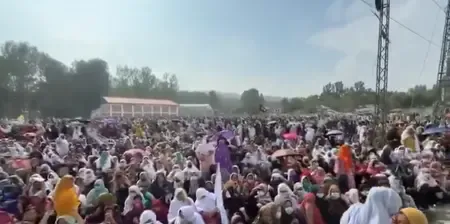
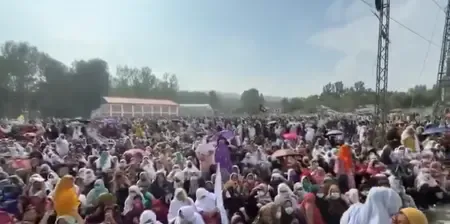
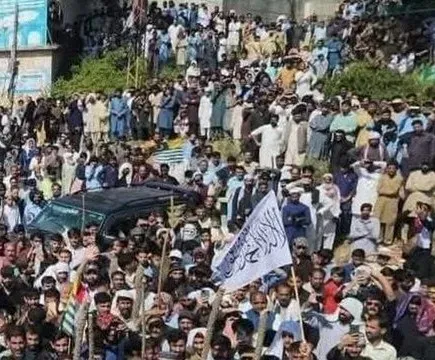
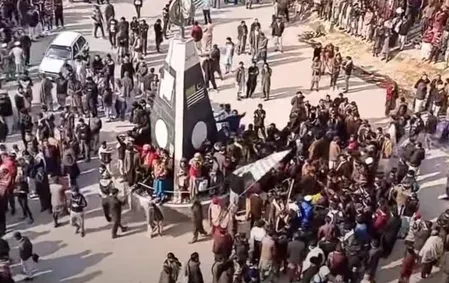
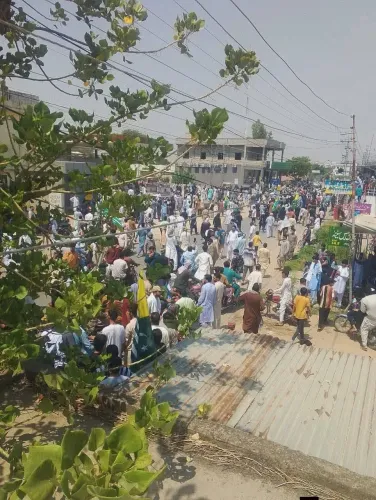
A sit-in at Dareek Eidgah in Rawalakot has continued uninterrupted since 10 June 2026 , drawing thousands again in November.
No accountability inquiry has been initiated despite documented allegations of human rights abuses over five months.
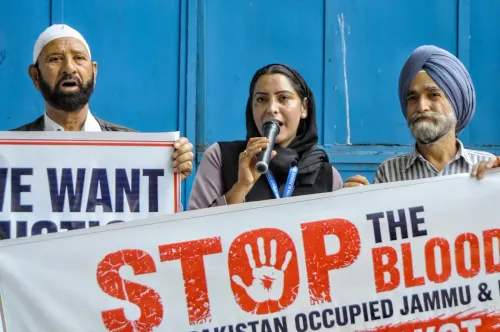
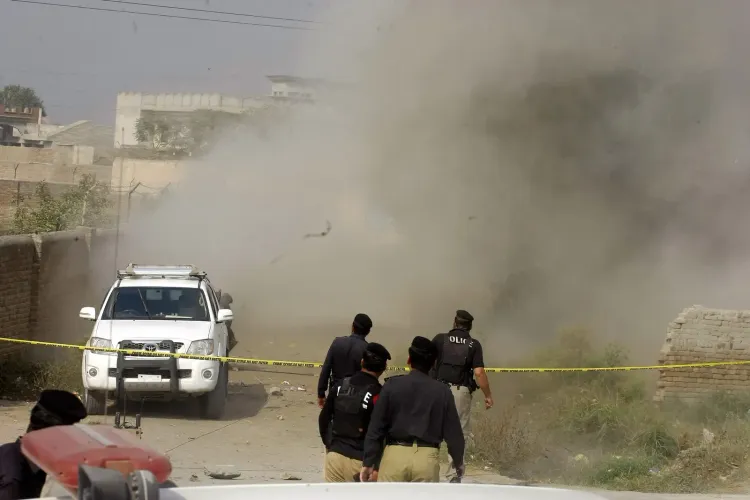
Pakistani security forces have reportedly withheld the bodies of civilians killed during a violent crackdown on peaceful sit-ins in the Rawalakot region of Pakistan-occupied Jammu and Kashmir (PoJK), with a new report describing the practice as among the cruellest aspects of Islamabad's treatment of people in the occupied territory. The findings, cited on 14 November 2026, come as protests in the region continue despite sustained state pressure.
Three Killed, Dozens Injured in Rawalakot Crackdown
Three men — Atif Jardees, Ehtisham Younis, and Adil Rashid — were reportedly killed during the security operation, while at least 18 others sustained serious injuries. Both the Joint Awami Action Committee (JAAC) and opposition alliance groups have demanded that the bodies of the deceased be returned to their families without preconditions.
According to the report, the practice of withholding bodies began as far back as June 2026, when relatives of a man identified as Fahad Barkat were allegedly told they would receive his body only after signing a statement declaring him a 'terrorist' killed in a police encounter. Critics have called this a technique of coercion designed to impose a forced narrative on grieving families as the price of a funeral.
Heavy Weapons and Drones Used to Suppress Protests
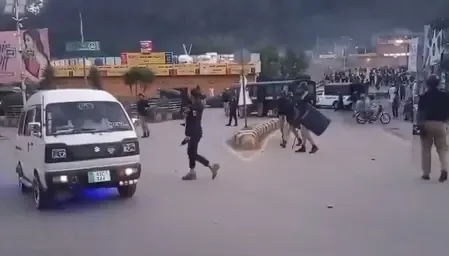
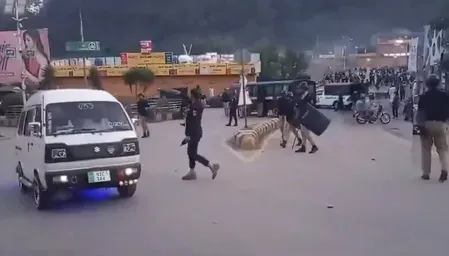
Organisers of the protests and members of the Kashmiri diaspora have accused Pakistani security forces of deploying heavy machine guns, armoured vehicles, and drones to crush demonstrations across PoJK. The report noted that independent fact-finding in the region has been systematically suppressed, making it increasingly difficult to verify or document the scale of the crackdown.
Notably, the report described the pattern of suppression as a 'working template' — not an isolated incident. 'Sit-ins across different parts of PoJK are cleared before dawn, communications are severed so nothing can be verified, bodies are held back until families accept Islamabad's version, and the civilian movement is reclassified as 'terrorism',' the report stated.
Crackdown Escalation Since June 2026
The escalation reportedly began in earnest after Pakistani authorities invoked anti-terrorism legislation to ban the JAAC on 5 June 2026. In the days that followed, internet and mobile connectivity were cut for approximately a week, more than 100 people were arrested within 48 hours, outsiders were directed to leave the region, and the JAAC's Muzaffarabad office was shut down.
Pakistani journalist Sohrab Barkat was arrested under cybercrime laws for his coverage of the events in PoJK, while activist Shahzaib Habib was reportedly shot on the same night. Despite these measures, protests at Dareek Eidgah in Rawalakot have continued uninterrupted since 10 June 2026, with thousands reportedly turning out again this month.
No Accountability Despite Documented Abuses
The report stated that no investigation or inquiry has been initiated to hold those responsible for the alleged human rights abuses accountable. Critics argue that the absence of accountability, combined with the deliberate isolation of PoJK from outside scrutiny, signals a deeper shift toward military-backed centralisation rather than any attempt at political accommodation.
As the sit-in at Dareek Eidgah enters its fifth month, international human rights observers and the Kashmiri diaspora are expected to intensify calls for independent access to the region and an end to what they describe as state-sanctioned suppression of civilian dissent.
Point of View
Pakistani authorities attempt to pre-empt both legal challenges and international documentation of the killings. What is striking is how methodical the template has become: communication blackout, pre-dawn dispersal, mass arrests, media suppression, and narrative coercion in that order. Five months on, with no accountability mechanism in sight and the Rawalakot sit-in still holding, Islamabad appears to have calculated that the cost of continued force is lower than the cost of concession — a calculation that has historically proved wrong in occupied territories when diaspora pressure and international scrutiny eventually converge.
NationPress
14 Nov 2026
Frequently Asked Questions
What happened during the crackdown on protesters in PoJK's Rawalakot region?
Pakistani security forces reportedly used heavy machine guns, armoured vehicles, and drones to suppress peaceful sit-ins in Rawalakot, killing three identified protesters — Atif Jardees, Ehtisham Younis, and Adil Rashid — and injuring at least 18 others. Authorities allegedly refused to return the bodies to families unless they signed statements labelling the deceased as terrorists.
Why are Pakistani authorities withholding the bodies of slain protesters?
According to the report, Pakistani authorities have been using the withholding of bodies as a coercion tactic, demanding families sign statements describing the deceased as 'terrorists killed in a police encounter' before releasing them for burial. Critics describe this as a technique to impose Islamabad's narrative on grieving families and suppress legal accountability.
What actions did Pakistan take against the JAAC and civil society in PoJK?
On 5 June 2026, Pakistani authorities banned the Joint Awami Action Committee (JAAC) under anti-terrorism legislation. Within 48 hours, over 100 people were arrested, internet and mobile connectivity were severed for approximately a week, and the JAAC's Muzaffarabad office was shut down. Journalist Sohrab Barkat was arrested under cybercrime laws, and activist Shahzaib Habib was reportedly shot.
How long has the sit-in protest at Dareek Eidgah been going on?
The sit-in at Dareek Eidgah in Rawalakot has continued uninterrupted since 10 June 2026 — running for over five months despite the crackdown. Thousands of protesters reportedly turned out again in November 2026, suggesting the state's use of force has not broken civilian resolve.
Has there been any accountability for the alleged human rights abuses in PoJK?
No investigation or inquiry has been initiated to hold those responsible for the alleged abuses accountable, according to the report. The suppression of independent fact-finding and media access to PoJK has made external verification difficult, with the report noting this isolation is itself a deliberate policy choice by Pakistani authorities.