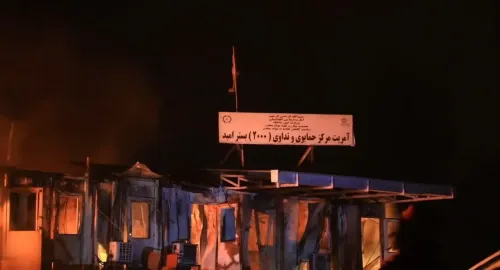
Pakistan Kabul airstrike on Omid Centre may be war crime, says Amnesty
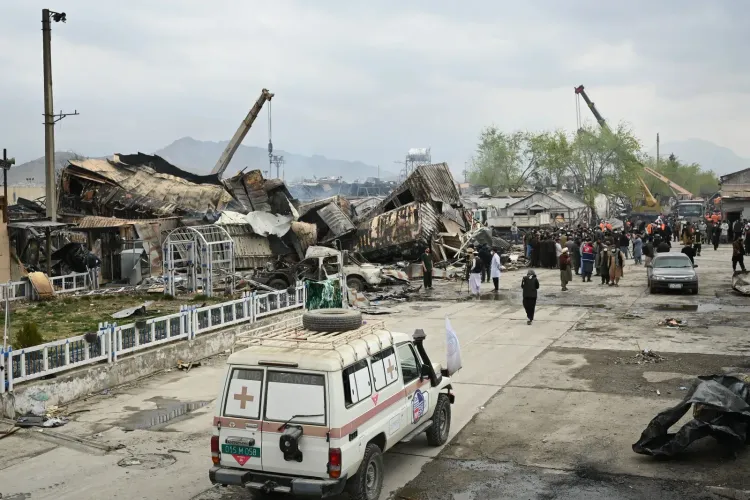
Synopsis
Amnesty International has declared Pakistan's 16 March airstrike on Kabul's Omid Rehabilitation Centre — a 2,000-bed medical facility that killed at least 269 civilians — a possible war crime, rejecting Islamabad's weapons-storage justification. With UNAMA logging over 750 civilian casualties in Afghanistan in just three months and Human Rights Watch also demanding accountability, the case against Pakistan's cross-border military conduct is rapidly hardening.
Key Takeaways
Amnesty International on 22 July said Pakistan's airstrike on Kabul's Omid Rehabilitation and Treatment Centre should be investigated as a possible war crime .
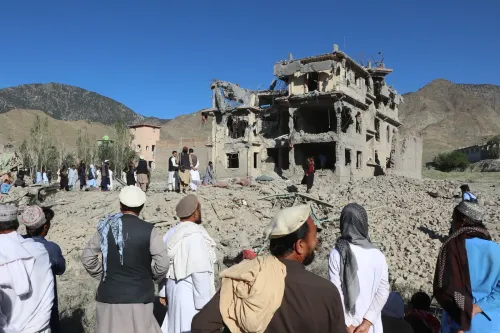
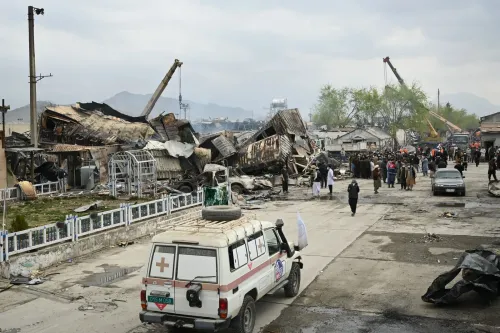
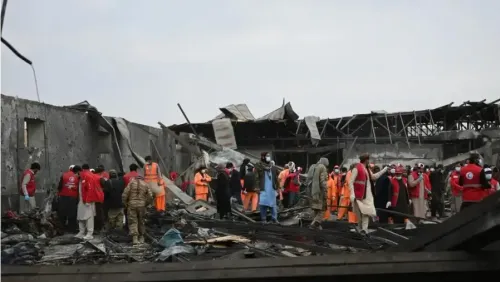
The 16 March strike killed at least 269 civilians and injured several others at the 2,000-bed medical facility in Kabul's Pul-e-Charkhi area.
Amnesty found no evidence supporting Pakistan's claim that the facility stored weapons or served any military purpose.
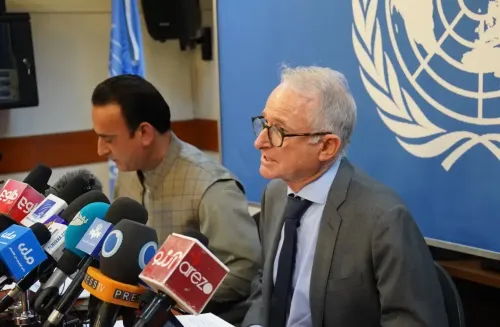
UNAMA documented more than 750 civilian casualties — 372 killed, 392 injured — in Afghanistan between January and March 2026 .
Pakistani strikes last month killed 36 civilians and injured 163 in Paktia , Paktika , and Kunar provinces.
Human Rights Watch has separately called for an impartial investigation into possible war crimes from Pakistan's recent strikes.
Amnesty International on Wednesday, 22 July declared that Pakistan's airstrike on the Omid Rehabilitation and Treatment Centre in Kabul should be investigated as a possible war crime, stating that no evidence supports Islamabad's claim that the 2,000-bed medical facility was used for military purposes. The strike, carried out on 16 March, killed at least 269 civilians and injured several others in Kabul's Pul-e-Charkhi area.
What Amnesty International Found
Isabelle Lassee, Amnesty International's Acting Regional Director for South Asia, said the attack constituted 'a serious violation of international humanitarian law — possibly amounting to a war crime.' She noted that the Omid Centre had functioned as a medical facility for more than a decade, making the strike a 'major failure in military planning by Pakistan that led to a significant loss of civilian life.'
Amnesty's open-source investigators and weapons experts concluded that the facility was not a 'legitimate military target' under International Humanitarian Law (IHL). The organisation stated that Pakistan violated the IHL principles of distinction, precaution, and proportionality — protections specifically designed to shield civilians and healthcare infrastructure during armed conflict.
Pakistan's Justification Rejected
Islamabad has claimed the Omid facility was being used to store weapons and ammunition, or for other military purposes. Amnesty International directly rejected this, stating that 'the evidence Pakistan has made public so far does not rebut the conclusion that this was an unlawful attack causing harm to civilians and civilian objects.'
Lassee described the strike as reflecting a 'lethal failure' by Pakistan to comply with its legal obligation to verify whether a target constitutes a military objective before striking.
Demands for Accountability
Amnesty International has called on Pakistan to urgently conduct a 'transparent, thorough, independent, and impartial investigation' into the attack — specifically into the decision-making process that led to the targeting of the Omid Centre — and to make the findings public. The organisation further stated that where sufficient evidence exists, authorities should prosecute those suspected of criminal responsibility, including under the doctrine of command responsibility.
Broader Pattern of Civilian Casualties
The 16 March strike was not an isolated incident. It was part of a series of airstrikes conducted by the Pakistan military in Afghanistan amid escalating cross-border hostilities with the Taliban since October 2025. The UN Assistance Mission in Afghanistan (UNAMA) documented more than 750 civilian casualties — 372 killed and 392 injured — in Afghanistan between January and March 2026 alone.
Last month, Pakistani military airstrikes in the Afghan provinces of Paktia, Paktika, and Kunar killed at least 36 civilians, including women and children, and injured 163 others, according to Taliban authorities. The US-based Human Rights Watch (HRW) has also called for an impartial investigation into possible war crimes following Pakistan's recent strikes in Afghanistan, citing grave concern over civilian casualties.
With two major human rights bodies now demanding accountability, international pressure on Islamabad is mounting — and the absence of a credible Pakistani investigation is likely to intensify scrutiny at multilateral forums in the weeks ahead.
Point of View
Combined with a documented pattern of civilian casualties across multiple Afghan provinces, suggests Islamabad is treating accountability as optional. What is missing from mainstream coverage is the command-responsibility angle: international law does not require proof that a commander ordered an unlawful strike — only that they knew or should have known. That is a far lower bar than Pakistan appears to be preparing for. With both Amnesty and HRW now aligned, the question is no longer whether an investigation is warranted, but whether any institution has the leverage to compel one.
NationPress
22 Jul 2026
Frequently Asked Questions
What did Amnesty International say about Pakistan's airstrike on the Omid Centre?
Amnesty International said the 16 March Pakistani airstrike on Kabul's Omid Rehabilitation and Treatment Centre should be investigated as a possible war crime. The organisation found no evidence that the 2,000-bed medical facility was used for any military purpose, contradicting Pakistan's public justification.
How many civilians were killed in the Omid Centre airstrike?
At least 269 civilians were killed and several others were injured in the 16 March Pakistani airstrike on the Omid Centre in Kabul's Pul-e-Charkhi area. The facility had operated as a medical centre for more than a decade at the time of the strike.
What is Pakistan's justification for the airstrike?
Pakistan has claimed the Omid facility was being used to store weapons, ammunition, or for other military purposes. Amnesty International's open-source investigators and weapons experts found no evidence to support this claim and stated the facility was not a legitimate military target under international humanitarian law.
What has Amnesty International demanded from Pakistan?
Amnesty International has demanded that Pakistan urgently conduct a transparent, thorough, independent, and impartial investigation into the attack, including the decision-making process behind targeting the facility. It has also called for prosecution of those suspected of criminal responsibility, including under the doctrine of command responsibility.
Is this the only Pakistani airstrike to have caused civilian casualties in Afghanistan?
No. The Omid Centre strike is part of a series of Pakistani airstrikes in Afghanistan since October 2025. UNAMA documented over 750 civilian casualties between January and March 2026 alone, and last month's strikes in Paktia, Paktika, and Kunar killed 36 civilians and injured 163 others. Human Rights Watch has also called for a war crimes investigation into the broader pattern of strikes.