Pakistan hikes defence spending 20% to $9 billion as poverty deepens
Synopsis
Pakistan has handed its military a record budget hike — over 20 per cent to $9 billion — while cutting welfare spending by 7 per cent, all under an active IMF bailout. The Hangor submarine deal, worth up to $5 billion, epitomises a fiscal order where guns consistently outrank human development, and the full defence allocation has never once been disclosed to elected lawmakers.
Key Takeaways
Pakistan raised defence spending by more than 20 per cent to Rs 2.55 trillion ($9 billion) in the 2025–26 budget .
Overall federal expenditure, including welfare measures, was cut by 7 per cent in the same budget.
The Hangor submarine programme , valued at $4–5 billion , is one of the costliest military-industrial projects in Pakistan's history.
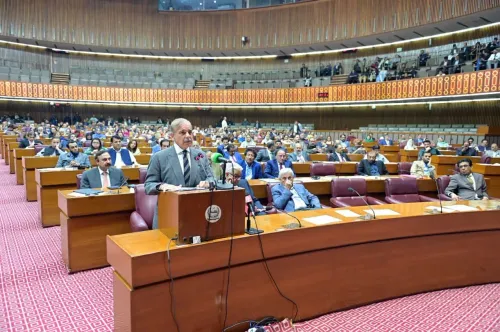
Full details of Pakistan's defence allocation have reportedly never been disclosed to elected representatives.
IMF austerity conditions have disproportionately hurt lower-income groups, according to the Eurasia Review analysis.
Critics argue the defence-versus-welfare trade-off reflects political choices, not fiscal inevitability, given Pakistan's low tax-to-GDP ratio.
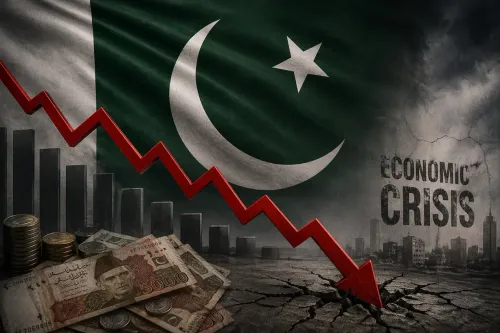
Pakistan has raised its defence budget by more than 20 per cent to Rs 2.55 trillion ($9 billion) in the 2025–26 fiscal year, even as the cash-strapped nation slashed overall federal expenditure — including welfare programmes — by 7 per cent, according to an analysis published in Eurasia Review. The surge in military outlays comes as poverty and unemployment continue to rise and the country remains heavily reliant on International Monetary Fund (IMF) funding to avert an economic collapse.
Defence Budget Outpaces Every Other Line Item
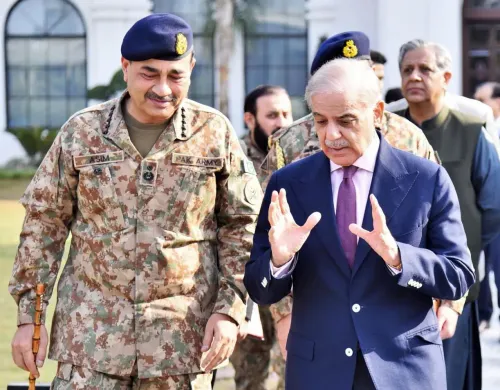
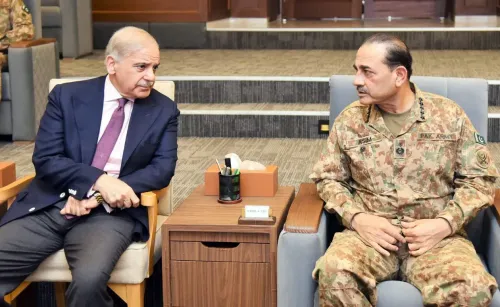
Pakistan's 2025–26 defence allocation is reportedly the fastest-growing component of the national budget — and, critically, one whose full details have never been disclosed to elected representatives, according to the Eurasia Review article. The military's outsized influence in Islamabad is widely seen as a key driver of this fiscal asymmetry, with army generals effectively calling the shots on budgetary priorities.
Among the headline programmes is the Hangor submarine initiative, a military-industrial collaboration valued at $4–5 billion and described as one of the most expensive defence procurement projects in Pakistan's history. The Hangor programme alone illustrates the scale of commitment to hardware acquisition at a time when social services are being squeezed.
IMF Austerity Deepens Inequality
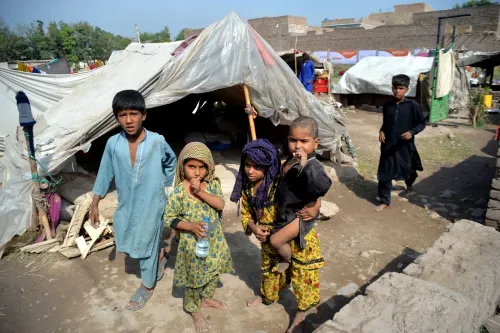
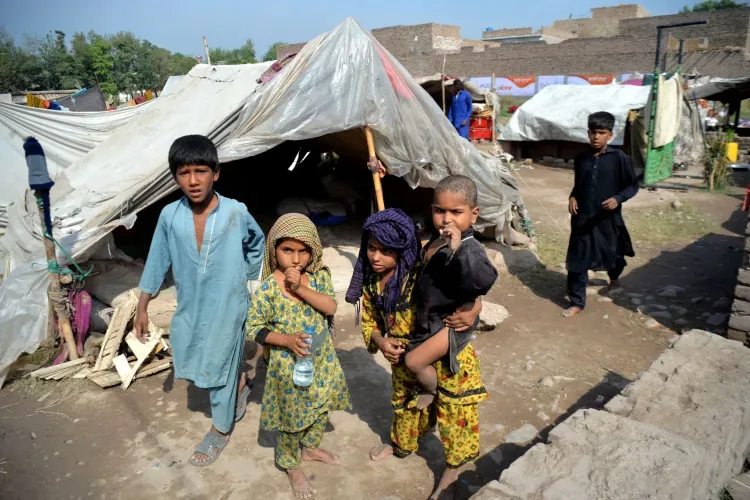
The austerity conditions attached to IMF assistance have compounded socioeconomic stress, disproportionately affecting lower-income groups, the article notes. Subsidies and welfare transfers — the primary buffers for Pakistan's most vulnerable citizens — have faced the sharpest cuts even as the military budget expanded at a record pace.
This comes amid a broader structural challenge: Pakistan's tax-to-GDP ratio remains well below regional and global peers, leaving the government with limited fiscal space. Critics argue the resulting trade-off — defence expansion versus social spending — is not an economic inevitability but a deliberate political choice about who bears the cost of adjustment.
Calls for Defence Procurement Accountability
Pressure for greater transparency in military spending is reportedly gaining traction in economic and civil society circles within Pakistan. The central question being raised, according to the Eurasia Review article, is whether allocations of this magnitude — in a country operating under external financial assistance — should face the same scrutiny applied to road contracts, hospital procurement, and social protection schemes.
Notably, defence spending in Pakistan has historically operated outside normal parliamentary oversight, a structural anomaly that critics argue insulates the military from the accountability mechanisms applied to civilian ministries.
Regional Stability Implications
The Eurasia Review article warns that the fragility of the Pakistani state — driven in part by the cumulative fiscal trade-offs that arise when defence spending crowds out human development — poses a potential threat to regional stability. Analysts argue that a state under chronic fiscal stress, with widening inequality and diminished public services, carries risks that extend well beyond its own borders.
With the IMF programme still in force and no structural shift in the civil-military spending balance in sight, Pakistan's fiscal trajectory will remain closely watched by regional governments and international financial institutions alike.
Point of View
Under an IMF programme that demands austerity from everyone except the military. The Hangor submarine deal — worth up to $5 billion in a country that needed an external bailout to pay its bills — crystallises the contradiction. What makes this structurally dangerous is not just the spending level but the opacity: an allocation of this scale that bypasses parliamentary scrutiny is, by definition, unaccountable. The regional stability warning in the Eurasia Review piece deserves attention — states that consistently trade human development for hardware tend to generate the very instability they claim the hardware is meant to deter.
NationPress
16 Sept 2026
Frequently Asked Questions
By how much has Pakistan increased its defence budget in 2025–26?
Pakistan raised its defence budget by more than 20 per cent to Rs 2.55 trillion ($9 billion) in the 2025–26 fiscal year, making it the fastest-growing line item in the national budget. This increase came even as overall federal expenditure, including welfare programmes, was cut by 7 per cent.
What is the Hangor submarine programme?
The Hangor programme is a major military-industrial collaboration valued at $4–5 billion, making it one of the most expensive defence procurement projects in Pakistan's history. It is part of the broader defence spending surge reflected in the 2025–26 budget.
How does Pakistan's defence spending affect its poor?
IMF-mandated austerity conditions have disproportionately hurt lower-income groups, as welfare transfers and subsidies face cuts while defence spending expands. Critics argue this reflects a political choice about who bears the cost of fiscal adjustment, rather than an unavoidable economic constraint.
Is Pakistan's defence budget subject to parliamentary oversight?
According to the Eurasia Review analysis, the full details of Pakistan's defence allocation have never been disclosed to elected representatives. This lack of transparency is drawing increasing scrutiny from economic and civil society circles, who argue such large allocations should face the same accountability applied to civilian spending.
What are the regional implications of Pakistan's military spending priorities?
The Eurasia Review article warns that Pakistan's fiscal fragility — driven by chronic under-investment in human development — constitutes a potential threat to regional stability. Analysts note that states under sustained fiscal stress, with widening inequality, carry risks that extend beyond their own borders.