Pakistan's domestic workers face abuse as child labour law stays unenforced
Synopsis
Pakistan passed a Domestic Workers Act in 2019 — then largely ignored it. With over four million workers in Lahore division alone, mostly women and girls, the law's internal contradictions and near-zero enforcement have left one of the country's most vulnerable workforces without meaningful protection six years on.
Key Takeaways
Pakistan's Domestic Workers Act (2019) remains largely unenforced, leaving millions of women and child workers without legal protection.
Lahore division has more than four million domestic workers — the highest in Punjab — with most being women and girls.
The Act sets the minimum working age at 15 years , conflicting with constitutional child protection provisions, and offers only six weeks of maternity leave versus 90 days under other laws.
Pakistan has ratified ILO Convention 189 but has yet to meet its obligations in practice, according to civil society activists.
Advocates are demanding a dedicated welfare fund, enforcement of the Rs 40,000 minimum wage, and social security cards for domestic workers.
Millions of domestic workers in Pakistan, including women and girls, continue to face exploitation, abuse, and economic insecurity as the government fails to enforce existing labour protections, according to a report by The Express Tribune. The findings, published on 10 May, expose a sector that remains largely undocumented and unregulated despite a law enacted six years ago.
Scale of the Problem
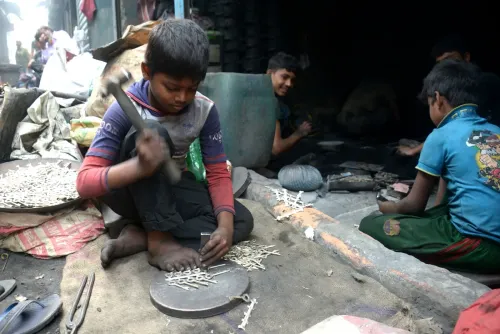
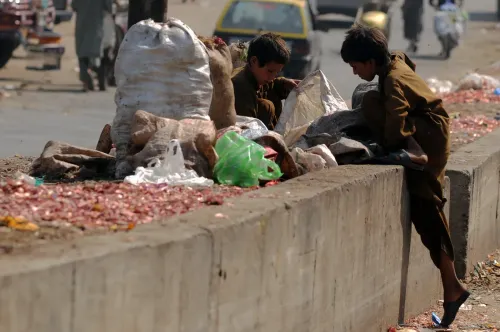
Punjab province hosts the largest concentration of domestic workers in Pakistan. According to available data cited in the report, Lahore division alone has more than four million domestic workers, followed by Rawalpindi (1.6 million), Faisalabad (1.4 million), Gujranwala (1.2 million), Multan (700,000), Sargodha (500,000), and Sahiwal and DG Khan divisions (around 200,000 each). The majority of these workers are women and children, with girls making up a significant portion of child labour in the sector.
Contradictions Within the Law
Pakistan enacted the Domestic Workers Act in 2019, but the legislation contains critical internal contradictions that advocates say undermine its intent. The Act sets the minimum working age at 15 years, which conflicts with constitutional provisions on child protection. It also allows only six weeks of maternity leave, compared to 90 days guaranteed under other Pakistani laws. According to Syeda Kulsume Hai, Director General of Labour Welfare in Punjab, the law contains gaps and was reportedly drafted hastily, further limiting its effectiveness in practice.
Voices From the Ground
Civil society activist Amna Malik pointed out that Pakistan has ratified ILO Convention 189, which obligates the government to protect domestic workers. She noted that most workers are uneducated women and girls, making them highly vulnerable. The sector remains undocumented, wages are paid in cash, and minimum wage laws are rarely enforced, she said. Two women workers told the report that NGOs often conduct symbolic activities without real impact, adding that they face salary deductions for taking leave and receive no medical support, and urged the government to provide financial assistance.
Demands for Reform
Syeda Farah Hashmi, an NGO leader, called for the establishment of a dedicated fund and strict enforcement of the Rs 40,000 minimum wage. She also stressed the need to formally recognise women's economic contributions and introduce skill development programmes to reduce vulnerability in the sector. Shahnaz Ajmal, President of the Women Domestic Workers Union in Punjab, shared her personal account of abuse and exploitation, highlighted gender-based wage discrimination, and demanded social security cards for all domestic workers.
What Needs to Change
Advocates argue that meaningful reform requires closing legislative contradictions in the 2019 Act, establishing an independent monitoring mechanism, and ensuring that wage payments are formally documented. This comes amid growing international scrutiny of Pakistan's labour rights record, with ILO obligations remaining largely unmet in practice. Without structural change, critics warn, the law will remain a paper guarantee for one of the country's most vulnerable workforces.
Point of View
From a minimum working age that conflicts with the constitution to maternity leave below the national standard, suggest the law was designed to be checked off rather than enforced. Ratifying ILO Convention 189 without building the inspection, documentation, and wage-payment infrastructure to back it up is performative compliance. Until Punjab's Labour Welfare department is adequately staffed and empowered to act, the millions of women and girls in this sector will remain invisible to the state — and therefore defenceless.
NationPress
23 Sept 2026
Frequently Asked Questions
What is Pakistan's Domestic Workers Act 2019?
The Domestic Workers Act 2019 is a Pakistani law designed to regulate working conditions for domestic workers, including minimum wage and maternity leave entitlements. However, it has not been fully implemented and contains contradictions — such as a minimum working age of 15 years that conflicts with constitutional provisions — which have limited its real-world impact.
How many domestic workers are there in Punjab, Pakistan?
According to available data cited in the report, Lahore division alone has more than four million domestic workers. Rawalpindi has 1.6 million, Faisalabad 1.4 million, Gujranwala 1.2 million, Multan 700,000, Sargodha 500,000, and Sahiwal and DG Khan around 200,000 each.
Has Pakistan ratified ILO Convention 189 on domestic workers?
Yes, Pakistan has ratified ILO Convention 189, which obligates the government to protect domestic workers' rights. However, civil society activists say enforcement remains negligible, with wages paid in cash, minimum wage laws rarely applied, and the sector largely undocumented.
What are activists demanding for Pakistan's domestic workers?
Activists are calling for a dedicated welfare fund, strict enforcement of the Rs 40,000 minimum wage, social security cards for domestic workers, formal recognition of women's economic contributions, and skill development programmes. They also want the legal contradictions in the 2019 Act to be resolved.
Why are women and girls especially vulnerable in Pakistan's domestic work sector?
Most domestic workers in Pakistan are uneducated women and girls, making them highly vulnerable to exploitation. The sector is undocumented, wages are paid informally, and legal protections are rarely enforced, leaving workers with no recourse against abuse, wage theft, or unsafe working conditions.