Pakistan's Disregard for EU's Tariff-Free Export Conditions
Synopsis
Pakistan has been granted tariff-free access to the EU under the GSP+ scheme, but alarming reports reveal widespread violations of workers' rights in its garment factories, raising serious concerns about compliance with international standards.
Key Takeaways
Pakistan's GSP+ access has led to significant export growth.
Widespread violations of workers' rights persist in garment factories.
Labour inspectors are under-resourced and ineffective.
Systematic barriers exist for union formation in factories.
Compliance gaps raise questions about government accountability .
New Delhi, April 5 (NationPress) In January 2014, the European Union initiated its Generalised Scheme of Preferences Plus (GSP+) program, providing Pakistan with duty-free access to its profitable markets, contingent upon its commitment to adhere to international standards related to human rights, labour, environmental, and governance practices.
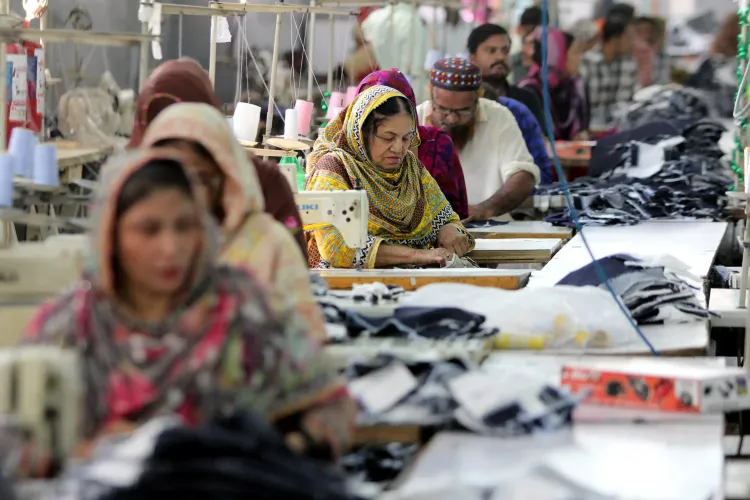
Despite this agreement, reports from Greece's digital news outlet NewsBomb reveal that Pakistan's garment factories are openly breaching these commitments by violating workers' rights and obstructing the establishment of labour unions, which limits workers' ability to voice their concerns to management.
The GSP+ framework has significantly boosted Pakistan's export economy, with over €7 billion of the country's €8.3 billion in EU imports being tariff-exempt in 2024, with apparel constituting almost three-quarters of this benefit, the report highlights.
Nevertheless, while Pakistan's garment exports have thrived, its adherence to essential labour standards has fallen short of the commitments made, raising serious questions regarding the government's dedication to fulfilling its legal responsibilities, according to the report.
Labour inspectors, who are expected to enforce these standards, are outnumbered and lack necessary resources. Their findings frequently point to violations in working hours, wage laws, and safety standards, yet enforcement actions following these reports are often irregular. In many smaller subcontracting facilities outside Karachi and Lahore, persistent non-compliance remains unaddressed, the report claims.
The GSP+ scheme permits vulnerable developing nations to export to the EU under nearly duty-free terms, provided they effectively implement 27 international conventions that cover human rights, labour rights, environmental protection, and good governance.
Pakistan has ratified all these conventions, including the International Labour Organisation’s (ILO) core labour standards concerning freedom of association and collective bargaining. The expectation was clear: ratification should lead to effective enforcement within the country.
According to the report, a major evaluation of Pakistan’s compliance with GSP+ was initiated in September 2023 by the ILO in collaboration with Pakistan’s Ministry of Overseas Pakistanis and Human Resource Development. This evaluation identified significant gaps in compliance.
The assessment, discussed in a tripartite forum comprising government, employers, and workers, acknowledged legislative efforts but highlighted enforcement weaknesses—particularly regarding labour rights and access to unions—that undermine Pakistan's commitments.
Representatives from the ILO and the EU observed that inspection and monitoring remain inadequate, hindering tangible improvements on the ground.
Pakistan's textile and garment industry, crucial to its GSP+ export success, has long faced challenges related to labour rights.
Interviews with workers and independent studies reveal widespread denial of union rights, precarious employment contracts, excessive working hours, and unsafe working conditions.
Factories producing for EU markets in Pakistan frequently exhibit intimidation and administrative pressure against union formation. Despite legal protections being in place, the reality for garment workers is one of limited agency, the report indicates.
Trade union organizers have reported systematic barriers to registering unions in export-oriented factories. Workers attempting to join or negotiate collectively face opaque procedures, employer influence over union recognition, and bureaucratic delays.
These practices contradict Pakistan’s obligations under the ILO conventions it has ratified, including Convention No. 87 on Freedom of Association and Convention No. 98 on the Right to Organize and Bargain Collectively, the report concludes.
Point of View
The ongoing violations of labour rights in Pakistan's garment sector not only jeopardize the welfare of workers but also undermine the country's credibility on the global stage. It raises critical questions about the enforcement of legal obligations and the real impact of international trade agreements.
NationPress
16 Oct 2026
Frequently Asked Questions
What is the GSP+ scheme?
The GSP+ scheme is a trade arrangement by the EU that allows developing countries to export goods on a duty-free basis, contingent on their adherence to international standards regarding human rights, labour rights, and environmental protection.
How much of Pakistan's exports to the EU are tariff-free?
In 2024, more than €7 billion of Pakistan's €8.3 billion in EU imports are expected to be tariff-free.
What commitments has Pakistan made under the GSP+?
Pakistan committed to implementing 27 international conventions related to human rights, labour rights, environmental protection, and governance to benefit from the GSP+ scheme.
What violations are occurring in Pakistan's garment factories?
Reports indicate widespread violations of workers' rights, including denial of trade union rights, excessive working hours, and unsafe working conditions.
What does the ILO say about Pakistan's compliance?
The ILO has identified significant compliance gaps in Pakistan's adherence to GSP+ conditions, particularly in relation to labour rights and union access.