Pakistan's child malnutrition crisis: 40% stunting rate stalls human capital
Synopsis
Pakistan's malnutrition emergency goes deeper than food scarcity — 40.2% of children under five are stunted, and UNICEF puts 38% in severe food poverty as of 2024. A new report warns this silent crisis is quietly dismantling the human capital that any economic recovery depends on, and decades of policy commitments have barely moved the needle.
Key Takeaways
40.2 per cent of Pakistani children under five were stunted as of the National Nutrition Survey 2018 , a rate that has remained high for over two decades.
UNICEF estimated that 38 per cent of Pakistani children lived in severe food poverty in 2024 , consuming food from no more than two recommended food groups.
Stunting during the first 1,000 days of life impairs brain development, immunity, and future productivity, with consequences extending into adulthood.
Unsafe water, poor sanitation, maternal malnutrition, and rising food prices compound the nutritional crisis beyond food availability alone.
Rural health infrastructure gaps — including vacant posts and inconsistent supplement supplies — leave identified cases without timely treatment.
The World Bank and UNICEF assessments indicate limited progress despite repeated policy commitments from successive Pakistani governments.
Pakistan's childhood malnutrition crisis — with 40.2 per cent of children under five classified as stunted — poses a structural threat to the country's long-term economic growth and human capital development, according to a recent report. The scale of the problem, documented by the National Nutrition Survey 2018 and corroborated by assessments from UNICEF and the World Bank, suggests that despite repeated policy commitments, meaningful progress has remained elusive for more than two decades.
The Scale of the Crisis
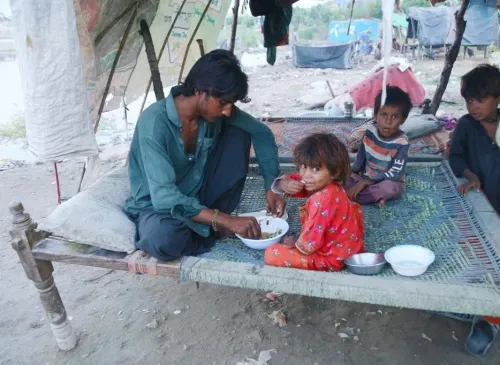
Nearly four in every ten Pakistani children suffer from chronic malnutrition, a rate that has remained stubbornly elevated since the early 2000s. Stunting, the most visible marker, is not merely a measure of physical height — it signals prolonged nutritional deprivation during the most critical window of human development: the first 1,000 days from conception to a child's second birthday.
This window is foundational for brain development, immune function, learning capacity, and future economic productivity. Deprivation during this phase can impose deficits that extend well into adulthood, reducing an individual's lifetime earning potential and, in aggregate, suppressing national output. According to the report, UNICEF estimated that 38 per cent of Pakistani children lived in severe food poverty in 2024, consuming food from no more than two of the recommended food groups.
Beyond Food Availability
The crisis is not reducible to food scarcity alone. Unsafe drinking water, inadequate sanitation, and repeated infections prevent children from absorbing nutrients even when food is accessible. Maternal malnutrition, anaemia, poor antenatal care, and inadequate infant-feeding practices compound the risk at the earliest stage of life.
Rising food prices, climate-related crop failures, declining household incomes, and limited nutritional awareness have further deepened the problem. For low-income families, nutritious food directly competes with other essential household expenditures, while poor water and sanitation infrastructure exposes children to recurrent illness that accelerates nutritional deterioration.
Rural Gaps and Service Delivery Failures
The crisis is sharpest in rural areas, where access to basic health services is frequently disrupted. Mothers reportedly travel long distances to health facilities, only to encounter vacant posts, inconsistent supplies of iron and folic acid supplements, and nutrition programmes that are not reliably operational.
Community health workers can identify undernourished children but, according to the report, often lack adequate therapeutic foods, supplements, and referral pathways to provide timely intervention. This gap between identification and treatment is a critical structural failure in Pakistan's public health delivery system.
The Economic Stakes
Pakistan's economic policy debate has historically focused on inflation, public debt, taxation, export competitiveness, and the energy crisis. The report argues that this framing overlooks a slower-moving but potentially more consequential variable: the systematic erosion of human capital through childhood undernutrition.
A workforce shaped by widespread stunting faces diminished cognitive capacity and productivity — constraints that no fiscal adjustment or trade policy can easily offset. This comes amid Pakistan's ongoing engagement with the International Monetary Fund (IMF) and repeated attempts to stabilise its macro-economy, raising questions about whether nutrition investment features adequately in its structural reform agenda.
Without sustained, targeted intervention — particularly in the first thousand days of a child's life — Pakistan risks locking in a cycle where economic underperformance and nutritional deprivation reinforce each other across generations.
Point of View
Debt restructuring, and energy tariffs — consistently sidelines the one variable that compounds every other: a stunting rate that has barely moved in twenty years. Human capital is not a soft development metric; it is the ceiling on long-term productivity growth, and Pakistan's ceiling has been suppressed for a generation. The report's framing is correct but incomplete — the harder question is why nutrition investment has failed to enter the core of structural reform programmes backed by multilateral lenders who are otherwise granular about fiscal targets. Until stunting reduction carries the same conditionality weight as primary deficits, the cycle will persist.
NationPress
17 Aug 2026
Frequently Asked Questions
What is Pakistan's child stunting rate and why does it matter?
According to the National Nutrition Survey 2018, 40.2 per cent of Pakistani children under five are stunted — a rate that has remained high for over two decades. Stunting reflects prolonged nutritional deprivation during the first 1,000 days of life, impairing brain development, immune function, and future productivity, with economic consequences that extend into adulthood.
How many Pakistani children are in severe food poverty?
UNICEF estimated that 38 per cent of Pakistani children lived in severe food poverty in 2024, meaning they consumed food from no more than two of the recommended food groups. This goes beyond simple hunger and reflects a structural deficit in dietary diversity.
Why is malnutrition in Pakistan not just a food supply problem?
The crisis is driven by multiple factors beyond food availability, including unsafe drinking water, poor sanitation, repeated infections, maternal anaemia, inadequate antenatal care, and poor infant-feeding practices. Rising food prices and climate-related crop failures have further worsened the situation for low-income households.
How does childhood malnutrition affect Pakistan's economy?
Widespread stunting reduces cognitive capacity and workforce productivity, imposing long-term constraints on economic output that fiscal or trade policy alone cannot offset. The report argues that Pakistan's focus on inflation, debt, and energy has overshadowed this deeper structural threat to human capital and growth.
What are the gaps in Pakistan's health system response to malnutrition?
Rural health facilities frequently face vacant posts, inconsistent supplies of iron and folic acid supplements, and unreliable nutrition programmes. Community health workers can identify undernourished children but often lack therapeutic foods and referral mechanisms to provide timely treatment, according to the report.