Pakistan's tax, export and energy reforms stay weak amid poor implementation: Report
Synopsis
A Business Recorder report lays bare a damning pattern: Pakistan has repeatedly introduced trade, tax, and energy reforms — and repeatedly failed to sustain them. With circular debt mounting, exports stagnating, and key sectors outside the formal tax net, the report warns the country risks an indefinite cycle of economic crises unless institutional barriers are dismantled.
Key Takeaways
Pakistan's taxation , exports , and energy sectors remain the weakest economic areas due to poor implementation and policy inconsistency, according to a Business Recorder report.
Despite reforms like the Pakistan Single Window (PSW) and WeBOC systems, exports have shown only temporary gains with no sustained growth.
Key sectors including retail , real estate , services , and agriculture remain outside the formal tax network.
Repeated delays in fuel price adjustments have fuelled circular debt and recurring fiscal imbalances in the energy sector.
The report warns that without addressing institutional barriers, Pakistan may face continued economic crises and dependence on external financing.
Taxation, exports, and energy reforms remain Pakistan's most persistently troubled economic areas, driven by poor implementation, policy inconsistency, and entrenched institutional constraints, according to a report published in Business Recorder. The findings underscore a pattern of reform attempts that have repeatedly failed to translate into sustained economic progress, leaving the country dependent on external financing.
Export Sector: Temporary Gains, No Sustained Growth
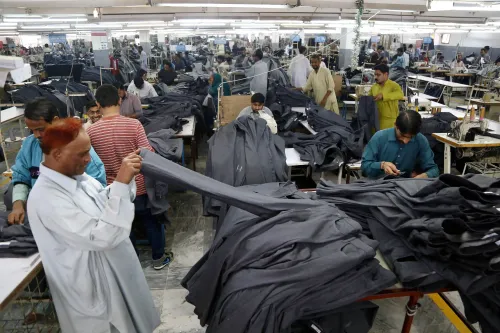
Pakistan's export sector is cited in the report as a clear reflection of its broader reform challenge. Over the years, authorities introduced multiple trade policy frameworks, exporter incentives, and institutional reforms — including the Pakistan Single Window (PSW) and WeBOC systems — aimed at streamlining trade procedures.
Despite these measures, exports have delivered only temporary gains and failed to achieve sustained growth. Meanwhile, competing economies have continued diversifying their export baskets and moving up the global value chain, widening the competitive gap with Pakistan.
Taxation: A Narrow Base, Persistent Gaps
The report also highlights deep weaknesses in Pakistan's taxation system. Tax authorities have reportedly failed to effectively broaden the tax base or bring key sectors — including retail, real estate, services, and agriculture — fully into the formal tax network.
This structural gap has constrained domestic revenue mobilisation, forcing the government to repeatedly rely on external financing arrangements. Critics argue the system favours administrative discretion and exemptions over rules-based governance, undermining long-term fiscal stability.
Energy Sector: Circular Debt and Fiscal Strain
Pakistan's energy sector is identified as another major concern. The report points to continued reliance on subsidies and repeated delays in fuel price adjustments, attributed largely to political sensitivities surrounding energy costs.
These delays have contributed to the build-up of circular debt and recurring fiscal imbalances, compounding the country's broader economic vulnerabilities. The energy sector's structural distortions remain among the most difficult to address, given the political economy surrounding subsidies.
Institutional Barriers and the Road Ahead
The report warns that Pakistan's reform failures are rooted in a system that consistently prioritises short-term political considerations over long-term policy continuity. Ordinary citizens, it notes, bear the burden of economic adjustment through higher taxes and reduced subsidies, while deeper structural distortions often go unaddressed.
Unless Pakistan addresses these institutional barriers and builds broader support for consistent reforms, the country risks continuing a cycle of recurring economic crises, weak growth, and sustained external financing pressures, the report cautioned. The path forward, analysts suggest, requires not just new policy frameworks but a fundamental shift in how reforms are implemented and sustained across political cycles.
Point of View
Windows, and incentive schemes in abundance — but a political economy that consistently rewards short-term accommodation over structural change. The circular debt crisis in energy and the narrow tax base are not technical failures; they are political choices. Until the cost of non-reform exceeds the cost of reform for those in power, the cycle is likely to repeat regardless of IMF programme conditionalities or external pressure.
NationPress
19 Sept 2026
Frequently Asked Questions
Why have Pakistan's economic reforms repeatedly failed?
According to the Business Recorder report, Pakistan's reform failures stem from poor implementation, policy inconsistency, and entrenched institutional constraints. The system reportedly favours administrative discretion and short-term political considerations over rules-based governance and long-term policy continuity.
What is circular debt and why is it a problem for Pakistan?
Circular debt refers to the accumulation of unpaid dues across Pakistan's energy supply chain, caused in part by delayed fuel price adjustments and continued reliance on subsidies. It has contributed to recurring fiscal imbalances and remains one of the country's most persistent economic vulnerabilities.
Which sectors in Pakistan remain outside the formal tax network?
The report identifies retail, real estate, services, and agriculture as sectors that have not been fully brought into Pakistan's formal tax network. This has constrained domestic revenue mobilisation and increased dependence on external financing.
How has Pakistan's export sector performed despite reform efforts?
Despite multiple trade policy frameworks and institutional reforms such as the Pakistan Single Window and WeBOC systems, Pakistan's exports have shown only temporary gains and failed to achieve sustained growth, while competing economies have continued diversifying and moving up the global value chain.
What does the report say about the impact on ordinary citizens?
The report warns that while ordinary citizens bear the burden of economic adjustment through higher taxes and reduced subsidies, deeper structural distortions in the economy often remain unaddressed, resulting in an inequitable distribution of reform costs.