Pannun's 'Khalistani Army' push in Canada sparks security alarm
Synopsis
Pannun's call to build a paramilitary 'Khalistan Army' — backed by rifle-training videos filmed in Canada — is drawing warnings that the rhetoric is not just a geopolitical provocation but a direct threat to Sikh youth in the diaspora, who are already being recruited into organised crime networks across the Greater Toronto Area and British Columbia.
Key Takeaways
Gurpatwant Singh Pannun has announced plans to form a Khalistan Army and a Sikh Homeland Security force, with videos showing armed training on Canadian soil .
Pannun also called on diaspora Sikhs to join a Khalistan 'Referendum' event in Indianapolis, Indiana .
A Khalsa Vox report warns the rhetoric is radicalising vulnerable Sikh youth, shortening the path from online messaging to real weapons.
Canadian police have made repeated arrests of young men of Punjabi origin in Brampton , Mississauga , and Surrey for shootings, extortion, and firearms offences.
In one Surrey case, three Punjabi youths received sentences of 25 months to five years for a shooting and explosive incident.
Canadian intelligence has previously flagged Khalistani extremism as a national security concern.
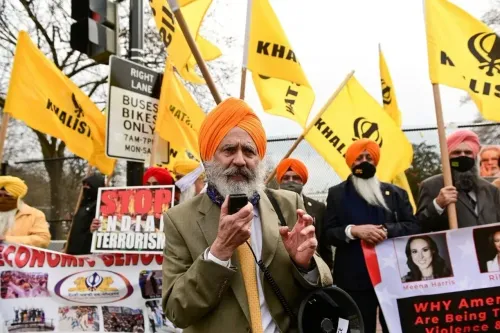
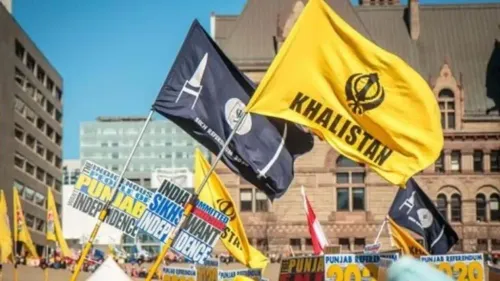
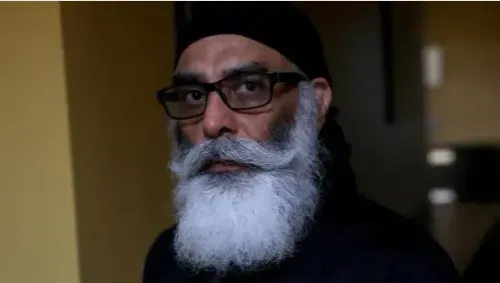
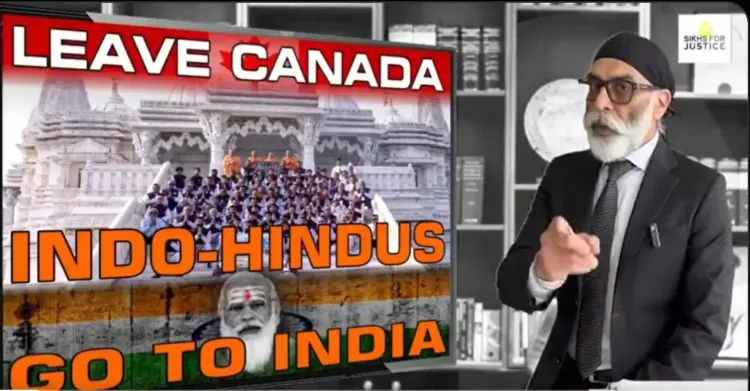
Separatist leader Gurpatwant Singh Pannun has triggered fresh alarm after announcing plans to form a so-called Khalistan Army and a Sikh Homeland Security force, with videos subsequently circulating online showing Sikh men training with semi-automatic rifles on Canadian soil. A report by Khalsa Vox has warned that the move could have catastrophic consequences — not for India, but for the Sikh diaspora communities in Canada and the United States themselves.
What Pannun Has Called For
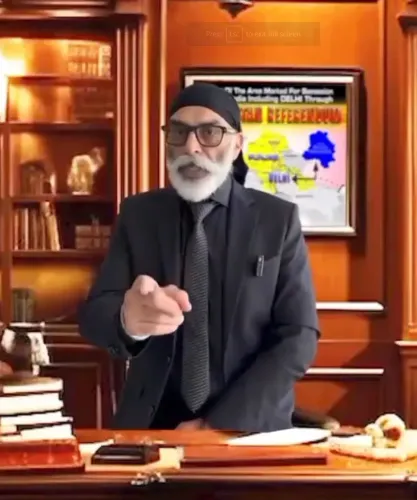
Pannun recently released a video urging diaspora Sikhs to participate in a so-called Khalistan 'Referendum' in Indianapolis, the capital of the US state of Indiana, while simultaneously floating the concept of a paramilitary 'Sikh Homeland Security' force. The Khalsa Vox report characterised these as 'calculated provocations aimed at restless young men already navigating the pressures of migration, identity, and easy money' — not abstract political arguments.
The report further noted that Pannun's messaging 'supplies a ready-made narrative that romanticises defiance and externalises every failure onto India,' warning that when a young man already exposed to street culture hears that 'the real war is against the Indian state,' the leap from online rhetoric to real weapons becomes significantly shorter.
The Ground Reality in Canada
The Khalsa Vox analysis pointed to a troubling pattern already visible across the Greater Toronto Area and British Columbia, where Indo-Canadian organised crime networks — many drawing recruits from Punjabi and Sikh backgrounds — have become significant players in drug trafficking, extortion, and targeted shootings.
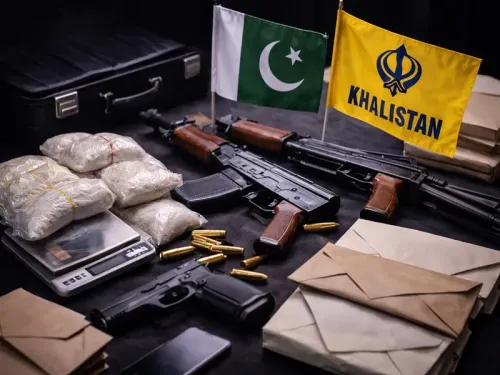
Canadian police operations have repeatedly resulted in arrests of young men of Punjabi origin in drive-by shootings, home invasions, and firearms seizures in Brampton, Mississauga, and Surrey. In one documented case, three Punjabi youths received sentences ranging from 25 months to five years following a shooting and explosive incident in Surrey. Extortion rings have also systematically targeted Sikh-owned businesses, filming attacks and circulating footage to intimidate the community. Youth as young as 16 and 17 have been charged with pointing loaded weapons at officers or participating in contract-style shootings, according to the report.
Intelligence Concerns and the Security Dimension
According to the Khalsa Vox report, Canadian intelligence has previously identified Khalistani extremists as a national security concern. The report described the pattern of inflammatory videos followed by displays of paramilitary force as 'not a coincidence,' urging both Canadian and US authorities to treat the overt display of such activity — and the networks that draw young people into transnational criminal enterprises — with greater seriousness.
What Community Leaders Are Being Asked to Do
The report placed equal responsibility on Sikh community institutions, stating that 'Sikh community leaders, gurdwaras, and families have an equal duty to reject the glamorisation of guns and the politics of permanent grievance.' It argued that the future of Sikh youth in the diaspora 'will be decided not by referendums staged for cameras, but by whether the next generation chooses education, enterprise, and peaceful citizenship over the dead-end of drugs, gangs, and imported radicalism.'
The report concluded that extremists of this kind must be called out for what they are — 'forces of division that ultimately endanger the very communities they claim to defend.' The developments come at a moment of already-strained diplomatic relations between India and Canada over Khalistani activity on Canadian soil, and are likely to add fresh pressure on Ottawa to act.
Point of View
Yet the videos of armed training on its soil remain in circulation. The real damage, as the Khalsa Vox report rightly flags, is not abstract — it is measurable in the court dockets of Brampton and Surrey, where young Sikh men are serving time for crimes that track the arc of radicalisation the report describes. Ottawa faces a credibility problem: it cannot simultaneously designate Khalistani extremism a threat and treat its most visible promoter as a protected political actor. India will watch the Canadian government's response — or non-response — very closely.
NationPress
2 Oct 2026
Frequently Asked Questions
What has Gurpatwant Singh Pannun announced regarding a Khalistan Army?
Pannun has announced plans to form a so-called Khalistan Army and a Sikh Homeland Security force, with videos subsequently circulating showing Sikh men training with semi-automatic rifles on Canadian soil. He has also called on diaspora Sikhs to participate in a Khalistan 'Referendum' event in Indianapolis, Indiana.
Why is Pannun's rhetoric considered dangerous for the Sikh community?
According to a Khalsa Vox report, Pannun's messaging supplies a narrative that romanticises defiance and externalises grievances onto India, making it easier for vulnerable young men to move from online rhetoric to real weapons. The report links this environment to a visible rise in organised crime, drug trafficking, and gang violence involving Sikh youth in Canada.
What does the crime data in Canada show?
Canadian police have repeatedly arrested young men of Punjabi origin in Brampton, Mississauga, and Surrey for drive-by shootings, home invasions, and firearms seizures. In one Surrey case, three Punjabi youths were sentenced to between 25 months and five years for a shooting and explosive incident. Youth as young as 16 and 17 have been charged with serious firearms offences.
Has Canadian intelligence flagged Khalistani extremism before?
Yes. According to the Khalsa Vox report, Canadian intelligence has previously identified Khalistani extremists as a national security concern. The report argues that the pattern of inflammatory videos followed by paramilitary displays is not coincidental and urges Canadian and US authorities to act more decisively.
What are Sikh community leaders being urged to do?
The Khalsa Vox report calls on Sikh community leaders, gurdwaras, and families to actively reject the glamorisation of guns and the politics of permanent grievance, arguing that the future of Sikh youth in the diaspora depends on choosing education and peaceful citizenship over drugs, gangs, and imported radicalism.