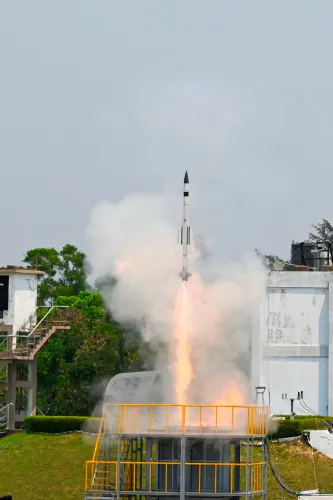
Pentagon picks Anduril, CoAspire, Zone 5 for low-cost FAMM cruise missiles

Synopsis
The Pentagon is betting on affordability and mass over exquisite precision — signing up Anduril and two lesser-known firms to fast-track cheap air-launched cruise missiles. With a seven-year procurement horizon on the table and Congress already granting a five-year authorisation, the FAMM programme is the clearest signal yet that the US military has absorbed the munitions-consumption lessons of Ukraine.
Key Takeaways
The Pentagon signed framework agreements with Anduril , CoAspire , and Zone 5 on 15 July under the Family of Affordable Mass Missiles (FAMM) programme.
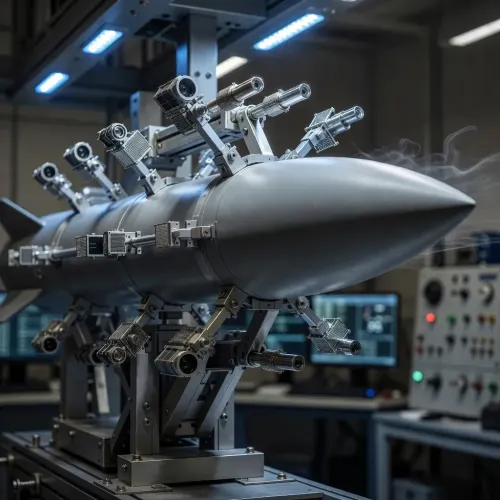
FAMM targets low-cost, air-launched cruise missiles for the US Air Force in both lugged and palletised variants, acquired through a single competition.
The Pentagon is seeking seven-year procurement agreements for firms that pass validation; Congress has already granted a five-year authorisation under the FY2026 NDAA .
Awards are subject to Congressional appropriations and required authorisations through the FY2027 defence measures.
FAMM complements the Pentagon's Low-Cost Containerised Missiles programme covering ground-launched variants.
The Pentagon has signed framework agreements with three new industry partners — Anduril, CoAspire, and Zone 5 — to accelerate the testing and qualification of low-cost, air-launched cruise missiles for the US Air Force, officials announced on 15 July. The deals fall under the Family of Affordable Mass Missiles (FAMM) programme, which aims to rapidly validate a new generation of inexpensive cruise missiles and broaden American weapons production capacity.
What the FAMM Programme Covers
The FAMM initiative is designed to deliver large quantities of low-cost air-launched cruise missiles at speed, offering both lugged and palletised variants to give the Air Force flexible options for logistics, handling, and battlefield deployment. Both variants will be acquired through a single combined competition, streamlining procurement and reducing administrative overhead.
The programme first appeared in the Air Force's fiscal year 2026 budget proposal. It complements the Pentagon's existing Low-Cost Containerised Missiles programme, which covers ground-launched affordable cruise missiles. Together, the two programmes are intended to field large volumes of low-cost precision weapons to deter and defeat adversaries.
The Acquisition Strategy Behind the Awards
The Pentagon described the agreements as a direct outcome of its Acquisition Transformation Strategy, which seeks to give industry stable demand signals, procure industry-driven systems, and make greater use of flexible contracts. A central feature of the plan is the proposed establishment of seven-year agreements with companies whose weapons successfully complete validation and competitive selection — a significantly longer horizon than typical defence contracts.
Michael P. Duffey, Under Secretary of Defense for Acquisition and Sustainment, said the announcement demonstrated the strategy in action. 'The Arsenal of Freedom of the 21st Century requires doing business differently,' Duffey said. 'Today's announcement showcases the Acquisition Transformation Strategy in action, expanding the defence industrial base, fielding capabilities faster, and attracting private investment to fund innovation and increase manufacturing output.'
Congressional Authorisation and Next Steps
The awards remain subject to Congressional appropriations and the enactment of all required authorisations. Congress granted a five-year authorisation for FAMM under the Fiscal Year 2026 National Defense Authorisation Act. The Department of Defense is now seeking approval for a seven-year procurement programme through the fiscal year 2027 defence authorisation and appropriations measures.
The extended procurement window is intended to provide stability for new market entrants, allowing manufacturers to invest in production capacity while giving the Air Force a more predictable and sustainable weapons supply. Notably, this approach marks a deliberate effort to attract non-traditional defence firms — such as Anduril, a venture-backed defence technology company — into the US weapons industrial base.
Why This Matters for US Defence Strategy
The FAMM programme reflects a broader shift in Pentagon thinking toward mass and affordability over exquisite, low-volume precision systems. Lessons drawn from the conflict in Ukraine, where both sides have consumed munitions at rates that outpaced Western stockpiles, have accelerated this pivot. By locking in longer procurement horizons and welcoming new entrants, the Department of Defense is betting that market competition can drive down unit costs while scaling up production. Whether Congress approves the seven-year extension will be a key test of political support for this strategy.
Point of View
Mass-producible munitions by offering the one thing that has historically kept non-traditional firms out — long-term demand certainty. Anduril's inclusion is the headline, but CoAspire and Zone 5 are the real test of whether new entrants can survive the qualification gauntlet. The seven-year procurement push through Congress is the harder fight; without it, manufacturers cannot justify the capital expenditure that makes mass production viable. If Congress balks, the 'Arsenal of Freedom' framing risks becoming another aspirational slogan without the industrial backbone to match.
NationPress
14 Oct 2026
Frequently Asked Questions
What is the Pentagon's FAMM programme?
The Family of Affordable Mass Missiles (FAMM) is a US Air Force programme to rapidly validate and procure large quantities of low-cost, air-launched cruise missiles. It first appeared in the Air Force's fiscal year 2026 budget and offers both lugged and palletised variants acquired through a single combined competition.
Which companies were selected under the FAMM framework agreements?
The Pentagon signed framework agreements with three firms: Anduril, CoAspire, and Zone 5. These deals cover testing and qualification of low-cost cruise missiles under the FAMM programme.
Why is the Pentagon seeking a seven-year procurement period for FAMM?
The seven-year horizon is designed to give new market entrants the demand stability needed to invest in production capacity. Congress has already granted a five-year authorisation under the FY2026 National Defense Authorisation Act; the Department of Defense is now seeking a seven-year extension through FY2027 measures.
How does FAMM relate to other Pentagon missile programmes?
FAMM complements the Pentagon's Low-Cost Containerised Missiles programme, which covers ground-launched affordable cruise missiles. Together, the two programmes aim to field large volumes of low-cost precision weapons to deter and defeat adversaries.
What is the Pentagon's Acquisition Transformation Strategy?
It is a procurement reform approach that gives industry stable long-term demand signals, procures industry-driven systems, and uses flexible contracts to attract private investment and accelerate fielding of new capabilities. The FAMM agreements are cited as a direct outcome of this strategy.