Philippines earthquake: 61 dead, 1,403 injured after 7.8 magnitude quake hits Mindanao
Synopsis
A magnitude 7.8 earthquake off Mindanao's southern coast has killed at least 61 people, displaced over 45,000, and damaged more than 8,600 schools — striking just as the Philippines reopened classrooms after summer break. With 40 still missing and entire road networks severed, the full scale of destruction is still emerging.
Key Takeaways
A magnitude 7.8 earthquake struck off the southern coast of Mindanao, Philippines on 8 June at 7:37 am local time .
At least 61 people have been killed, 40 are missing , and 1,403 have been injured, per the NDRRMC .
Over 346,000 people across 75,300 households have been affected; more than 45,000 residents are displaced.
The quake triggered 45 related incidents , mainly landslides, and disrupted power in 48 cities and municipalities .
8,642 schools across 43 divisions in six regions were affected, with a two-storey school building collapsing in General Santos .
The epicentre was 32 km southwest of Maasim town, Sarangani province , at a depth of 33 km .
A magnitude 7.8 earthquake that struck off the southern coast of Mindanao, the Philippines, on 8 June has killed at least 61 people, left 40 missing, and injured 1,403 others, according to the National Disaster Risk Reduction and Management Council (NDRRMC). The figures, updated as of Sunday, 14 June, make this one of the deadliest seismic events to hit the Philippines in recent years.
Scale of Destruction
The NDRRMC confirmed that the quake has affected more than 75,300 households, or over 346,000 people, across the region. More than 45,000 displaced residents have been forced to leave their homes, with over 12,600 houses sustaining varying degrees of damage. The earthquake also triggered 45 related incidents, predominantly landslides, compounding the humanitarian toll.
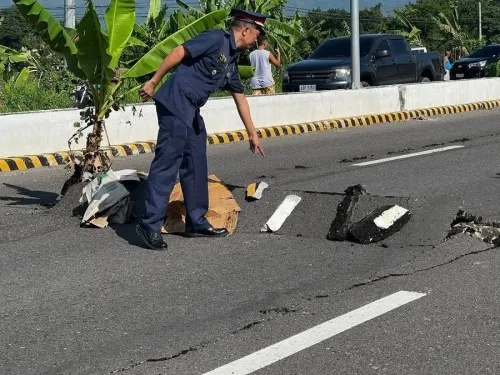
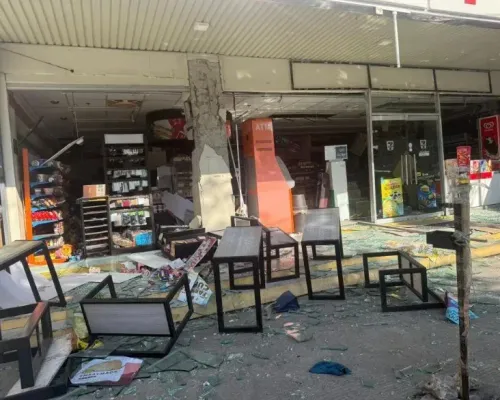
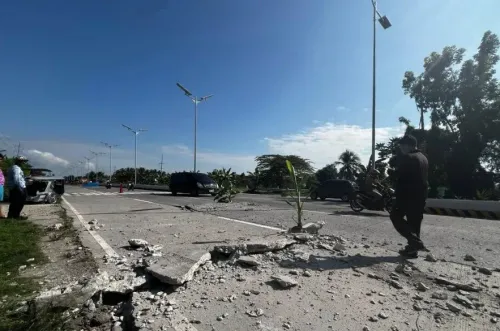
Infrastructure damage has been severe. The quake disrupted 45 road sections, eight bridge sections, one airport, and two seaports. Power services were knocked out across 48 cities and municipalities, while the agriculture, livestock, and fishery sectors also sustained significant losses.
Epicentre and Technical Details
The Philippine Institute of Volcanology and Seismology (PHIVOLCS) said the tectonic earthquake struck at 7:37 am local time at a depth of 33 km. Its epicentre was located 32 km southwest of the coast of Maasim town in Sarangani province on Mindanao Island — a seismically active zone situated along the Pacific Ring of Fire.
Ground-Level Impact: Schools, Buildings, and Casualties
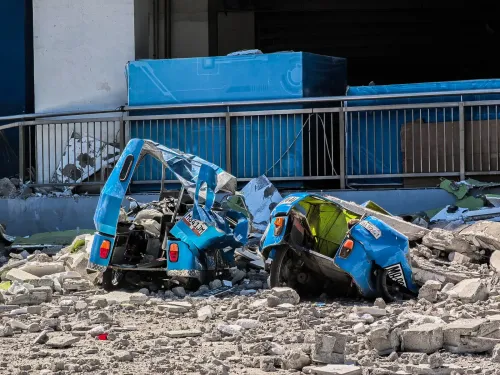
The deaths were caused by falling debris, building collapses, and landslides, according to authorities. General Santos, a port city in South Cotabato with a population of over 700,000, reported at least 10 fatalities, with 12 people still unaccounted for, according to Junie Castillo, spokesperson for the Philippines' Office of Civil Defence.
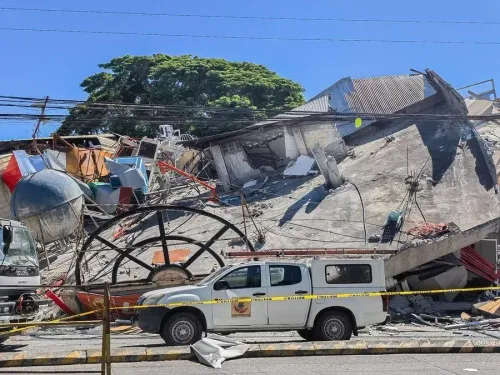
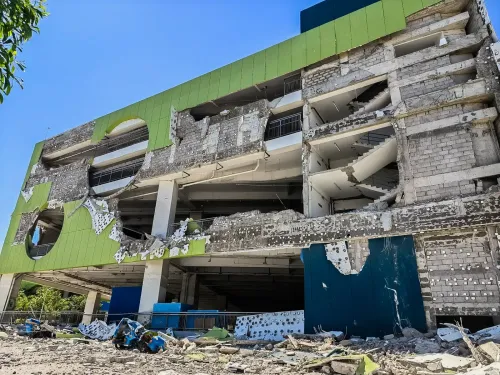
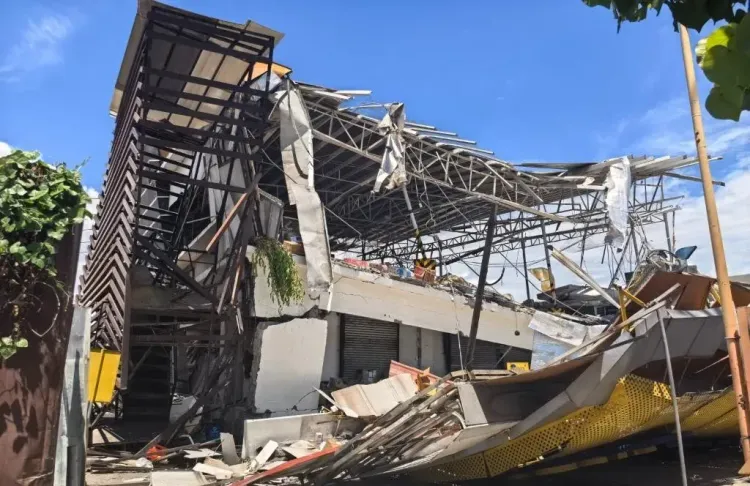
A two-storey school building in General Santos collapsed with students trapped inside. Authorities said they were verifying details of the incident. Videos circulating online showed university and restaurant buildings reduced to rubble in the worst-hit areas. Commercial facilities also sustained structural damage, with signage toppling and window panes shattering across affected zones.
The timing of the quake was particularly alarming: it struck shortly after schools across the Philippines had reopened following the summer break. Surveillance footage from multiple campuses captured violent shaking, with teachers and students either evacuating urgently or sheltering under desks. The number of schools affected has risen to 8,642 across 43 divisions in six regions, according to figures from the Department of Education cited in local media reports.
Ongoing Response and What Comes Next
Rescue and relief operations are ongoing, with the NDRRMC coordinating response efforts across affected provinces. The search for the 40 missing persons continues, and authorities have warned that the death toll may rise as teams reach more remote, landslide-affected areas. With tens of thousands still displaced, the immediate priorities are shelter, water, and restoring power to the 48 affected municipalities.
Point of View
Yet school infrastructure in southern regions continues to lag on earthquake-resilience standards. The collapse of a two-storey school building during the first week of the academic year is not an anomaly; it is a recurring pattern. With over 8,600 schools affected and a disaster-response architecture still reliant on post-event coordination rather than pre-event structural hardening, the human cost of each major quake reflects a policy gap as much as a geological one. The NDRRMC's toll will likely climb as search teams penetrate landslide-blocked areas — the 40 missing figure is almost certainly an undercount at this stage.
NationPress
13 Sept 2026
Frequently Asked Questions
How powerful was the Philippines earthquake on 8 June?
The earthquake measured magnitude 7.8 and struck at a depth of 33 km , with its epicentre located 32 km southwest of Maasim town in Sarangani province, Mindanao. It is classified as a major earthquake and caused widespread structural damage across southern Philippines.
What is the current death toll from the Mindanao earthquake?
As of 14 June , at least 61 people have been confirmed dead, 40 remain missing , and 1,403 have been injured, according to the National Disaster Risk Reduction and Management Council. Authorities warn the toll may rise as rescue teams reach remote areas.
How many people have been displaced by the Philippines earthquake?
More than 45,000 residents have been displaced, with over 12,600 houses damaged. The quake has affected more than 346,000 people across 75,300 households in the region.
Why were so many schools affected by the Mindanao earthquake?
The earthquake struck shortly after schools across the Philippines reopened following the summer break, leaving students and teachers inside buildings at the time of the quake. A total of 8,642 schools across 43 divisions in six regions were affected, according to the Department of Education.
What infrastructure was damaged in the Philippines earthquake?
The earthquake disrupted 45 road sections , eight bridge sections , one airport , and two seaports . Power services were cut across 48 cities and municipalities , and the agriculture, livestock, and fishery sectors also sustained damage.