PM Modi lays wreath at Tashkent's Yangi Uzbekistan Park on State Visit
Synopsis
Modi's wreath-laying at Yangi Uzbekistan Park was more than ceremony — it opened his fourth visit to Uzbekistan, a country India sees as a gateway to Central Asia. With Viksit Bharat 2047 and Uzbekistan-2030 on the table, the Tashkent talks signal India's quiet but steady push to deepen its strategic footprint well beyond its immediate neighbourhood.
Key Takeaways
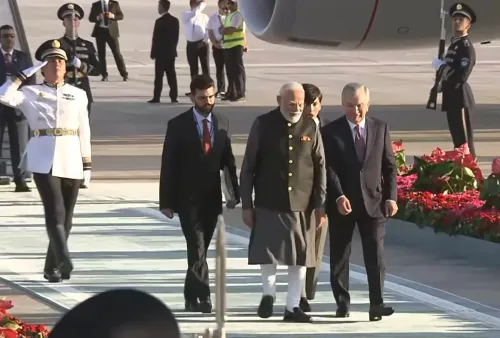
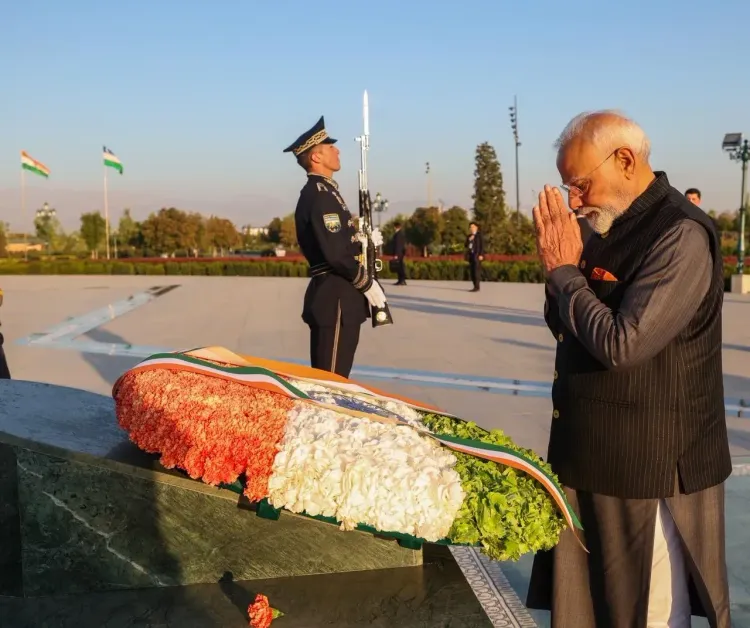
PM Narendra Modi laid a wreath at Yangi Uzbekistan Park in Tashkent on 29 August , accompanied by President Shavkat Mirziyoyev .
This is Modi's fourth visit to Uzbekistan, reflecting sustained high-level bilateral engagement.
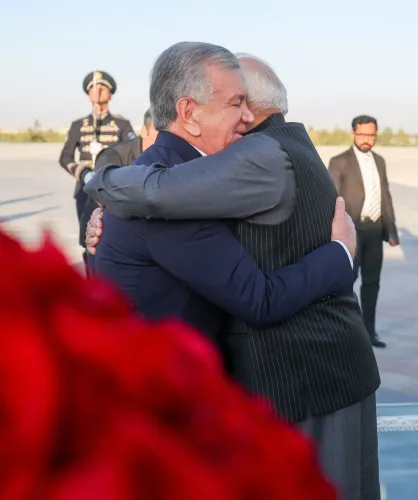
President Mirziyoyev personally received Modi at Tashkent airport — a notable diplomatic gesture.
Delegation-level talks will cover trade, investment, digital connectivity, defence, and energy .
Both nations will align their long-term visions: India's Viksit Bharat 2047 and Uzbekistan's Uzbekistan-2030 .
Modi will also visit the Shastri Memorial and Mahatma Gandhi Centre at Tashkent State University of Oriental Studies.
Prime Minister Narendra Modi on Saturday, 29 August laid a wreath at Yangi Uzbekistan Park in Tashkent, marking the ceremonial opening of his two-day State Visit to Uzbekistan with a gesture honouring the Central Asian nation's history, heritage, and national spirit. The Ministry of External Affairs (MEA) confirmed the event, describing it as an occasion that 'underscored the deep-rooted and longstanding friendship between India and Uzbekistan.'
A Symbolic Start to the State Visit
Modi was accompanied at the park by Uzbekistan President Shavkat Mirziyoyev, and both leaders examined artwork at the venue representing Uzbek culture and history. The joint appearance set the tone for what officials have framed as a substantive bilateral engagement aimed at deepening the India-Uzbekistan Strategic Partnership.
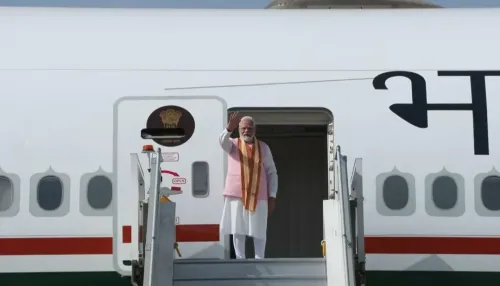
In a notable diplomatic gesture, President Mirziyoyev personally travelled to Tashkent airport to receive Modi on arrival — a protocol signal of the warmth both sides have cultivated. 'Landed in Tashkent to a warm welcome by President Shavkat Mirziyoyev. Grateful to him for the special gesture. This is my fourth visit to Uzbekistan, reflecting the depth and growing momentum of our bilateral relations,' Modi posted on X.
Agenda: Trade, Defence, Digital Connectivity
The centrepiece of the visit is a round of delegation-level talks between Modi and Mirziyoyev, with the agenda spanning trade and investment, digital connectivity, defence cooperation, and energy. Both nations are expected to align their long-term development blueprints — India's Viksit Bharat 2047 and Uzbekistan's Uzbekistan-2030 — as a shared framework for future collaboration.
'In recent years, India-Uzbekistan Strategic Partnership has seen significant advancement. I look forward to my discussions with President Mirziyoyev on further deepening our cooperation in trade and investment, digital connectivity, defence, energy, and on advancing our shared visions of Viksit Bharat and Yangi Uzbekistan,' Modi said in his departure statement before leaving India.
Cultural Ties in Focus
Beyond the bilateral talks, Modi is scheduled to visit the Shastri Memorial and the Mahatma Gandhi Centre at the Tashkent State University of Oriental Studies — sites that carry deep historical resonance for India. Modi described the planned visits as 'a tribute to the close cultural and people-to-people ties' binding both countries.
The Shastri Memorial holds particular significance: former Prime Minister Lal Bahadur Shastri died in Tashkent in January 1966, just a day after signing the historic Tashkent Declaration that ended the 1965 India-Pakistan war. This is Modi's fourth visit to Uzbekistan, underscoring a pattern of sustained high-level engagement with Central Asia that has intensified since India formalised its Connect Central Asia policy.
What Comes Next
The delegation-level talks and bilateral agreements, if any, are expected to be announced before Modi concludes his State Visit. Outcomes across defence and digital connectivity will be closely watched, given India's broader push to expand its strategic footprint in Central Asia amid shifting regional geopolitics.
Point of View
A region where China and Russia have historically dominated. The alignment of Viksit Bharat 2047 with Uzbekistan-2030 is diplomatically clever — it frames the partnership as co-development rather than patronage. Yet the real test is whether the trade and connectivity announcements translate into measurable outcomes; past India-Central Asia summits have produced warm communiqués with thin follow-through. The Shastri Memorial visit adds a layer of historical weight, but New Delhi's Central Asia strategy will ultimately be judged on corridors built, not wreaths laid.
NationPress
29 Aug 2026
Frequently Asked Questions
Why did PM Modi visit Tashkent on 29 August?
PM Modi travelled to Tashkent on 29 August for a two-day State Visit to Uzbekistan, his fourth to the country. The visit includes delegation-level talks with President Mirziyoyev covering trade, defence, digital connectivity, and energy cooperation.
What is the significance of Yangi Uzbekistan Park?
Yangi Uzbekistan Park in Tashkent is a cultural landmark representing Uzbek history and heritage. Modi's wreath-laying there, alongside President Mirziyoyev, was the ceremonial opening of his State Visit and a symbolic affirmation of India-Uzbekistan friendship.
What will Modi and Mirziyoyev discuss during the visit?
The two leaders are expected to hold delegation-level talks on trade and investment, digital connectivity, defence, and energy. They will also seek to align India's Viksit Bharat 2047 vision with Uzbekistan's Uzbekistan-2030 national development plan.
What is the Shastri Memorial in Tashkent?
The Shastri Memorial in Tashkent commemorates former Indian Prime Minister Lal Bahadur Shastri, who died in the city in January 1966 after signing the Tashkent Declaration ending the 1965 India-Pakistan war. Modi planned to visit the memorial as a tribute to India-Uzbekistan cultural ties.
How has India-Uzbekistan relations developed in recent years?
The India-Uzbekistan Strategic Partnership has seen significant advancement over the past 12 years, with growing cooperation in trade, defence, and people-to-people ties. Modi's four visits to Uzbekistan reflect the depth and momentum of the bilateral relationship.