Portugal PM Montenegro defends migration model amid EU Ceuta crisis
Synopsis
Around 72,000 migrants entered Spain's Ceuta enclave in a single 24-hour period — and the fallout is reshaping EU migration politics. As ministers agreed on tougher border enforcement, Portugal's PM Montenegro is making a calculated bet: champion humane integration at home while backing Schengen rigour abroad, positioning Lisbon as Europe's model migrant state.
Key Takeaways
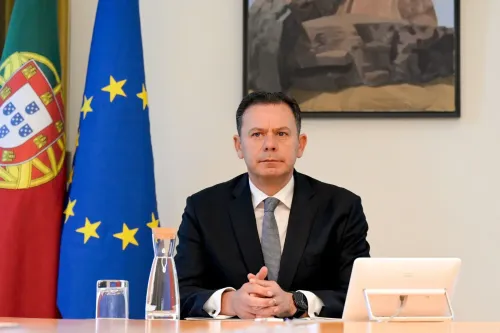
Portuguese Prime Minister Luis Montenegro defended Portugal's migration approach as a model of regulated reception and integration on 5 August .
Approximately 72,000 people entered Spain's Ceuta enclave irregularly within a single 24-hour period last week; around 70,000 have since returned to Morocco .
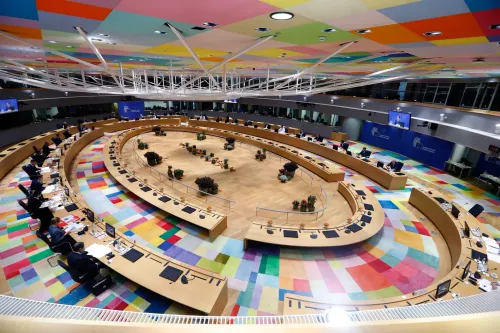
EU interior ministers held an emergency video meeting on Tuesday and agreed that border reinforcement and stronger return mechanisms are necessary.
Portugal's government had flagged the crisis 'with great concern' as early as 31 July , reaffirming commitment to Schengen border integrity.
Portuguese security forces — including the GNR gendarmerie and Maritime Police — are coordinating with Spanish counterparts.
Portuguese Prime Minister Luis Montenegro has defended his country's migration framework as a regulated and humane model, drawing a pointed contrast with what he called the 'lack of regulation of migration flows' observed in other European nations. His remarks came in the wake of an emergency video conference of European Union (EU) interior ministers convened to address a mass migrant influx into Ceuta, a Spanish enclave in North Africa.
Montenegro's Case for Regulated Integration
Montenegro argued that Portugal was actively working to ensure migrants could live with dignity, with access to employment, housing, healthcare, education, and mobility. He cautioned that countries operating pull-effect migration policies — drawing migrants without adequate reception infrastructure — were compounding the broader European crisis rather than resolving it.
His position reflects a deliberate effort to position Lisbon as a responsible actor within the EU migration debate, even as pressure mounts on member states to harden external borders.
The Ceuta Crisis: Scale and Immediate Response
The trigger for the emergency ministerial meeting was a dramatic surge at Ceuta: Spain's interior ministry reported that approximately 72,000 people had entered the enclave irregularly within a single 24-hour window last week. Of those, around 70,000 have since returned to Morocco, according to Spanish authorities.
EU interior ministers, meeting on Tuesday, agreed that border reinforcement and stronger migrant return mechanisms are necessary — a consensus that underscored the urgency of the situation across the bloc.
Portugal's Earlier Position and Diplomatic Coordination
As early as 31 July, the Portuguese government had publicly stated it was following the Ceuta crisis 'with great concern' and reaffirmed its commitment to rigorous border control as a cornerstone of the Schengen area's integrity. A statement from Montenegro's office also expressed condolences for lives lost during the crisis.
'The Portuguese government reaffirms that the integrity of the Schengen system depends on rigorous border controls and a determined fight against all forms of illegal immigration,' the official statement read.
Portuguese security forces — including the GNR gendarmerie and the Maritime Police — have been coordinating with their Spanish counterparts. Lisbon said it has remained in contact with both the Spanish and Moroccan governments throughout the crisis. Spain, for its part, reportedly gave assurances that it would reverse the migrant flow in close coordination with Moroccan authorities.
Broader EU Context and What Comes Next
The Ceuta surge is the most acute flashpoint in a broader pattern of increased migration pressure on the EU's southern and eastern frontiers. The bloc has long struggled to reconcile humanitarian obligations with member states' demands for tighter external border management.
Portugal's dual messaging — championing integration at home while backing Schengen enforcement externally — reflects the tension at the heart of EU migration policy. With ministers now aligned on the need for stronger return mechanisms, the next phase will likely involve negotiations over burden-sharing and expanded Frontex deployments. How swiftly those agreements translate into operational changes will determine whether the Ceuta episode remains an isolated spike or signals a sustained pressure point on Europe's southern border.
Point of View
000-in-24-hours figure at Ceuta is extraordinary and will intensify pressure on every member state to show results, not rhetoric. The real test for Lisbon is whether its 'dignified reception' model can survive a sustained influx — and whether EU partners will accept it as a template or dismiss it as a luxury of lower migration pressure. The agreement on stronger return mechanisms signals that the political centre of gravity in Brussels is shifting toward enforcement, not inclusion.
NationPress
19 Sept 2026
Frequently Asked Questions
What did Portuguese PM Luis Montenegro say about migration?
Montenegro defended Portugal's migration framework as a model of regulated reception and integration, arguing that countries with pull-effect policies attract migrants without providing adequate conditions. He made the remarks after an emergency EU ministers' meeting on the Ceuta migrant crisis.
What happened at Ceuta that triggered the EU emergency meeting?
Spain's interior ministry reported that approximately 72,000 people entered the Ceuta enclave irregularly within a single 24-hour window last week, with around 70,000 subsequently returning to Morocco. The scale of the surge prompted EU interior ministers to convene an emergency video conference.
What did EU ministers agree on at the emergency meeting?
EU interior ministers meeting on Tuesday agreed that border reinforcement and stronger migrant return mechanisms are necessary to manage the Ceuta crisis and broader migration pressures on the bloc's external frontiers.
What is Portugal's official position on the Schengen border?
Portugal reaffirmed on 31 July that the integrity of the Schengen system depends on rigorous border controls and a determined fight against illegal immigration. Portuguese security forces are coordinating with Spanish counterparts, and Lisbon has remained in contact with both Spain and Morocco throughout the crisis.
How is Portugal coordinating with Spain on the Ceuta crisis?
Portuguese security forces, including the GNR gendarmerie and the Maritime Police, have been coordinating directly with their Spanish counterparts. Portugal's government said it has been kept informed by Spain since the start of the crisis and is also in contact with Moroccan authorities.