Are Radical Islamists Responsible for the Violence in Bangladesh Following Hadi's Death?
Synopsis
Discover the alarming allegations made by former minister Mohammad Ali Arafat regarding the rise of radical Islamist violence in Bangladesh post-Hadi's death. He highlights the targeted attacks on media and cultural institutions, emphasizing the need for a deeper understanding of the political ramifications. Arafat calls for a closer look at the motives behind these violent actions.
Key Takeaways
Radical Islamist groups are accused of instigating violence against media and cultural institutions in Bangladesh.
The attacks were not random, but rather targeted efforts against symbols of Bangladeshi culture .
Understanding the motives behind these actions is crucial for assessing Bangladesh's political landscape.
The significance of Chhayanaut in preserving Bangladeshi identity during the 1971 Liberation War is highlighted.
Arafat advocates for free and inclusive elections to prevent disenfranchisement of voters.
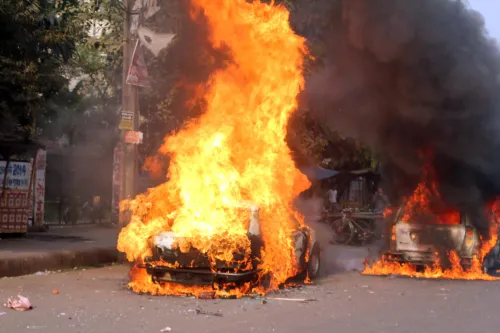
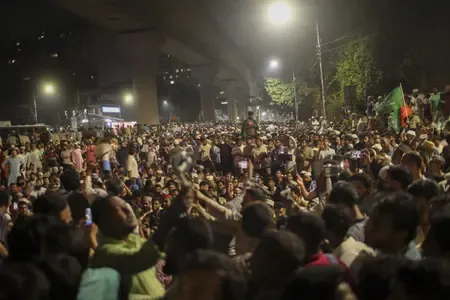
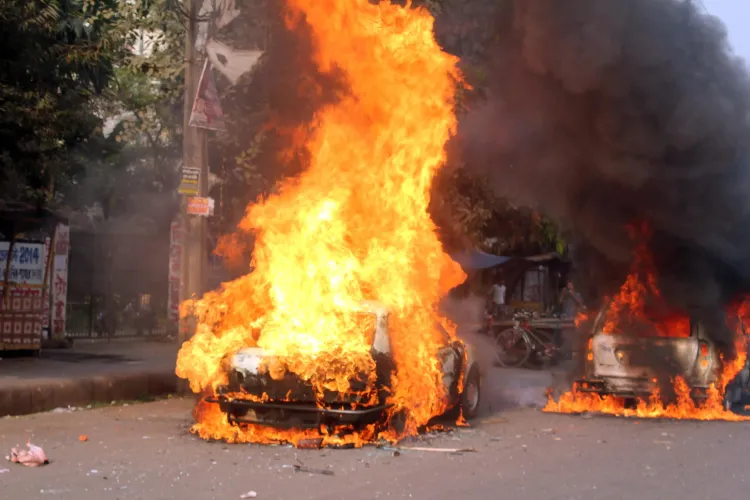
Dhaka, Dec 24 (NationPress) Former Bangladesh Minister and Awami League leader Mohammad Ali Arafat claimed on Wednesday that extremist Islamist factions are largely to blame for the assaults on the nation's prominent media outlets and cultural entities after the demise of radical leader Sharif Osman Hadi.
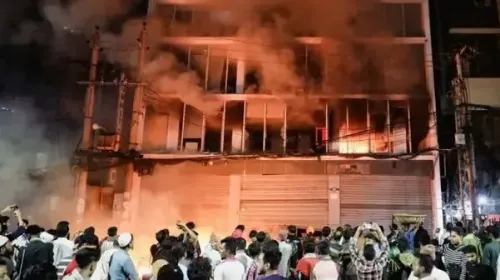
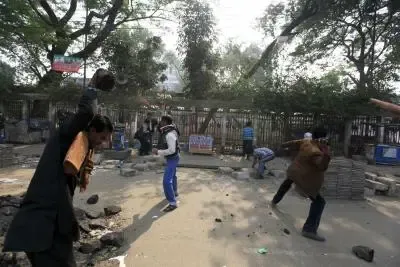
"The attacks targeted not just the offices of The Daily Star and Prothom Alo, but also the facilities of key cultural institutions like 'Chhayanaut' and 'Udichi Shilpigoshthi' in Dhaka, executed by violent followers of Osman Hadi. The assailants predominantly hailed from radical Islamist organizations," Arafat shared on X.
He emphasized the extremist roots of the violence, urging for an investigation into the motives behind these attacks.
"To grasp the political landscape of Bangladesh, it is essential to delve into why these specific cultural institutions were targeted and to scrutinize the motivations and social backgrounds of those involved in the assaults. During the vandalism of Chhayanaut, the perpetrators were chanting 'Naray-e-Takbeer, Allahu Akbar'. Does this not carry weight?" he questioned.
Arafat maintained that radical Islamists seem to be reveling in what they perceive as a triumph over the symbols of Bangladeshi culture, the principles of the 1971 Liberation War against Pakistan, and the nation's secular ideals.
"These same groups vigorously opposed the Awami League government during the July–August 2024 period. Their intense animosity towards the Awami League merits thorough examination—whether it solely arises from the party's lengthy governance or from deeper ideological and political grievances," he stated.
Describing the assault on 'Chhayanaut' and 'Udichi Shilpigoshthi' as neither arbitrary nor mere vandalism, Arafat argued that these actions signify a calculated political attack on the very foundations of the 1971 Liberation War and its secular values.
He contended that the attack on 'Chhayanaut' represented an assault on the nation's historical narrative, highlighting that the institution stood as a cultural bastion against Pakistan's efforts to erase Bangladeshi identity and played a crucial role in 1971 by inspiring fighters and garnering international support.
"Currently, under the guise of 'anti-India' rhetoric, extremist forces are targeting the pillars of our secular, Liberation War-based identity. This was not a spontaneous outburst but a calculated maneuver exploiting public sentiment," Arafat remarked.
Earlier on Tuesday, he underscored that the upcoming February 2026 elections could pave the way for a just, stable, and prosperous Bangladesh, provided they are genuinely inclusive and preferably overseen by impartial international observers.
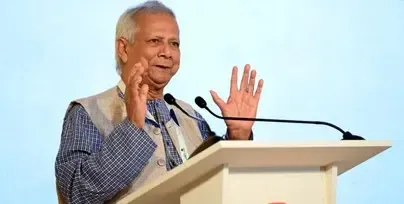
Arafat expressed alarm over the ongoing prohibition of widely supported political parties by the interim government led by Muhammad Yunus, alleging that this action disregards advice from the United Nations, along with the UK and other traditional allies of Bangladesh.
"Without free, fair, and inclusive elections, countless ordinary Bangladeshis will be left disenfranchised and may abstain from voting altogether. An election lacking the participation of all major political factions cannot be deemed democratic. The unelected interim government of Muhammad Yunus should not impose this restriction on the voters of Bangladesh," he emphasized.
Point of View
We must approach this situation with responsibility. The allegations made by Mohammad Ali Arafat highlight a concerning trend of political violence that reflects deeper ideological divides within Bangladesh. It is crucial to report these developments factually while also considering the broader implications for national unity and democratic integrity.
NationPress
20 Sept 2026
Frequently Asked Questions
What prompted Mohammad Ali Arafat's allegations?
Arafat claims that the violent attacks on media and cultural institutions in Bangladesh were largely orchestrated by radical Islamist groups following the death of extremist leader Sharif Osman Hadi.
What institutions were targeted during the attacks?
The attacks primarily targeted major media offices like The Daily Star and Prothom Alo, as well as cultural institutions such as Chhayanaut and Udichi Shilpigoshthi.
What motivations did Arafat highlight behind the attacks?
Arafat emphasized the need to analyze the motivations of the attackers and the significance of their actions as a political assault on Bangladesh's cultural identity and secular values.
What is Arafat's stance on the upcoming elections?
Arafat believes that the February 2026 elections should be participatory and guided by impartial international observers to ensure a just and stable Bangladesh.
How does Arafat view the current political situation in Bangladesh?
He expresses concern over the ban on political parties by the interim government, arguing that it undermines democracy and disenfranchises the electorate.