BRICS Summit 2026: Ramaphosa demands UNSC reform, Africa's permanent seat
Synopsis
At the 18th BRICS Summit in New Delhi, South African President Cyril Ramaphosa put the case for UNSC reform in stark terms: Africa holds 54 UN seats and nearly a fifth of humanity, yet has zero permanent representation on the Security Council. With BRICS now spanning multiple continents and the Global South pushing back against a fraying multilateral order, the reform demand has its widest platform yet.
Key Takeaways
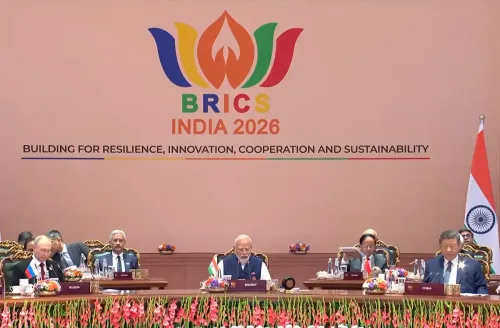
South African President Cyril Ramaphosa called for UNSC reform at the 18th BRICS Summit in New Delhi on 12 September .
Africa holds 54 UN member states and nearly one-fifth of humanity yet has no permanent Security Council seat, Ramaphosa stated.
The summit session was held under the theme 'Inclusive Global Governance and Strengthening Multilateralism.' BRICS leaders showed broad convergence on reforming the UN, the Security Council, and the international financial architecture to strengthen the Global South's voice.
Sudhakar Dalela , Secretary of Economic Relations at the MEA , confirmed the convergence at a media briefing on the summit's sidelines.
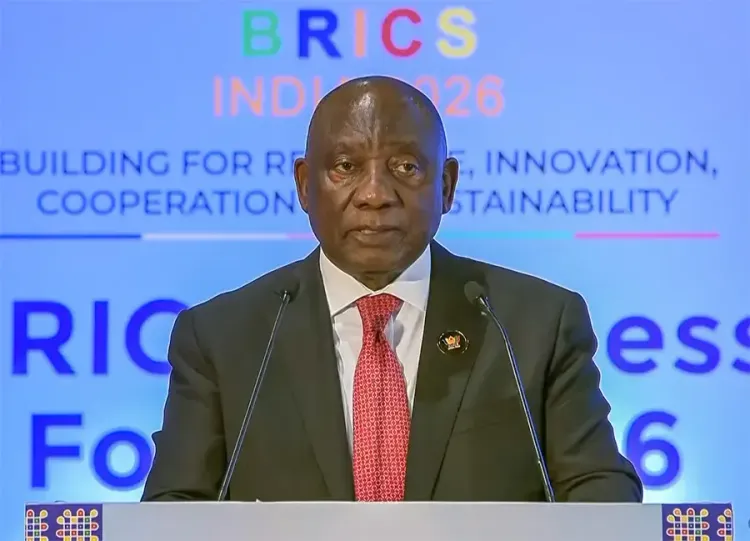
South African President Cyril Ramaphosa on 12 September made a forceful call for comprehensive reform of the United Nations Security Council (UNSC) at the 18th BRICS Summit in New Delhi, arguing that Africa's continued absence from permanent representation on the Council is 'neither just nor sustainable.' The session was held under the theme 'Inclusive Global Governance and Strengthening Multilateralism.'
Africa's Case for a Permanent Seat
Ramaphosa anchored his argument in numbers and moral weight. Africa accounts for 54 member states of the United Nations — nearly one-fifth of humanity — yet holds no permanent seat on the Security Council's five-member permanent bloc. 'This is neither just nor sustainable,' he said, reiterating South Africa's longstanding demand for a Council that is more representative, more accountable, more transparent, and more effective.
The remarks echo a decades-old grievance from the African Union, but carry renewed urgency as the global order faces mounting stress from conflicts in Europe, the Middle East, and parts of Africa itself. This is not the first time Ramaphosa has raised the issue at a multilateral forum, but the BRICS platform — now expanded to a broader coalition of the Global South — gives the call a wider political resonance than ever before.
Why BRICS Matters More in Today's Geopolitical Terrain
Ramaphosa argued that the relevance of the United Nations and the durability of the multilateral system are now directly threatened by what he described as overt violations of the UN Charter and the resort to war to settle differences between member states. Against that backdrop, he positioned BRICS as a critical counterweight.
'The greatness of BRICS lies not in the fact that we are the same, but precisely in the fact that we are different. We represent different continents, different civilisations, political traditions and stages of development. Yet we have discovered that our diversity need not divide us,' Ramaphosa stated. He added that BRICS represents a world in which no nation needs to choose between East and West, North and South — a pointed reference to Western pressure on Global South nations over geopolitical alignments.
Broad BRICS Convergence on Global Governance Reform
Sudhakar Dalela, Secretary of Economic Relations at the Ministry of External Affairs (MEA), confirmed at a media briefing on the sidelines of the summit that BRICS leaders — speaking from their respective national perspectives — showed broad convergence on the need for reform. 'The leaders reiterated support for comprehensive reform of the United Nations, including its Security Council, with greater representation of developing countries and for reform of the international financial architecture to give developing countries and the Global South a stronger voice,' Dalela said.
He noted that discussions reaffirmed the foundations of BRICS cooperation — anchored in mutual respect, equality, solidarity, openness, inclusiveness, and consensus — with differences addressed through dialogue rather than confrontation. Notably, this convergence spans members with sharply different relationships with Washington and Brussels, underscoring BRICS's claim to non-aligned pluralism.
What the Push for UNSC Reform Means
The demand for a restructured Security Council is not new, but its momentum is building. India, Brazil, Germany, and Japan — the so-called G4 — have long sought permanent seats; the African Union seeks at least two. At the 18th BRICS Summit, that ambition now has a collective platform that represents a significant share of the world's population and economic output. Whether the P5 — the United States, the United Kingdom, France, Russia, and China — will engage seriously with reform proposals remains the central question.
The summit's outcomes and any joint declaration on UNSC reform will be closely watched by UN member states ahead of the next General Assembly session.
Point of View
And BRICS is increasingly its loudest megaphone. The irony is that two of the five permanent members blocking reform — Russia and China — are themselves BRICS members, creating a structural tension the grouping has never resolved. Broad 'convergence' on reform language at a summit communiqué is a long way from the amendment process the UN Charter actually requires. Until the P5 veto calculus shifts, this risks being an annual ritual of compelling rhetoric without institutional change.
NationPress
13 Sept 2026
Frequently Asked Questions
What did Cyril Ramaphosa say at the BRICS Summit about the UNSC?
President Cyril Ramaphosa called for comprehensive reform of the United Nations Security Council at the 18th BRICS Summit in New Delhi on 12 September, stating that Africa's absence from permanent representation despite holding 54 UN member states is 'neither just nor sustainable.' He demanded a Council that is more representative, accountable, transparent, and effective.
What is the 18th BRICS Summit about?
The 18th BRICS Summit was held in New Delhi and focused on the theme 'Inclusive Global Governance and Strengthening Multilateralism.' Leaders discussed reforms to the United Nations, the Security Council, and the international financial architecture to give developing nations a stronger voice.
Why does Africa want a permanent seat on the UN Security Council?
Africa represents 54 of the 193 United Nations member states and nearly one-fifth of the world's population, yet holds no permanent seat on the Security Council's five-member permanent bloc. African leaders and the African Union argue this makes the Council unrepresentative of today's global realities.
What did India's Ministry of External Affairs say about the BRICS session?
Sudhakar Dalela, Secretary of Economic Relations at the Ministry of External Affairs, said at a media briefing that BRICS leaders showed broad convergence on making global governance institutions more representative, inclusive, and effective. He said leaders also called for reform of the international financial architecture to amplify the Global South's voice.
How does BRICS frame its role in global geopolitics?
President Ramaphosa articulated BRICS as a platform where nations need not choose between East and West, North and South — a world of many power centres united by a common commitment to development, dignity, and a more equitable international order. He argued BRICS's diversity is its strength, not a weakness.