CM Chandrababu Writes to Amit Shah on Cyclone Arnab Damage
Synopsis
Chief Minister Chandrababu Naidu has written to Union Home Minister Amit Shah detailing Cyclone Arnab's damage across six Andhra Pradesh districts — 180 houses, 220+ fallen trees, disrupted power — while highlighting that over 28,000 evacuations kept the death toll at zero. A central assessment team has been requested.
Key Takeaways
CM Chandrababu Naidu formally wrote to Union Home Minister Amit Shah on the impact of Cyclone Arnab in Andhra Pradesh.
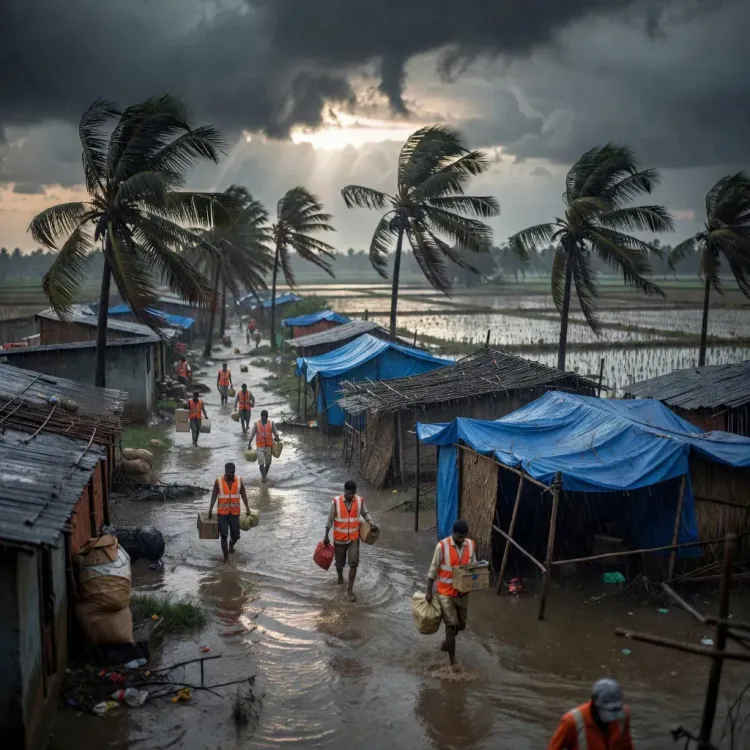
More than 28,000 people were evacuated to relief shelters ahead of the cyclone, and no deaths have been recorded so far.
Preliminary damage includes 180 houses damaged, 220+ trees fallen on roads, coastal road destruction, and electricity supply disruptions.
The worst-affected districts are Konaseema, Kakinada, East Godavari, West Godavari, Anakapalle, and Krishna .
The Chief Minister has requested New Delhi to dispatch a central assessment team at the earliest to estimate the full extent of losses.
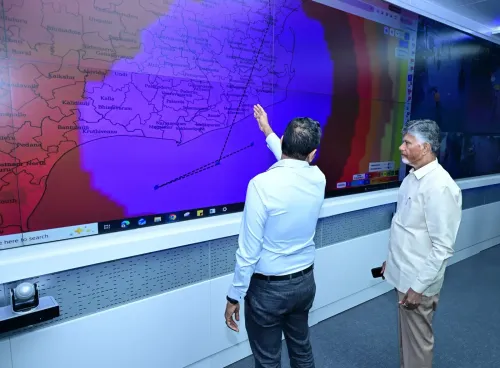
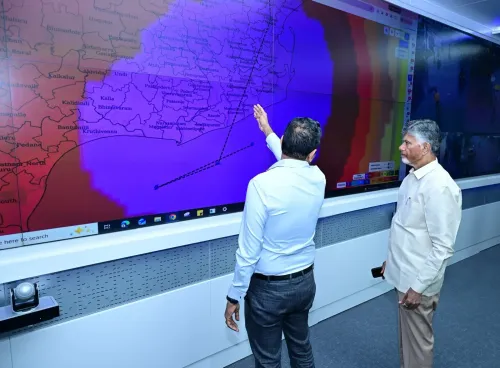
The State Emergency Operations Centre and district control rooms are operating continuously to manage the emergency.
Zero lives lost — but the damage is real, and Andhra Pradesh wants New Delhi's assessors on the ground fast. Chief Minister Nara Chandrababu Naidu has written to Union Home Minister Amit Shah, detailing the destruction left by Cyclone Arnab across the state's coastal belt and formally requesting the immediate dispatch of a central assessment team.
What Cyclone Arnab has broken across six districts
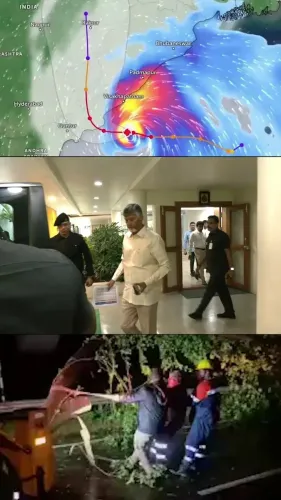
The letter catalogues early damage across Konaseema, Kakinada, East Godavari, West Godavari, Anakapalle, and Krishna districts — the same coastal arc that has borne the brunt of every major Bay of Bengal cyclone in recent memory. Preliminary estimates record 180 houses damaged, more than 220 trees downed across roads, widespread coastal road washouts, and disrupted power supply. Crops and electricity poles have also taken significant hits, with control rooms and the State Emergency Operations Centre running round-the-clock to manage the fallout.
28,000-plus evacuated — and why the zero-casualty figure matters
The single headline the Chief Minister's letter leads with: more than 28,000 people were moved to relief shelters ahead of landfall, and as of the time of writing, no loss of life has been recorded. That outcome is not accidental. Andhra Pradesh's coastal evacuation machinery — rebuilt after the catastrophic lessons of Cyclone Hudhud in 2014 — is designed precisely to move delta communities before a storm arrives, not after. The Naidu government's proactive steps are cited explicitly in the letter as the reason casualties have been avoided so far.
The federal playbook: letter, team, funds
Requesting a central team to quantify losses is a well-worn step in India's federal disaster-response architecture. Under the Disaster Management Act, 2005, states bear first responsibility but must demonstrate damage to unlock assistance from the National Disaster Response Fund — and that demonstration requires a Union-government assessment. Andhra Pradesh has walked this exact path before: after Hudhud, the then-Naidu government's formal requests led to both central team visits and substantial reconstruction support for the same Krishna-Godavari coastal districts. The letter to Shah follows that same protocol, positioning the state for faster central mobilisation.
What comes next: the central team's findings
The Home Ministry's response — how quickly it dispatches a team, and what quantum of additional assistance follows — will determine the pace of reconstruction for thousands of coastal households and farmers. With delta agriculture already stressed and coastal roads severed in multiple locations, the clock on relief is ticking. A possible formal declaration of a calamity and the size of any central grant remain the two numbers coastal Andhra is now watching.
The zero-casualty figure is a rare win in a region chronically in the cyclone belt's crosshairs — but the harder work of rebuilding homes, restoring power, and compensating farmers starts now.
Point of View
The cyclone renews the case for permanent coastal resilience investment in the Krishna-Godavari delta, one of India's most recurrently storm-exposed regions.
NationPress
28 Oct 2026
Frequently Asked Questions
What damage did Cyclone Arnab cause in Andhra Pradesh?
Cyclone Arnab damaged 180 houses and downed more than 220 trees across roads, disrupted power supply, and caused widespread coastal road destruction across six districts including Konaseema, Kakinada, and the Godavari districts.
Were there any deaths due to Cyclone Arnab in Andhra Pradesh?
As of the time CM Chandrababu Naidu's letter was written, no loss of life had been recorded, which the government attributed to pre-emptive evacuation of over 28,000 people.
Why did CM Chandrababu Naidu write to Amit Shah about Cyclone Arnab?
CM Naidu wrote to Union Home Minister Amit Shah to formally convey the extent of damage and request the immediate dispatch of a central assessment team to evaluate losses, a necessary step to unlock central disaster relief funds.
Which districts in Andhra Pradesh were most affected by Cyclone Arnab?
The most affected districts are Konaseema, Kakinada, East Godavari, West Godavari, Anakapalle, and Krishna , all located along the state's Bay of Bengal coastal belt.
How many people were evacuated because of Cyclone Arnab?
The Andhra Pradesh government evacuated more than 28,000 people to relief shelters in cyclone-affected areas as a precautionary measure before the storm made its impact felt.