Sheikhupura massacre 1947: Over 300 Sikhs killed in Bhuler village
Synopsis
Just two weeks after Pakistan's creation, over 300 Sikhs were slaughtered at Bhuler village in Sheikhupura — women jumped into wells to avoid capture, a hundred men faced thousands of attackers, and reinforcements never came. Decades later, this massacre remains one of Partition's most under-documented tragedies.
Key Takeaways
More than 300 Sikhs were killed at Bhuler village , Sheikhupura district , on 31 August 1947 — barely two weeks after Partition.
Thousands of armed men from neighbouring villages attacked the predominantly Sikh settlement, which had only a limited supply of firearms.
Sikh women and girls reportedly jumped into wells or asked family members to kill them to avoid abduction and assault.
A Sikh jatha arrived the following day and forced attackers to flee, but found only a handful of survivors.
Surviving families were resettled in Batala and nearby villages after a stay at a refugee camp in Amritsar .
The massacre is documented in Virsa Singh Bajwa 's book 'Shaheedi Saka Bhuler' but has received little mainstream historical attention.
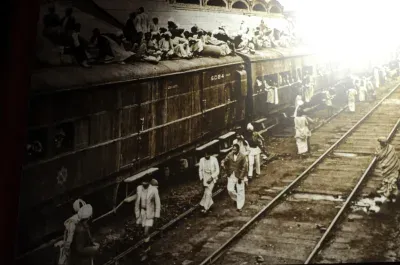
The massacre of more than 300 Sikhs at Chak No. 119, known as Bhuler village in Sheikhupura district, Punjab, on 31 August 1947 — barely two weeks after Pakistan's creation — stands as one of the most under-documented atrocities of the Partition era. A detailed account, drawing on survivor testimonies and historical records, has brought renewed attention to this largely forgotten tragedy.
The Village and Its People
Bhuler, situated near Sangla Hill, was a Sikh-majority settlement where residents owned substantial agricultural land. According to historian Kulwinder Singh Bajwa, a native of the village who now lives in Batala, many residents chose to remain even after the area became part of Pakistan on 14 August 1947, hoping the communal violence sweeping Punjab would eventually subside.
Encircled by Muslim-majority villages, Bhuler had already faced early looting attempts — all of which were thwarted. But as reports of widespread violence across Punjab reached the settlement, tensions mounted sharply.
The Attack
Thousands of armed men from neighbouring villages descended on Bhuler, reportedly beating drums as they approached. Sikh residents moved women, girls, and children into a single house for shelter, while the men took up defensive positions — armed with only a limited supply of firearms and ammunition.
'When the attackers came within range, the defenders opened fire and then carefully conserved their ammunition, hoping for reinforcements that never arrived,' according to accounts detailed in Virsa Singh Bajwa's book 'Shaheedi Saka Bhuler'. Roughly a hundred Sikh men eventually faced thousands of assailants. The fighting devolved into hand-to-hand combat as the defence collapsed.
The Fate of Women and Children
Inside the house where the women and children had been sheltered, many reportedly chose death over the fate they feared awaited them. 'Sikh women and young girls, fearing abduction and sexual assault, chose death. Several jumped into wells. When the wells could hold no more, some asked their fathers and brothers to kill them rather than allow them to be captured,' the account states.
The attackers subsequently took control of the village and began looting. The scale of the violence — and the deliberate targeting of civilians — places the Bhuler massacre among the gravest episodes of communal carnage during Partition.
Rescue and Resettlement
A Sikh jatha arrived in Bhuler the following day, forcing the attackers to flee amid war cries. Rescuers found only a handful of survivors. The remaining families were transported to a refugee camp in Amritsar and later resettled in Batala and neighbouring villages, on land abandoned by Muslims who had migrated to Pakistan.
A History Still Waiting to Be Told
Decades on, the Bhuler massacre has received scant public attention compared with other Partition tragedies. Survivor testimonies preserved by descendants and works such as 'Shaheedi Saka Bhuler' remain among the few records of what transpired. This comes amid a broader reckoning with Partition history — one that scholars argue is still incomplete on both sides of the border.
Point of View
Village-level atrocities like Bhuler are rarely taught, rarely memorialised, and rarely discussed in official histories. The testimonies preserved by survivors' descendants fill a gap that state archives on both sides have left conspicuously empty. As India and Pakistan each curate their Partition narratives for domestic audiences, episodes like Bhuler — where the victims were neither combatants nor statistics but named families — risk permanent erasure. The question is not just historical: it is about which tragedies a society chooses to remember, and why.
NationPress
18 Aug 2026
Frequently Asked Questions
What happened at Bhuler village in Sheikhupura in 1947?
On 31 August 1947, a heavily armed mob from neighbouring villages attacked Bhuler, a Sikh-majority settlement in Sheikhupura district, Punjab. More than 300 Sikhs were killed in the assault, which included hand-to-hand combat after the defenders' ammunition ran out.
Why did Sikh residents stay in Bhuler after Partition?
According to historian Kulwinder Singh Bajwa, many residents chose to remain even after the area became part of Pakistan on 14 August 1947, hoping that the communal violence sweeping Punjab would eventually subside. The village had also successfully repelled earlier looting attempts.
What is 'Shaheedi Saka Bhuler'?
'Shaheedi Saka Bhuler' is a book by Virsa Singh Bajwa that recounts the events of the Bhuler massacre through survivor testimonies and historical accounts. It is one of the few detailed records of the attack and its aftermath.
What happened to the survivors of the Bhuler massacre?
A Sikh jatha arrived the day after the attack and forced the attackers to flee. The surviving families were taken to a refugee camp in Amritsar and later resettled in Batala and neighbouring villages on land vacated by Muslims who had migrated to Pakistan.
Why has the Bhuler massacre received so little attention?
Despite its scale, the Bhuler massacre has been largely absent from mainstream historical and public discourse. Scholars argue that village-level Partition atrocities are frequently underdocumented, with official histories on both sides tending to focus on broader narratives rather than specific local incidents.