Russia backs India, Brazil for permanent UN Security Council seat, blocks Germany, Japan
Synopsis
Russia just fractured the G4 reform coalition — backing India and Brazil for permanent UN Security Council seats while branding Germany and Japan as revisionist powers. Lavrov's UNGA address puts India's bid at the centre of a sharply contested geopolitical debate, even as Moscow's own veto remains the ultimate barrier to any reform.
Key Takeaways
Russian Foreign Minister Sergei Lavrov endorsed India and Brazil for permanent UN Security Council seats at the 81st UNGA on 27 September 2026 .
Lavrov explicitly opposed seats for Germany and Japan , calling them countries 'on the path to militarism and revanchism.' The statement splits the G4 coalition — which includes all four countries — putting India and Brazil on one side and Germany and Japan on the other.
Mauritius and Portugal also backed India's candidature; the Marshall Islands backed Japan and G4 partners.
Any Security Council expansion requires a UN Charter amendment ratified by two-thirds of members, including all 5 permanent members — making Russia's own veto the final arbiter.
The UN Secretariat has not endorsed any individual candidacy, with spokesperson Stéphane Dujarric stating the decision rests with member states.
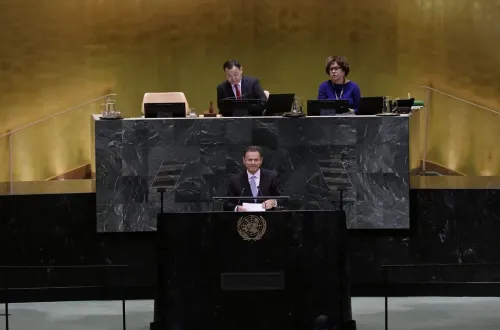
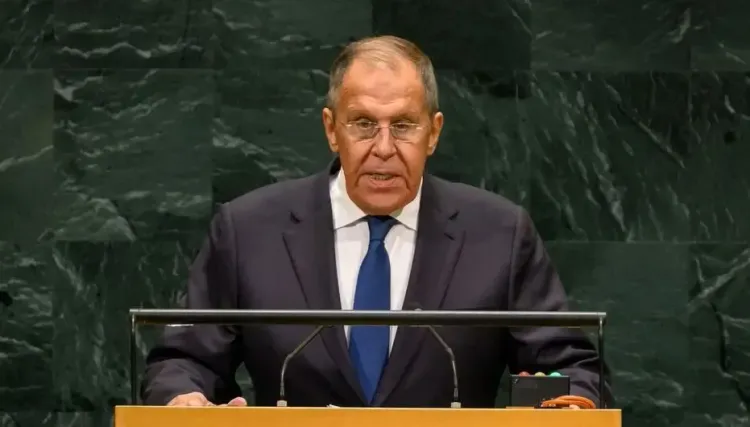
Russian Foreign Minister Sergei Lavrov on Saturday, 27 September 2026, formally endorsed India and Brazil for permanent seats on the UN Security Council, while explicitly opposing the bids of Germany and Japan — splitting the four-nation G4 reform coalition squarely down the middle. Lavrov made Moscow's position clear during his address to the 81st session of the UN General Assembly in New York.
What Lavrov Said
'UN Security Council reform cannot involve any additional seats being allocated to Western countries, especially to Germany and Japan, who are now on the path to militarism and revanchism,' Lavrov declared from the General Assembly podium. He followed with a direct endorsement: 'We are in favour of broadening the representation of Asia, Africa, and Latin America. We support Brazil's and India's candidatures for a permanent seat.'
The remarks represent the clearest public statement of Moscow's position on Council expansion in recent years, and they arrive at a moment when reform debates have gathered fresh momentum ahead of broader UN reform discussions.
The G4 Fault Line
The statement exposed a significant contradiction within the G4 — the grouping of India, Brazil, Germany, and Japan that has jointly campaigned for permanent membership for over two decades. The four countries met on the sidelines of the General Assembly this week, with their foreign ministers calling for expansion in both the permanent and non-permanent categories, and for stronger representation for Africa, the Asia-Pacific, and Latin America and the Caribbean.
Russia's selective endorsement effectively fractures the G4's unified front in the eyes of the other permanent members — backing two partners while labelling the other two as threats to global stability. This is a significant diplomatic signal that New Delhi will need to navigate carefully, given its historically non-aligned posture toward Moscow.
Broader Support for India at the General Assembly
Mauritius Foreign Minister Dhananjay Ramful reiterated support for India's candidature, stating: 'We support the positions of the G4 and of L69 on Council reform, and we reiterate our support for India's candidature for a permanent seat, commensurate with its constructive role in global affairs.'
Portuguese Prime Minister Luis Montenegro also backed permanent representation for Africa, Brazil, and India. The Marshall Islands, by contrast, backed Japan and its G4 partners. President Hilda Heine said: 'The Marshall Islands affirms its longstanding support for Japan and its G4 partners to achieve permanent membership on the UN Security Council.'
Africa's Demand for Representation
African nations continued to press their own reform demands at the high-level debate. Sierra Leone President Julius Maada Bio argued the Council still reflected the power structure of 1945, leaving Africa without a single permanent seat. Ghanaian President John Dramani Mahama linked Council reform directly to the broader legitimacy and credibility of the United Nations itself. Russia's endorsement of greater African representation aligned with these calls, even as Moscow's veto remains the single biggest structural barrier to any amendment.
What Reform Actually Requires
The UN Security Council currently has 15 members — five permanent (China, France, Russia, the United Kingdom, and the United States) with veto power, and ten elected for two-year terms. Expanding permanent membership requires a UN Charter amendment approved by two-thirds of the General Assembly and ratified by two-thirds of all UN member states, including all five permanent members. The UN Secretariat has not endorsed any individual candidacy. Spokesperson Stéphane Dujarric said on Friday that the decision rested entirely with member states, adding that the Council required broader representation 'so people around the world could feel that they were represented.'
India has served eight terms as an elected Council member and continues to cite its population, its growing global economic weight, its record in UN peacekeeping, and its role as a voice of the Global South in pressing its permanent-member case. Whether Russia's endorsement translates into concrete reform progress remains to be seen, given Moscow's own veto.
Point of View
But accepting it without qualification risks appearing aligned with Russia's framing of Germany and Japan as 'militarist.' The deeper irony is that Russia holds a permanent veto and can block the very reform it is now cheerleading — making Lavrov's statement more a pressure tool than a genuine commitment. India's eight-term elected-member track record is its strongest card; it should press that case on its own merits, not through great-power sponsorship.
NationPress
27 Sept 2026
Frequently Asked Questions
What did Russia say about India's UN Security Council bid?
Russian Foreign Minister Sergei Lavrov explicitly endorsed India and Brazil for permanent UN Security Council seats during his address to the 81st UN General Assembly on 27 September 2026. He stated Moscow supports 'Brazil's and India's candidatures for a permanent seat' while opposing Germany and Japan.
Why did Russia oppose Germany and Japan for permanent seats?
Lavrov argued that 'UN Security Council reform cannot involve any additional seats being allocated to Western countries, especially Germany and Japan, who are now on the path to militarism and revanchism.' The statement reflects Moscow's broader opposition to expanding Western influence in multilateral institutions.
What is the G4 and how does Russia's position affect it?
The G4 is a coalition of India, Brazil, Germany, and Japan that jointly campaigns for permanent UN Security Council membership. Russia's selective endorsement of India and Brazil while rejecting Germany and Japan creates a visible fault line within the group's unified reform push.
Which other countries backed India's Security Council candidature at UNGA?
Mauritius Foreign Minister Dhananjay Ramful and Portuguese Prime Minister Luis Montenegro both expressed support for India's permanent membership bid. The Marshall Islands backed Japan and G4 partners. African leaders from Sierra Leone and Ghana also pushed for broader Council reform, though without naming specific candidates.
How would UN Security Council expansion actually happen?
Expanding permanent membership requires a UN Charter amendment approved by two-thirds of the General Assembly and ratified by two-thirds of all UN member states, including all five permanent members — China, France, Russia, the UK, and the US. This means any single P5 member, including Russia itself, could veto the reform.