Russia: Ukraine must rule out NATO bid before security talks
Synopsis
Russia has drawn a hard line: before any security guarantees for Ukraine can even be discussed, Kyiv must formally acknowledge that NATO membership is off the table — and 'creative' quasi-membership formulas won't cut it either. This directly contradicts signals from Trump's envoy Jared Kushner, and comes just a day after Trump, Putin and Xi met in Shenzhen and pledged nuclear risk talks with no binding targets.
Key Takeaways
Deputy Foreign Minister Sergei Ryabkov said on 20 November 2026 that security guarantee talks can begin only after Ukraine renounces NATO membership .
Russia explicitly rejected 'quasi-membership' formulas or any 'creative solution' that approximates NATO membership for Kyiv .
Jared Kushner had claimed a day earlier that Russia was comfortable with Article 5 -based security guarantees for Ukraine — a claim Ryabkov's statement appears to contradict.
Putin invited the European troika to Moscow , but Russia said there are no agreements on the previously used Abu Dhabi trilateral format.
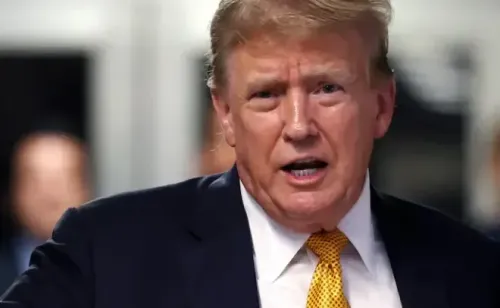
Trump, Putin and Xi met in Shenzhen on Thursday, pledging nuclear risk reduction talks and UN reform but announcing no binding targets or timelines.
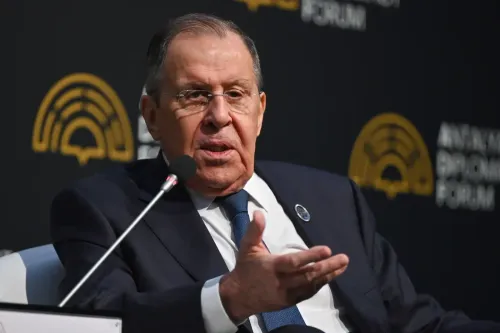
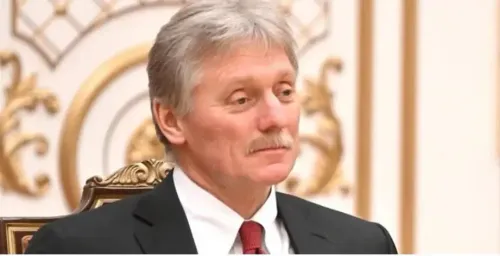
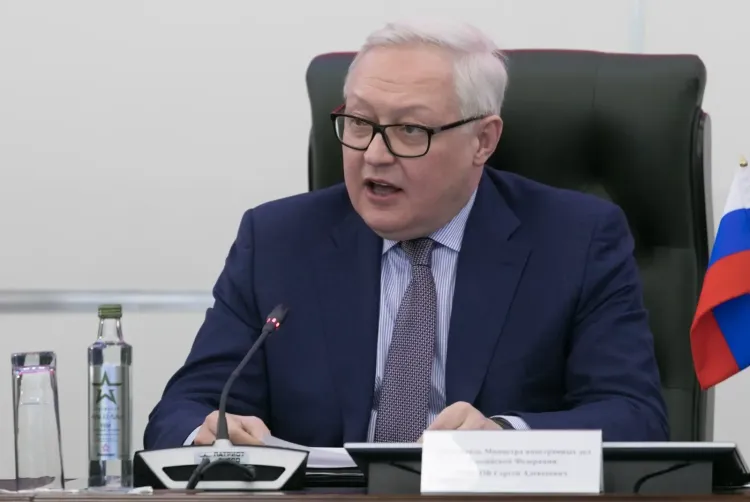
Russia's Deputy Foreign Minister Sergei Ryabkov said on Friday, 20 November 2026, that security guarantees for Ukraine could only be discussed after Kyiv formally acknowledges that joining NATO is off the table — a demand Moscow describes as non-negotiable. The statement, made in St. Petersburg, draws a sharp new boundary ahead of any potential multilateral peace negotiations.
Russia's Core Demand
Ryabkov was unambiguous: Ukraine's NATO membership is 'a completely unacceptable option' for Moscow. He went further, explicitly rejecting any intermediate arrangement. 'Even the idea of a quasi-membership formula for Kyiv within NATO, or the search for some sort of creative solution in this regard, is an unacceptable option for us,' he said. The remarks leave little room for the kind of creative diplomacy that Western interlocutors have recently floated.
Ryabkov added that Russia is not opposed to dialogue in principle but will not entertain discussions on Ukraine's accession to the North Atlantic Treaty Organisation (NATO) under any framing.
Kushner's Claim Complicates the Picture
U.S. President Donald Trump's special envoy Jared Kushner said on Thursday that Russia had agreed to European participation in a multilateral negotiating mechanism on Ukraine and was 'comfortable' with the concept of providing Ukraine security guarantees based on Article 5 of the NATO treaty. Ryabkov's remarks, issued the following day, appear to contradict or at least significantly qualify that characterisation, underscoring how far apart the parties remain on the fundamental architecture of any settlement.
European Troika and Abu Dhabi Format
Also on Friday, Ryabkov confirmed that President Vladimir Putin had announced Moscow's decision to invite representatives of the so-called European troika to Moscow. However, he stressed that regarding the previously used trilateral format — including the recent meeting in Abu Dhabi — 'there are no relevant agreements or understandings.' The clarification signals that Russia is selectively engaging diplomatic channels while keeping its core positions firm.
Trump-Putin-Xi Summit in Shenzhen
The diplomatic backdrop shifted significantly on Thursday when President Trump, President Putin, and Chinese President Xi Jinping met in Shenzhen and issued a four-point joint declaration. The leaders pledged talks on reducing nuclear risks, committed to United Nations reform, and outlined plans to increase supplies of refined petroleum products. The declaration reaffirmed that 'a nuclear war cannot be won and must never be fought.'
Notably, the summit produced no nuclear arms-reduction targets, no timetable for expanding fuel supplies, and no specific changes to the UN structure — signalling broad intent without binding commitments. The three powers did commit to a continued dialogue on strategic stability and non-proliferation.
What This Means for Ukraine Negotiations
Russia's insistence that Ukraine renounce NATO aspirations before security guarantees can even be discussed effectively sets a precondition that Kyiv and its Western backers have consistently rejected. Any framework that uses Article 5-equivalent language but excludes formal membership creates precisely the 'quasi-membership' arrangement Ryabkov ruled out on Friday. This comes amid growing international pressure to bring the conflict to a negotiated end, with the Shenzhen summit and the Abu Dhabi talks both suggesting that big-power diplomacy is accelerating — even as the gap between Moscow's floor and Kyiv's minimum remains wide.
Point of View
No quasi-NATO — and the minimum Kyiv and its backers will accept has not narrowed; if anything, the public contradiction of Kushner's framing suggests the Shenzhen optics of great-power convergence are running ahead of any real diplomatic substance. The trilateral summit produced a declaration heavy on shared rhetoric and empty of binding commitments — a pattern that historically precedes prolonged stalemate rather than settlement. The harder question mainstream coverage is sidestepping: if Article 5-equivalent guarantees are also off the table, what security arrangement could Kyiv realistically accept that Moscow would not veto?
NationPress
20 Nov 2026
Frequently Asked Questions
What is Russia's condition for discussing security guarantees for Ukraine?
Russia has said Ukraine must formally acknowledge that NATO membership is a non-starter before any discussion of security guarantees can begin. Deputy Foreign Minister Sergei Ryabkov made the statement on 20 November 2026 in St. Petersburg.
Did Russia reject quasi-membership or Article 5-style arrangements for Ukraine?
Yes. Ryabkov explicitly said that even a 'quasi-membership formula' or any 'creative solution' approximating NATO membership is 'an unacceptable option' for Moscow. This appears to conflict with claims by U.S. envoy Jared Kushner that Russia was comfortable with Article 5-based guarantees.
What happened at the Trump-Putin-Xi summit in Shenzhen?
The three leaders met in Shenzhen on Thursday and issued a four-point declaration pledging talks to reduce nuclear risks, committing to UN reform, and outlining plans to increase refined petroleum supplies. The declaration reaffirmed that 'a nuclear war cannot be won and must never be fought' but set no binding targets or timelines.
What is the European troika, and why is Russia inviting it to Moscow?
The European troika refers to a group of European nations involved in Ukraine diplomacy. President Putin announced the invitation to Moscow as part of ongoing multilateral engagement, though Ryabkov clarified there are no existing agreements on the Abu Dhabi trilateral format previously used.
Why do Russia's statements matter for Ukraine peace negotiations?
Russia's precondition — that Ukraine must renounce NATO aspirations before security talks begin — is a position Kyiv and Western backers have consistently rejected. If quasi-membership and Article 5-style arrangements are also ruled out, the space for a viable security framework narrows significantly, complicating any path to a negotiated settlement.