Sacks Backs Meta's $115M AI Workforce Training Push
Synopsis
White House AI and Crypto Czar David Sacks endorsed Meta's $115 million America's Workforce Academy on June 9, 2026, citing acute shortages of electricians, fiber technicians, and mechanical tradespeople needed to build and maintain AI data centers. He called the paid-training-plus-job-guarantee model exactly what the country needs more of.
Key Takeaways
David Sacks , White House AI and Crypto Czar, publicly endorsed Meta's $115 million America's Workforce Academy on June 9, 2026 .
The AI infrastructure boom has created a shortage of electricians, fiber technicians, and mechanical tradespeople needed for data center construction and maintenance.
Meta's Academy offers paid training plus job guarantees for skilled trades roles supporting AI data centers.
The CHIPS and Science Act of 2022 had earlier established federal workforce development grants for advanced manufacturing and semiconductor infrastructure roles.
Sacks's endorsement signals White House alignment with public-private training models as a mechanism to close the AI-era skills gap.
Other hyperscalers and federal agencies may face pressure to launch or expand comparable apprenticeship and trades training programs.
White House AI and Crypto Czar David Sacks on Tuesday, June 9, 2026, publicly endorsed Meta's $115 million America's Workforce Academy, calling it 'the kind of practical jobs training program that we need more of' as the AI infrastructure buildout drives acute shortages of skilled tradespeople across the United States.
Context
Sacks highlighted that the rapid scaling of AI data centers has created strong demand for electricians, fiber technicians, and mechanical tradespeople — roles that sit outside the traditional four-year college pipeline. 'The AI infrastructure boom is generating strong demand for skilled blue-collar workers,' he wrote, pointing to a concrete shortage that is increasingly becoming a bottleneck for hyperscaler expansion plans.
Meta's America's Workforce Academy is designed to address this gap directly by offering paid training alongside guaranteed job placement in data center construction and maintenance roles. The $115 million commitment marks one of the largest single corporate pledges to trades-focused workforce development tied explicitly to AI infrastructure.
Policy Backdrop
The endorsement from Sacks carries policy weight: as the Trump administration's AI and Crypto Czar, his public backing of a private-sector training model signals White House alignment with public-private approaches to closing the skills gap. The CHIPS and Science Act of 2022 had earlier authorized federal workforce development grants for advanced manufacturing and semiconductor roles, establishing a legislative foundation for this kind of initiative.
Longstanding federal efforts through the Department of Labor's registered apprenticeship programs have sought to expand trades training in infrastructure sectors. The Meta program fits within that broader arc but is notable for attaching a job guarantee — a feature that distinguishes it from conventional grant-funded training schemes.
Stakeholders and Impact
The primary beneficiaries are skilled trades workers — particularly those seeking entry into the data center sector without a four-year degree. Data center operators, including hyperscalers running large AI workloads, stand to gain a more reliable pipeline of certified personnel at a time when construction timelines are being stretched by labor shortages.
For India, where domestic hyperscalers and global cloud providers are investing heavily in data center capacity, the Meta model offers a reference point for how industry-led, outcome-linked training programs can be structured. Indian policymakers and industry bodies watching US workforce trends may find the paid-training-plus-placement model applicable to their own infrastructure buildout needs.
What's Next
Analysts and industry observers will watch whether other major hyperscalers — Google, Amazon, Microsoft — follow with comparable workforce commitments as AI capital expenditure continues to surge. Any new guidance from the Department of Labor or Department of Commerce expanding apprenticeship funding specifically for digital infrastructure trades would amplify the impact of programs like Meta's Academy.
With Sacks lending explicit White House-level visibility to the initiative, the program could become a template that federal agencies reference when designing or incentivising future workforce development frameworks tied to the AI buildout cycle.
Point of View
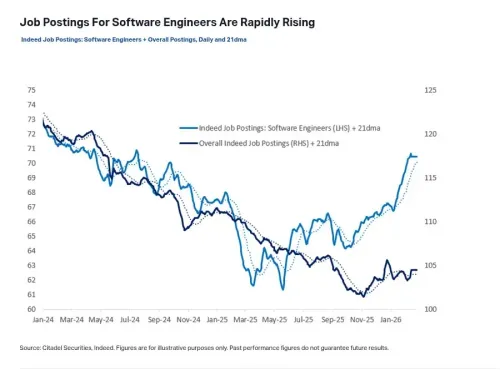
It effectively positions the White House as a cheerleader for industry-led, outcome-linked workforce development over purely federally administered programs. The signal matters: it suggests the Trump administration may lean on hyperscalers to self-fund the labor pipeline their own infrastructure demands are creating, rather than expanding public apprenticeship budgets. For a government keen to project AI dominance without large new spending commitments, Meta's model is politically convenient. The broader implication is that the 'AI jobs' narrative is shifting from white-collar software roles to the blue-collar trades workforce — a reframing that carries significant electoral and economic-policy weight.
NationPress
23 Oct 2026
Frequently Asked Questions
What is Meta's America's Workforce Academy?
Meta's America's Workforce Academy is a $115 million initiative that provides paid training and guaranteed job placement for electricians, fiber technicians, and mechanical tradespeople needed to build and maintain AI data centers.
Why is David Sacks endorsing a Meta training program?
As White House AI and Crypto Czar , Sacks endorsed the program because the AI infrastructure boom has created acute shortages of skilled blue-collar workers, and he sees paid-training-plus-job-guarantee models as the practical solution needed at scale.
What jobs are in shortage due to the AI data center boom?
The AI infrastructure buildout has driven shortages of electricians, fiber technicians, and mechanical tradespeople — trades critical to constructing and maintaining large-scale data centers.
How does the CHIPS Act relate to AI workforce training?
The CHIPS and Science Act of 2022 authorized federal workforce development grants for advanced manufacturing and semiconductor infrastructure roles, establishing a policy foundation that programs like Meta's Academy build upon.
Will other tech companies launch similar workforce programs?
Industry observers are watching whether hyperscalers like Google, Amazon, and Microsoft announce comparable commitments, particularly as AI capital expenditure and data center construction continue to accelerate globally.