Saudi Arabia funds Pakistan military ties with $8 billion lifeline: Report
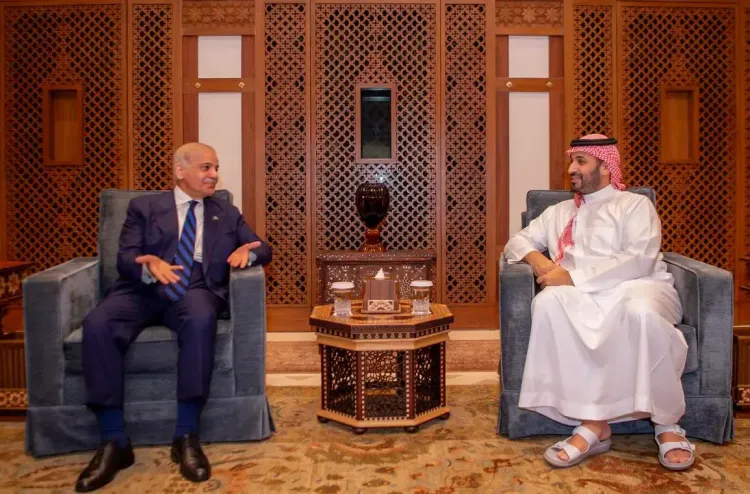
Synopsis
Saudi Arabia's $8 billion in deposits now backstops 37 per cent of Pakistan's central bank reserves — and the price, according to a new report, is 8,000 troops, a fighter squadron, and air-defence assets serving Riyadh. This is not aid; it is a strategic retainer, and the contrast with the UAE's abrupt $3.45 billion recall in April makes the terms of the arrangement unmistakably clear.
Key Takeaways
Saudi Arabia rolled over a $3 billion deposit for Pakistan on 4 November 2026 , days after it matured on 31 October .
Total Saudi support stands at $8 billion , equivalent to 37 per cent of Pakistan's $21.5 billion in SBP reserves.
In contrast, the UAE recalled $3.45 billion in April 2026 , nearly wiping out 21 per cent of Pakistan's reserves.
The Makkah defence pact linking Saudi Arabia , Pakistan , and Turkey was ratified by Turkey's Parliament on 5 November 2026 .
Around 8,000 Pakistani troops , a fighter squadron, and air-defence assets are reportedly deployed in Saudi Arabia as of 2026 .
Pakistan's public debt rose 75.9 per cent from PKR 49.3 trillion (June 2022) to PKR 86.7 trillion (June 2026), with exports declining as a share of GDP.
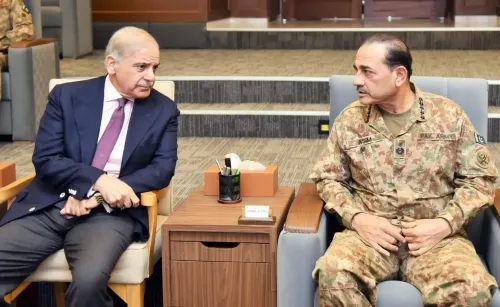
Saudi Arabia has been systematically bailing out a financially beleaguered Pakistan through strategic loan rollovers and deposits — not out of goodwill, but as payment for security services and diplomatic alignment, according to a new analytical report. The findings reframe what has long been characterised as Gulf aid into something far more transactional: a standing retainer for military manpower and geopolitical cover.
The Financial Architecture of the Deal
On 4 November 2026, Pakistan's finance minister confirmed that Saudi Arabia had rolled over a $3 billion deposit — which had matured on 31 October — for an unstated period. The very next day, Turkey's Parliament ratified the Makkah defence pact linking Riyadh, Islamabad, and Ankara, underscoring the security dimension of the financial relationship.
Notably, the United Arab Emirates (UAE) had taken a sharply different path. In April 2026, the UAE demanded immediate repayment of $3.45 billion — a stark contrast to Saudi Arabia's continued support. With State Bank of Pakistan (SBP) reserves standing at $16.38 billion as of 27 March, that repayment amounted to surrendering roughly 21 per cent of total reserves, which would have dragged them below the $14.5 billion recorded in June 2025.
Saudi Arabia's $8 Billion Stake in Pakistan's Stability
To plug the gap and prevent a reserves collapse, Saudi Arabia extended a total of $8 billion across two instalments. That figure now constitutes approximately 37 per cent of Pakistan's $21.5 billion in SBP reserves — making Riyadh not merely a creditor but effectively a co-guarantor of Pakistan's financial floor.
The report frames this explicitly as a quid pro quo. 'Pakistani personnel have served in the kingdom since 1967 while in 2026, about 8,000 troops, a fighter squadron and air defence followed. On 6 October, amid Houthi attacks, Saudi Arabia, Pakistan and Turkey moved to rapid deployment of agreed forces,' the article observes.
How This Fits Into Pakistan's Wider Creditor Web
The report draws a sharp distinction between Pakistan's creditors. The International Monetary Fund (IMF) sets structural conditions, lending only on the assurance that bilateral partners — including Saudi Arabia, China, and until recently the UAE — keep deposits in place. Multilateral lenders operate on longer tenors with less discretion.
China, the single largest creditor, reportedly rolls its deposit annually at roughly 6.1 per cent interest and refinances loans separately. Gulf deposits, by contrast, are the 'discretionary layer' — and that discretion, as the UAE's recall demonstrated, cuts both ways. The Financial Times reportedly cited Emirati irritation at Pakistan's deepening Riyadh ties and its role in Iran mediation — something Islamabad described as routine diplomacy.
Pakistan's Structural Problem Remains Unresolved
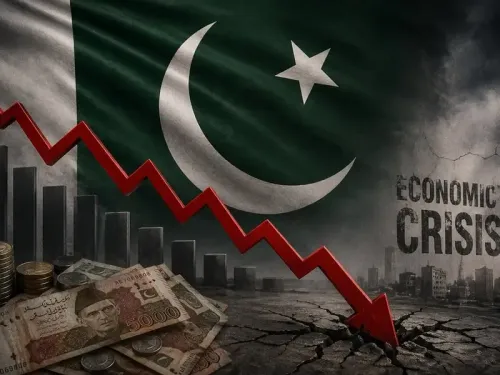
Despite repeated financial rescues, Pakistan's underlying economic trajectory has not improved. Pakistan's public debt surged from PKR 49.3 trillion in June 2022 to PKR 86.7 trillion in June 2026 — a rise of 75.9 per cent in four years. Exports, meanwhile, slipped from 10.6 per cent of GDP in FY2022 to 10.0 per cent in FY2025, placing Pakistan below both Bangladesh (11.1 per cent) and Sri Lanka (19.0 per cent) on that measure.
The pattern suggests that Saudi financial injections have provided oxygen without addressing the underlying structural ailments. As long as the security retainer relationship holds, Islamabad retains a financial buffer — but one whose continuity is entirely contingent on strategic alignment with Riyadh, not on domestic reform.
Point of View
The structural numbers are damning: exports shrinking as a share of GDP, debt up 76 per cent in four years, and a central bank reserve buffer that is 37 per cent Saudi-funded. The loans buy time; they do not buy transformation.
NationPress
12 Nov 2026
Frequently Asked Questions
Why is Saudi Arabia providing financial support to Pakistan?
According to the report, Saudi Arabia's financial deposits in Pakistan are effectively a payment for security services and diplomatic alignment — not conventional development aid. Pakistani troops, a fighter squadron, and air-defence assets have been deployed in Saudi Arabia, most recently in response to Houthi attacks in October 2026.
How much has Saudi Arabia deposited in Pakistan's central bank?
Saudi Arabia has provided a total of $8 billion across two instalments, which amounts to roughly 37 per cent of the State Bank of Pakistan 's $21.5 billion in reserves, making it the single most consequential bilateral financial prop for Pakistan's economy.
Why did the UAE withdraw its deposits from Pakistan?
The UAE recalled $3.45 billion in April 2026 , reportedly due to irritation at Pakistan's growing closeness with Saudi Arabia and its role in Iran mediation. The withdrawal threatened to cut Pakistan's reserves by 21 per cent , highlighting how exposed Islamabad is to shifts in Gulf relationships.
What is the Makkah defence pact?
The Makkah defence pact is a trilateral security agreement linking Saudi Arabia , Pakistan , and Turkey . Turkey's Parliament ratified it on 5 November 2026 , one day after Saudi Arabia confirmed the rollover of Pakistan's $3 billion deposit — a sequencing the report treats as directly connected.
Has Pakistan's economy improved despite Saudi support?
Not structurally. Pakistan's public debt rose from PKR 49.3 trillion in June 2022 to PKR 86.7 trillion in June 2026 — a 75.9 per cent increase — while exports fell from 10.6 per cent of GDP in FY2022 to 10.0 per cent in FY2025, below comparable regional economies such as Bangladesh and Sri Lanka.