Pralhad Joshi Cites Modi on India's Solar and Startup Rise
Synopsis
Union Minister Pralhad Joshi amplified PM Modi's claim that India expanded solar capacity more than 50 times and built the world's third-largest startup ecosystem in 12 years, citing the post-2014 policy era as the driver.
Key Takeaways
PM Modi stated India grew its solar power generation capacity by more than 50 times in 12 years .
India is claimed to now host the world's third-largest startup ecosystem , after the US and China.
The Jawaharlal Nehru National Solar Mission , launched in 2010 and scaled post- 2014 , underpins the solar milestone.
The Startup India initiative, launched in January 2016 , is credited for the entrepreneurial ecosystem's growth.
Minister Pralhad Joshi , who holds the New and Renewable Energy portfolio, shared the remarks, linking both achievements to the broader self-reliance agenda.
India's 2030 non-fossil fuel capacity targets remain the next benchmark to watch.
Two numbers. Twelve years. And a claim that reframes India's economic identity — Union Consumer Affairs Minister Pralhad Joshi on Thursday, November 12, 2026, shared remarks by Prime Minister Narendra Modi pointing to twin milestones: a more-than-50-fold surge in solar power generation capacity and the construction of the world's third-largest startup ecosystem, both achieved within a single decade-and-change.
The solar number: from modest base to global scale
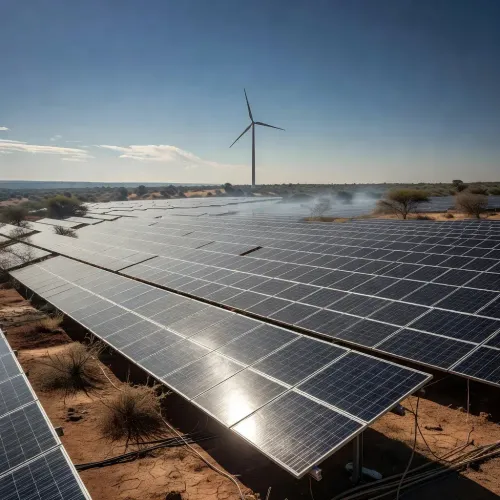
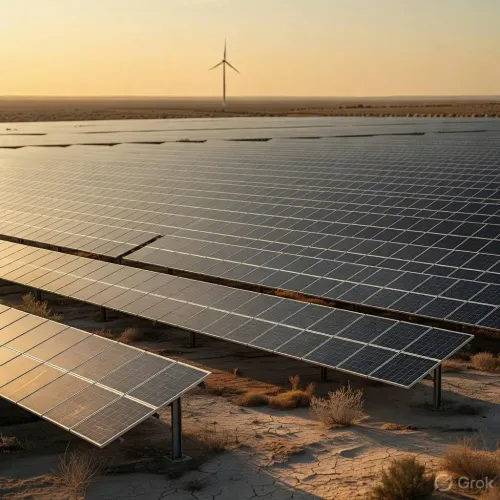
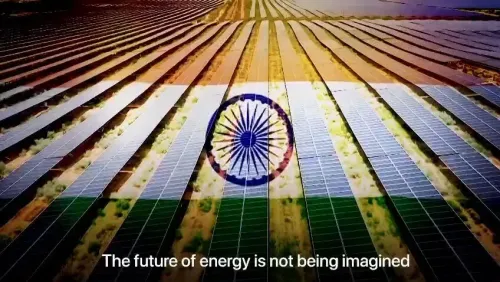
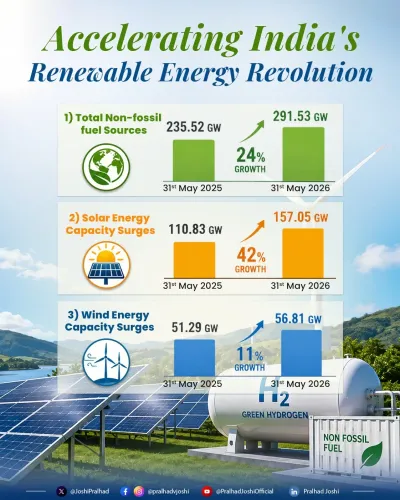
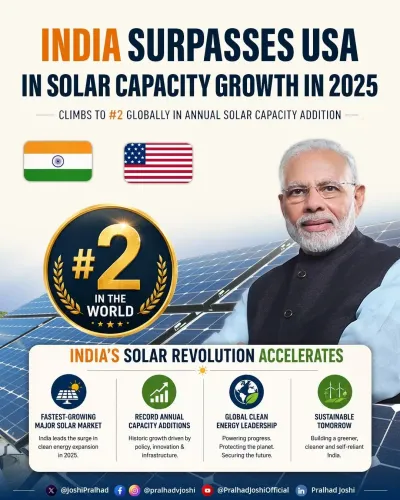
When PM Modi took office in May 2014, India's installed solar capacity was a fraction of what it is today. The government dramatically scaled up the ambitions of the Jawaharlal Nehru National Solar Mission — originally launched in 2010 — revising targets upward repeatedly and channelling policy support toward utility-scale projects, rooftop installations, and international partnerships like the International Solar Alliance. The result, as Modi framed it, is a capacity base more than 50 times larger than where India started. The government has anchored this push in a broader energy-security and climate-commitments strategy, with eyes on ambitious non-fossil fuel capacity targets for 2030.
The startup claim: third-largest ecosystem in 12 years
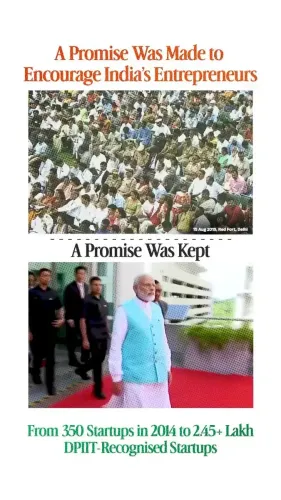
The second milestone is entrepreneurial. The Startup India initiative, announced in January 2016, set out to build a venture ecosystem through tax incentives, simplified regulatory frameworks, and dedicated funding pipelines. What followed was a decade of rapid growth in the number of government-recognised startups, unicorns, and deeptech ventures. Modi's assertion — amplified by Joshi — places India's startup ecosystem as the world's third-largest, behind only the United States and China. The government credits ease-of-doing-business reforms and expanding digital infrastructure as the structural backbone behind that ranking.
Why Joshi is amplifying these figures now
As Minister of New and Renewable Energy in addition to his consumer affairs portfolio, Pralhad Joshi sits at the precise intersection of both claims — renewable energy policy and the broader economic-growth narrative. His decision to share Modi's remarks is as much a political statement as a policy update: it frames the post-2014 era as one of measurable, quantifiable transformation rather than aspirational targets. The pairing of solar and startups — green growth and innovation economy — is deliberate shorthand for a 'self-reliant India' thesis the BJP has consistently pressed ahead of budget cycles and international forums.
What comes next matters as much as what's been built. Upcoming Union Budgets and renewable energy policy reviews will test whether the momentum can sustain — and whether third-place becomes second.
Point of View
The party ensures the claim carries institutional weight, not just rhetorical colour. The 12-year frame is also precise enough to be partisan — it dates the transformation squarely to the Modi era, drawing a contrast with the previous decade. Whether the figures hold up to independent audit will shape how durable this narrative proves to be in the run-up to budget season and beyond.
NationPress
12 Nov 2026
Frequently Asked Questions
How much has India's solar power capacity increased in the last 12 years?
PM Modi has stated that India increased its solar power generation capacity by more than 50 times over the past 12 years, a growth the government attributes to the scaled-up National Solar Mission and post-2014 policy support.
Is India really the third-largest startup ecosystem in the world?
PM Modi claimed India has built the world's third-largest startup ecosystem in 12 years. The government credits the Startup India initiative, launched in January 2016, along with ease-of-doing-business reforms and digital infrastructure expansion, for this growth.
What is the Startup India initiative?
Startup India is a government scheme announced in January 2016 to promote entrepreneurship through tax benefits, regulatory easing, and dedicated funding support, with the goal of building a world-class innovation and job-creation ecosystem.
What is the Jawaharlal Nehru National Solar Mission?
The Jawaharlal Nehru National Solar Mission was launched in 2010 to scale up India's solar energy capacity. Its targets were significantly revised upward after 2014, forming the backbone of India's renewable energy expansion.
Why did Pralhad Joshi share PM Modi's remarks on solar and startups?
As Union Minister of New and Renewable Energy and Consumer Affairs, Pralhad Joshi sits at the intersection of both achievements. Sharing Modi's remarks underscores the government's 'self-reliant India' and green growth narrative ahead of upcoming policy reviews and budget cycles.