India-ASEAN maritime cooperation must secure Indo-Pacific amid geo-economic crisis
Synopsis
As VLCC hire costs soar 10 times above pre-crisis levels, India’s top maritime and strategic experts gathered in New Delhi to deliver a blunt message: building alternative sea routes and deepening India–ASEAN operational cooperation is no longer optional. With the 35-year dialogue anniversary approaching in 2027, the pressure to move from frameworks to real-world outcomes has never been higher.
Key Takeaways
VLCC hiring costs have risen nearly 10 times and container shipping rates 5 times above pre-crisis levels, according to former Joint Secretary R Lakshmanan .
Experts at the CRF conference in New Delhi on 30 September 2026 called for expanding the IFC-IOR ’s mandate to cover commercial shipping disruptions alongside its existing security role.
Ambassador Jaideep Mazumdar said the India–ASEAN partnership must move from ‘declaratory alignment’ to ‘tangible outcomes’ in joint maritime contingency responses.
Frameworks including AOIP , IPOI , Act East Policy and MAHASAGAR were cited as needing stronger operational convergence.
Energy diversification, stronger East Coast port capacity , and greater use of ARF and ADMM-Plus platforms were identified as priority action areas.
The 35th anniversary of the India–ASEAN dialogue partnership in 2027 was flagged as a milestone to target concrete cooperation deliverables.
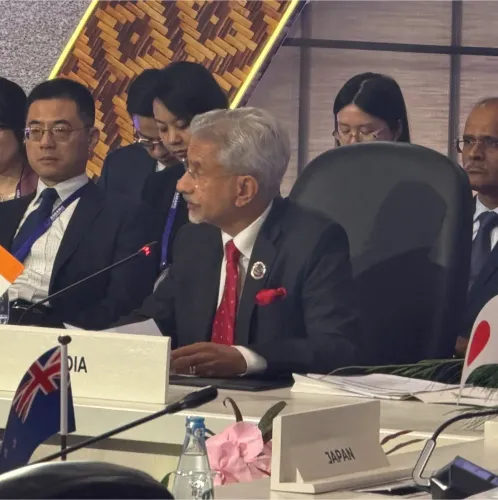
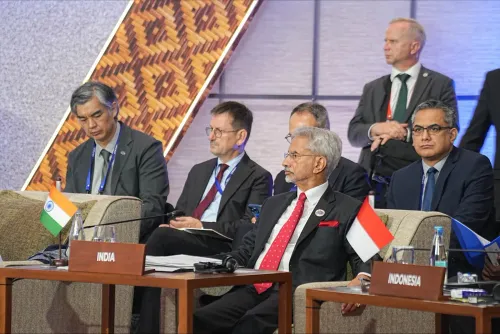
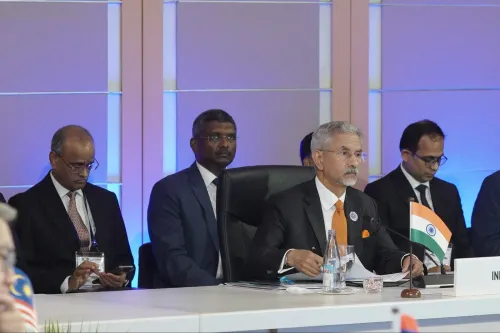
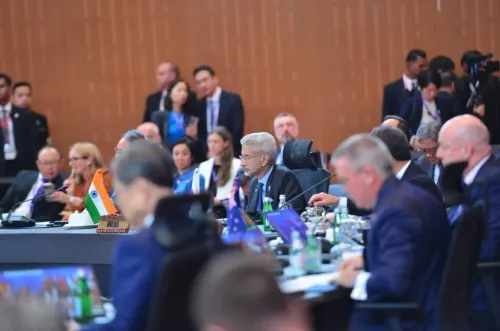
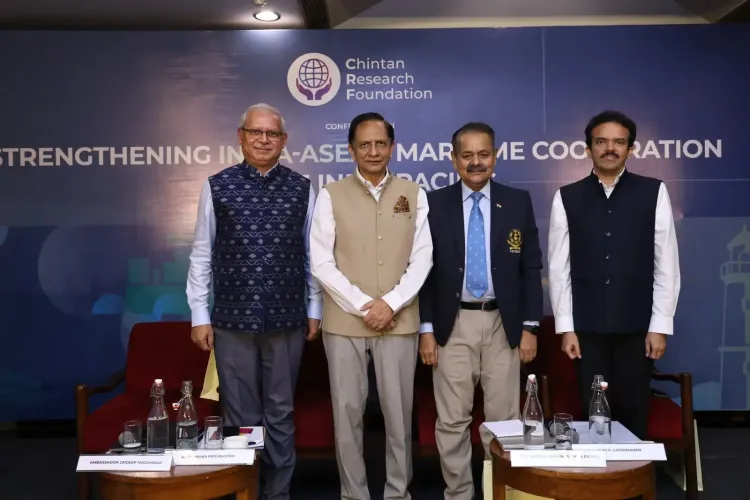
Experts at a high-level conference in New Delhi on 30 September 2026 called for urgent action to secure maritime highways and build alternative supply routes, warning that geopolitical disruptions have made resilient ocean connectivity a national priority for India and its ASEAN partners. The conference, titled 'Strengthening India-ASEAN Maritime Cooperation in the Indo-Pacific', was organised by the Chintan Research Foundation (CRF).
The Cost of Maritime Disruption
The financial toll of ongoing geopolitical crises on global shipping was laid bare by R Lakshmanan, former Joint Secretary at the Ministry of Ports, Shipping and Waterways. He noted that the cost of hiring a Very Large Crude Carrier (VLCC) has risen nearly 10 times compared to the pre-crisis era, while container shipping rates have gone up five times. “This impacts manufacturing, logistics costs, and overall supply chain resilience,” Lakshmanan said.
He argued that the Information Fusion Centre – Indian Ocean Region (IFC-IOR), the Indian Navy-hosted centre that monitors maritime activity in the region, could be expanded beyond its current security mandate. “We could expand its scope to include the commercial side by involving port authorities and customs agencies, enabling us to track disruptions to trade and commercial shipping and facilitate the sharing of information,” he said.
India–ASEAN Partnership: From Declarations to Outcomes
Ambassador Jaideep Mazumdar underscored that while India–ASEAN maritime cooperation has matured significantly, the central challenge now is operational delivery. “India-ASEAN maritime cooperation has evolved from declaratory alignment into a structured, multidimensional partnership. The challenge now is to translate this convergence into tangible outcomes, building common understandings and joint responses to both anticipated and unforeseen maritime contingencies,” he said.
Vice Admiral Shekhar Sinha (Retd.) reinforced the strategic logic, arguing that open oceans are a prerequisite for shared prosperity. He noted that in an interdependent world, secured seas and safe shipping lanes directly translate into economic growth for all regional stakeholders.
Key Frameworks in Focus
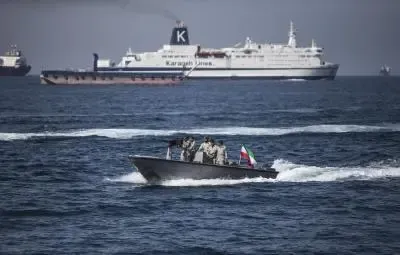
The conference examined how existing frameworks — including the ASEAN Outlook on the Indo-Pacific (AOIP), India’s Indo-Pacific Oceans Initiative (IPOI), the Act East Policy, and MAHASAGAR — can be better aligned and operationalised. Speakers flagged the Strait of Hormuz crisis as a case study in how distant chokepoints can expose interconnected vulnerabilities across energy routes and regional trade corridors.
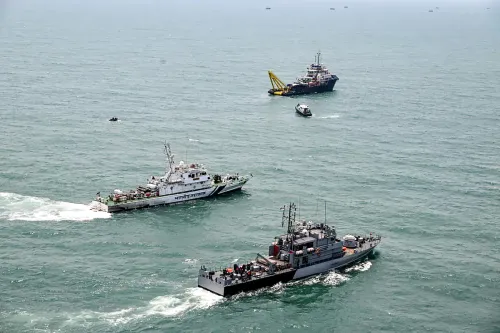
The conference called for stronger East Coast port capacity, alternative connectivity corridors, maritime domain awareness, and coordinated patrols and exercises. Greater use of ASEAN-led platforms such as the ASEAN Regional Forum (ARF) and ADMM-Plus was also recommended. India’s Andaman and Nicobar Islands were highlighted as a strategic asset requiring deeper engagement through capacity-building and defence cooperation.
Energy and Supply-Chain Resilience
Energy diversification emerged as a recurring theme, with experts warning that over-reliance on single trade or energy corridors leaves both India and ASEAN economies exposed to external shocks. Cooperative mechanisms for Humanitarian Assistance and Disaster Relief (HADR), search-and-rescue operations, and supply-chain security were identified as practical near-term areas for joint action.
Speakers stressed that stronger institutional coordination and crisis preparedness are essential to move from framework alignment to sustained operational outcomes.
Looking Ahead to 2027
With 35 years of the India–ASEAN dialogue partnership approaching in 2027, the conference identified the translation of a well-established cooperation agenda into concrete and continuous deliverables as the defining challenge of the next phase of the relationship.
Point of View
Container rates up 5 times — is a stark reminder that geopolitical risk is no longer an abstraction for Indian industry; it is a line item in every logistics budget. Yet the gap between India’s impressive framework architecture (IPOI, MAHASAGAR, Act East) and operational outcomes on the water remains wide. Expanding the IFC-IOR’s mandate to cover commercial shipping is a practical, low-hanging fix, yet it has apparently not happened. With the 35-year India–ASEAN dialogue milestone in 2027 approaching, the risk is that the anniversary becomes another declaration rather than a delivery checkpoint. The Andaman and Nicobar Islands, consistently highlighted as a strategic lever, remain underutilised — that gap deserves harder scrutiny than it received at Wednesday’s conference.
NationPress
30 Sept 2026
Frequently Asked Questions
What was the India-ASEAN maritime cooperation conference about?
The conference, titled ‘Strengthening India-ASEAN Maritime Cooperation in the Indo-Pacific’, was held in New Delhi on 30 September 2026 and organised by the Chintan Research Foundation (CRF). It brought together senior analysts, former officials, and diplomats to discuss building alternative supply routes, deepening maritime security cooperation, and aligning existing frameworks between India and ASEAN amid ongoing geo-economic uncertainty.
How much have shipping costs risen due to geopolitical disruptions?
According to former Joint Secretary R Lakshmanan, the cost of hiring a Very Large Crude Carrier (VLCC) has risen nearly 10 times compared to the pre-crisis era, while container shipping rates have increased five times. Experts warned this directly impacts manufacturing, logistics costs, and supply-chain resilience.
What is the IFC-IOR and why does it matter?
The Information Fusion Centre – Indian Ocean Region (IFC-IOR) is an Indian Navy-hosted centre that monitors maritime activity across the Indian Ocean region. Experts at the conference argued its mandate should be expanded beyond naval and coast guard security to include commercial shipping, involving port authorities and customs agencies to help track trade disruptions in real time.
Which frameworks were discussed for India-ASEAN maritime cooperation?
The conference examined the ASEAN Outlook on the Indo-Pacific (AOIP), India’s Indo-Pacific Oceans Initiative (IPOI), the Act East Policy, and MAHASAGAR. Speakers called for stronger operational convergence between these frameworks and greater use of ASEAN-led platforms such as the ASEAN Regional Forum (ARF) and ADMM-Plus.
Why is 2027 significant for the India-ASEAN relationship?
2027 marks the 35th anniversary of the India–ASEAN dialogue partnership. Experts at the conference identified the milestone as a deadline by which the two sides should demonstrate tangible, operational cooperation outcomes rather than limiting progress to declarations and framework alignment.