Slovak FM Blanar: EU lacks seat at Ukraine peace table, urges active role
Synopsis
Slovakia's Foreign Minister Juraj Blanar has put a sharp number to Europe's diplomatic embarrassment: $226 billion in Ukraine aid, and still no seat at the peace table. With the US now driving negotiations and a Putin-Trump call described as 'constructive,' the EU's role as funder-without-influence is under sharper scrutiny than ever.
Key Takeaways
Slovak Foreign Minister Juraj Blanar said the EU has no meaningful role in Ukraine peace negotiations despite massive financial contributions.
The EU and its member states have provided over $226 billion in financial, military, humanitarian, and refugee assistance to Ukraine, according to the European External Action Service .
Slovakia , Hungary , and the Czech Republic will not participate in guarantees for a 90 billion euro (~ $104.5 billion ) loan to Ukraine; Poland has agreed to do so.
Slovakia assumed the Visegrad Four (V4) presidency on 1 July ; a Slovak-Ukrainian government meeting is being planned in Lviv with no date yet set.
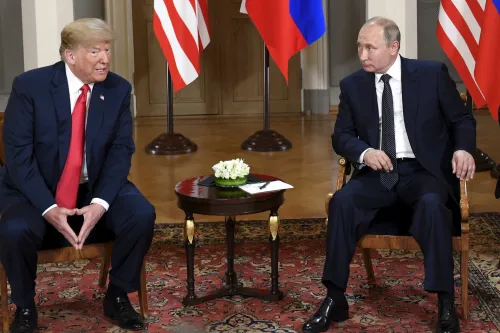
Russian President Vladimir Putin and US President Donald Trump held a one-hour phone call described by the Kremlin as 'constructive and very frank,' with both sides agreeing to continue humanitarian exchange efforts.
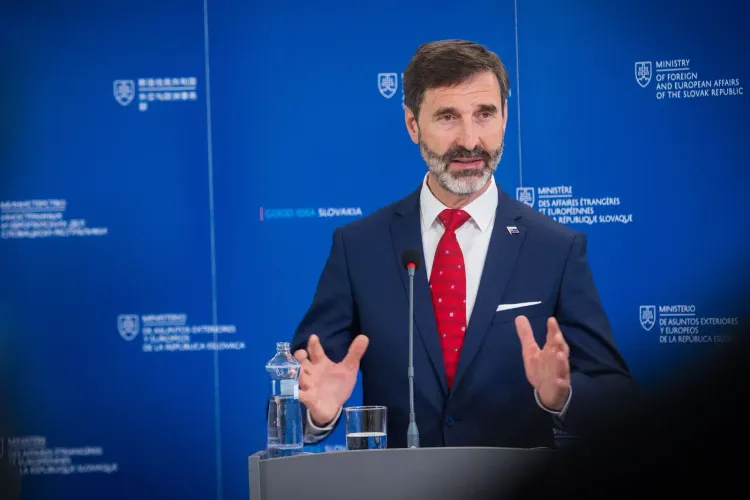
Slovak Foreign and European Affairs Minister Juraj Blanar has said that European Union leaders should have taken a far more proactive role in pursuing a diplomatic end to the war in Ukraine, warning that the bloc currently has no meaningful place in the peace negotiations. Blanar made the remarks in an interview with TASR TV in Bratislava on 9 September.
Europe Paying the Bill, Not Setting the Terms
'At present, we basically don't have a seat at the table. We are simply paying all the costs associated with it,' Blanar said, capturing what he described as a fundamental imbalance in how the conflict's diplomatic and financial burdens are being shared. He noted that the United States has assumed a significantly larger role in driving the peace process, while Europe has largely confined itself to financial backing.
According to data released by the European External Action Service, the EU and its member states have collectively made available more than $226 billion in financial, military, humanitarian, and refugee assistance to Ukraine since the war began — a figure that underscores just how heavily European taxpayers are invested in the conflict's outcome, even as European governments remain on the diplomatic sidelines.
Visegrad Four: Common Ground, Divergent Paths
Blanar said Slovakia could find shared footing with its partners in the Visegrad Four (V4) — comprising the Czech Republic, Hungary, Poland, and Slovakia — on the principle of a more active EU role in the peace process, even as the four nations hold differing views on the specifics of achieving a ceasefire. 'Despite having different views, we are still able to discuss these issues together,' he said.
A notable point of divergence concerns a proposed 90 billion euro (approximately $104.5 billion) loan to Ukraine. Blanar confirmed that Slovakia, Hungary, and the Czech Republic would not participate in guarantees for the loan, while Poland has chosen to do so — reflecting the broader fracture lines within Central European policy on the war.
Notably, Slovakia assumed the one-year V4 presidency on 1 July this year. Blanar also disclosed that Bratislava is preparing for a bilateral meeting between the Slovak and Ukrainian governments, expected to be held in Lviv, Ukraine, though no date has yet been confirmed.
Putin-Trump Call: 'Constructive and Very Frank'
Separately, Russian President Vladimir Putin and US President Donald Trump held a telephone conversation on Tuesday that Kremlin aide Yury Ushakov described as 'constructive and very frank.' The call lasted exactly one hour, according to Ushakov.
Ushakov said Putin used the call to push back against what he characterised as unfounded narratives about Russian aggression toward Europe. 'Against the backdrop of speculation alleging that Russia holds hostile intentions toward European states, it was emphasised that we do not harbour any aggressive plans against Europe whatsoever. The circulated myths about a Russian threat serve as a cover for European nations to ramp up support for Ukraine and increase their own military spending,' Ushakov said, according to reports.
Trump, for his part, reportedly stressed the urgency of ending the Ukraine conflict, arguing that a resolution would immediately open 'broad and promising prospects for the full restoration of Russia-US relations,' Ushakov said. The two sides also agreed to continue work on humanitarian matters, including the exchange of detained and convicted individuals.
What This Means for EU Diplomacy
Blanar's remarks arrive at a moment of growing unease within Europe about its diminishing influence over a conflict it is financing at scale. This is not the first time Central European leaders have voiced frustration with the EU's reactive posture — Hungary's Prime Minister Viktor Orbán has repeatedly called for ceasefire talks, often at odds with Brussels. Slovakia's position, while less confrontational in tone, points to a widening debate about whether European financial commitment should translate into a stronger diplomatic voice. With the Putin-Trump call signalling renewed US-Russia engagement, the pressure on European capitals to define their own peace strategy is likely to intensify in the weeks ahead.
Point of View
Making it easier for both the US and Russia to treat Europe as a payer rather than a player. With Trump and Putin now in direct conversation, the window for Europe to insert itself meaningfully into a peace framework is narrowing — and Blanar's remarks suggest at least some European capitals know it.
NationPress
24 Oct 2026
Frequently Asked Questions
What did Slovak Foreign Minister Juraj Blanar say about the EU's role in Ukraine peace talks?
Blanar said EU leaders should have been far more active in pursuing a diplomatic solution to the Ukraine conflict, warning that Europe currently has no meaningful seat at the peace table despite contributing over $226 billion in aid. He made the remarks in an interview with TASR TV in Bratislava on 9 September.
How much has the EU contributed to Ukraine since the war began?
According to data from the European External Action Service, the EU and its member states have made available more than $226 billion in financial, military, humanitarian, and refugee assistance to Ukraine since the start of the war.
What is the Visegrad Four's position on the Ukraine loan guarantee?
The Visegrad Four countries are divided on the issue. Slovakia, Hungary, and the Czech Republic have said they will not participate in guarantees for a 90 billion euro ($104.5 billion) loan to Ukraine, while Poland has decided to join the guarantee. Blanar noted the four still engage in dialogue despite differing views.
What was discussed in the Putin-Trump phone call?
Kremlin aide Yury Ushakov described the one-hour call as 'constructive and very frank.' Putin reportedly stressed that Russia harbours no hostile intentions toward European countries, while Trump emphasised the need to end the Ukraine conflict. Both sides agreed to continue efforts on humanitarian issues, including prisoner exchanges.
What is Slovakia's current role in the Visegrad Four?
Slovakia assumed the one-year Visegrad Four (V4) presidency on 1 July this year. Under this presidency, Bratislava is also preparing for a bilateral meeting between the Slovak and Ukrainian governments, expected to take place in Lviv, Ukraine, though a date has not yet been set.