South Korea Education Minister Choi Kyo-jin resigns over AI cheating chaos at CSAT 2024

Synopsis
South Korea's most consequential exam turned into a governance crisis: last-minute anti-AI cheating rules — pencils only, sticker-covered buttons, emergency phone alerts mid-exam — caused widespread confusion at the CSAT, and Education Minister Choi Kyo-jin paid for it with his job. With 111 suspected cheating cases still logged and a minister on record saying he couldn't detect AI cheating 'because of his age,' Seoul faces a credibility test on how it handles AI in high-stakes testing.
Key Takeaways
Education Minister Choi Kyo-jin resigned on 22 November after President Lee Jae Myung accepted his offer to step down.
Last-minute anti-AI rules at the CSAT (Suneung) — including a pencils-only policy, sticker-covered buttons, and nationwide emergency alerts — caused widespread confusion among students and teachers.
111 suspected cheating cases involving electronic devices were detected during the exam, according to the education ministry.
Choi faced additional criticism for saying in parliament he could not be confident AI cheating could be detected, citing his age of 72 .
The crisis follows a tax accountant exam scandal in which the top scorer admitted to cheating using a miniature camera, smartphone, and generative AI .
The nomination process for Choi's successor is underway; no replacement has been named.
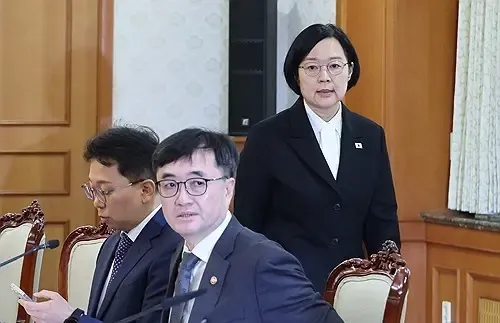
South Korea's Education Minister Choi Kyo-jin resigned on Sunday, 22 November after President Lee Jae Myung accepted his offer to step down, following a storm of criticism over last-minute rule changes introduced to prevent artificial intelligence-assisted cheating at the country's high-stakes national college entrance exam, the Suneung, held last Thursday.
What Triggered the Resignation
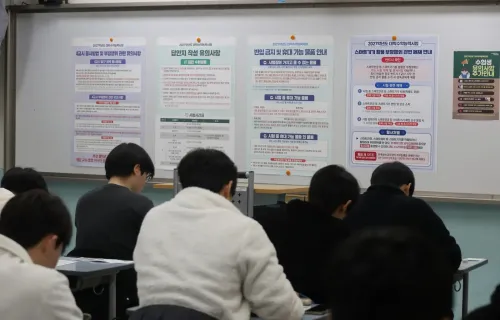
The education ministry came under sharp criticism for announcing sweeping anti-AI cheating measures just days — and in some cases hours — before the College Scholastic Ability Test (CSAT), leaving students and teachers scrambling. The last-minute directives included restricting exam halls to pencils only, requiring students to cover clothing buttons with stickers to block potential miniature cameras, and issuing three emergency disaster alerts to mobile phones nationwide during the exam to identify candidates who had not surrendered their devices.
'As the minister in charge, I believe I cannot escape criticism that we failed to prepare in advance,' Choi said in a statement released by the ministry. 'Now that the exam has concluded, I feel a deep sense of responsibility and am offering my resignation.'
Presidential Acceptance and What Follows
President Lee accepted the resignation approximately one hour after Choi announced his intention to step down, according to Cheong Wa Dae spokesperson Kang Yu-jung, who notified the press. Kang confirmed that the nomination process for Choi's successor will proceed through due procedures, though no timeline has been specified.
Scale of Suspected Cheating
Despite — or arguably because of — the chaotic rollout of the new rules, the education ministry said on Friday that 111 suspected cheating cases involving electronic devices were detected during the exam. The number underscores both the scale of the concern and the operational difficulty of enforcing protocols that had not been adequately communicated in advance.
Choi's Earlier Remarks Deepened the Crisis
The minister had already drawn fire before the exam when, responding to a parliamentary query on whether he was fully confident that AI-assisted cheating could be detected, the 72-year-old replied: 'I don't think I could, because of my age.' Critics and opposition lawmakers seized on the remark as evidence of a leadership ill-equipped to handle a rapidly evolving technological challenge.
Broader Context: AI Cheating Fears Grip South Korea
The upheaval at the CSAT reflects a wider anxiety in South Korea over generative AI disrupting high-stakes examinations. The abrupt rule changes were precipitated by a scandal in which the top scorer of this year's certified tax accountant exam admitted to cheating using a miniature camera, a smartphone, and generative AI. Separately, a man who had earned a perfect score on the Legal Education Eligibility Test (LEET) — the national law school entrance exam — was found dead on Thursday after facing cheating allegations; police have confirmed they will continue investigating. The CSAT itself carries enormous social weight in South Korea, where university admission is widely seen as a defining factor in long-term career prospects, making any administrative misstep a matter of profound public concern.
With a ministerial vacancy now confirmed, attention turns to whether South Korea's education establishment can establish credible, well-communicated AI-detection protocols before the next examination cycle begins.
Point of View
Not a solution. South Korea's education bureaucracy was caught flat-footed by a cheating methodology — miniature cameras paired with generative AI — that was already publicly documented before this exam cycle. Issuing emergency disaster alerts during a college entrance exam is not a policy; it is a panic measure dressed up as enforcement. The deeper problem is structural: a testing regime designed for the pre-AI era is being patched in real time, with students bearing the anxiety cost of each failed patch. Until Seoul builds a coherent AI-proctoring framework with adequate notice and independent validation, ministerial resignations will be a recurring feature of the exam calendar.
NationPress
22 Nov 2026
Frequently Asked Questions
Why did South Korea's Education Minister Choi Kyo-jin resign?
Choi Kyo-jin resigned on 22 November 2024 because of widespread public criticism over last-minute rule changes introduced to prevent AI-assisted cheating at the CSAT national college entrance exam. The abrupt changes caused significant confusion among students and teachers, and President Lee Jae Myung accepted his resignation within about an hour of its announcement.
What is the Suneung or CSAT?
The Suneung — short for College Scholastic Ability Test (CSAT) — is South Korea's annual national college entrance examination, widely regarded as one of the most consequential events in a student's life. University admission based on CSAT scores is seen as a major determinant of career prospects in South Korea.
What last-minute anti-AI cheating rules caused the controversy?
The education ministry announced measures just before the exam that included allowing only pencils inside exam rooms, requiring students to cover clothing buttons with stickers to block miniature cameras, and sending three nationwide emergency disaster alerts to mobile phones to identify test takers who had not surrendered their devices. Critics said the lack of advance notice added to student anxiety.
How many cheating cases were detected at the CSAT?
The education ministry confirmed on Friday that 111 suspected cheating cases involving electronic devices were detected during the exam. The figure highlighted both the scale of the concern and the difficulty of enforcing protocols that were communicated at the last minute.
What is the broader context of AI cheating fears in South Korea?
The CSAT controversy follows a high-profile scandal in which the top scorer of this year's certified tax accountant exam admitted to cheating using a miniature camera, a smartphone, and generative AI. Additionally, a man who achieved a perfect score on the Legal Education Eligibility Test (LEET) was found dead after facing cheating allegations, with police continuing to investigate.