Ceuta migrant crisis: Spain's Pedro Sanchez urges EU emergency meet
Synopsis
Around 50,000 migrants crossed into Ceuta in one of the EU's worst recent border emergencies — at least 67 died. Spain restored control in 48 hours, but Pedro Sanchez is now turning the political heat on Brussels, accusing fellow EU states of 'selfish' grandstanding and demanding an emergency ministers' summit to force a common response.
Key Takeaways
Pedro Sanchez wrote to European Commission President Ursula von der Leyen on 1 August demanding an extraordinary EU interior ministers' meeting.
Approximately 50,000 migrants entered Spain's enclave of Ceuta irregularly; at least 67 people died during the crisis.
Spain says it restored border control in under 48 hours , with more than 48,000 migrants returned to Morocco .
Sanchez accused some EU governments of calling for Spain's exclusion from the Schengen Area , labelling the move contrary to European and humanitarian law.
He urged the Irish Presidency to convene an emergency videoconference to reaffirm that external border protection is a shared EU responsibility.
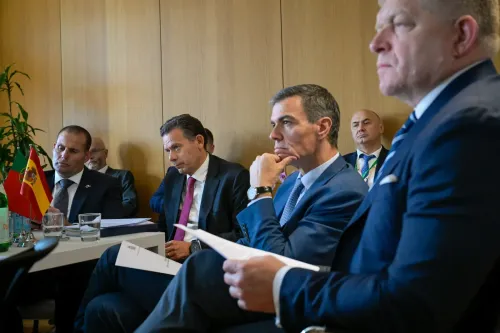
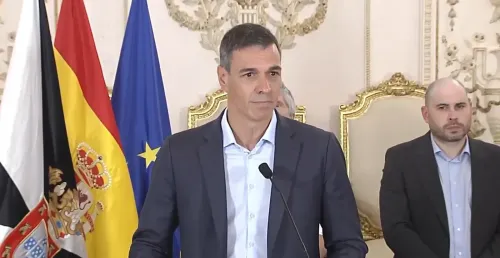
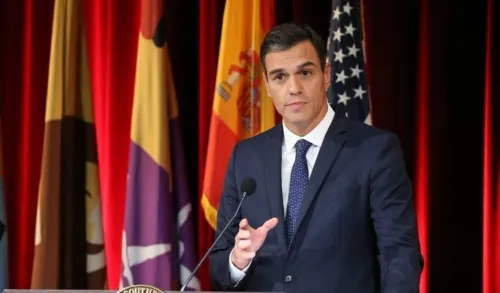
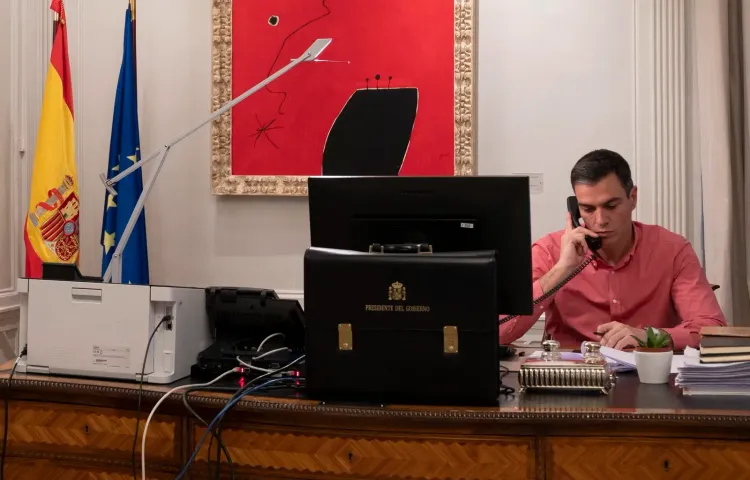
Spanish Prime Minister Pedro Sanchez on Saturday, 1 August formally called on the European Union to convene an extraordinary meeting of interior ministers, demanding a coordinated bloc-wide response to the mass irregular migration crisis that recently struck Spain's North African enclave of Ceuta. In a letter to European Commission President Ursula von der Leyen, Sanchez also sharply criticised what he termed the 'selfish' posture of certain EU member states in the crisis's aftermath.
Scale of the Crisis
According to the Spanish government, approximately 50,000 migrants entered Ceuta irregularly in what has been described as one of the largest such incidents on Spain's southern border in recent years. At least 67 people died during the crisis. Within 48 hours, more than 48,000 of those who had crossed had returned to neighbouring Morocco, with Spain asserting it had restored full border control in under two days.
What Sanchez Said in His Letter
Sanchez stated that Spain had provided humanitarian assistance, returned virtually all irregular entrants, and prevented any unauthorised onward movement to mainland Europe — efforts he said were made possible through close cooperation with Moroccan authorities and the support of willing EU partners. He described Spain's long-standing migration policy as having made the country 'one of the EU's most secure external borders.'
However, he expressed 'serious concern' over the response of certain EU governments, which he said had chosen to 'attack Spain' and call for its temporary exclusion from the Schengen Area. Sanchez argued that such a reaction — 'driven by prejudice, fake news, ignorance, or political interest' — was contrary to European law, humanitarian law, and the principle of solidarity. 'The European Union cannot afford this kind of selfish, polarising and unlawful reaction,' he wrote.
The Call for an Emergency Videoconference
Sanchez urged the Irish Presidency of the EU Council to convene, as a matter of urgency, an extraordinary videoconference of EU interior ministers. The aim, he said, would be to establish a common response framework for similar situations and reaffirm that protecting the bloc's external borders is a shared responsibility of all member states — not a burden to be borne by frontline states alone.
Broader Context and What It Means
The Ceuta crisis has reignited long-running tensions within the EU over migration burden-sharing, a fault line that has repeatedly fractured bloc cohesion since the 2015 refugee surge. Notably, calls to suspend Spain from Schengen — a legally dubious proposition under current EU treaty architecture — reflect the degree to which migration has become a politically weaponised issue across European capitals. This is not the first time a southern EU member state has found itself isolated after a border emergency; Italy and Greece have made near-identical complaints in previous years. Whether the Irish Presidency acts on Sanchez's request, and how quickly, will signal whether the EU has drawn any institutional lessons from those earlier episodes.
Point of View
He pre-empts domestic criticism while putting the burden of EU dysfunction squarely on member states that have used Ceuta as electoral fodder. The Schengen exclusion threat is legally hollow — no treaty mechanism allows it in these circumstances — but its political resonance in hardline capitals is real. The deeper problem is structural: the EU's external border framework still relies on frontline states absorbing the first shock, with solidarity remaining voluntary and therefore unreliable. Until that changes, letters to Brussels will keep arriving from whichever capital happens to be next in line.
NationPress
1 Aug 2026
Frequently Asked Questions
What happened in Ceuta that triggered the migrant crisis?
Approximately 50,000 migrants entered Spain's North African enclave of Ceuta irregularly in one of the largest such incidents on Spain's southern border in recent years. At least 67 people died during the crossing, and Spain says it restored full border control within 48 hours, returning more than 48,000 migrants to Morocco.
Why is Pedro Sanchez calling for an extraordinary EU meeting?
Sanchez is seeking a coordinated EU response after certain member states called for Spain's temporary exclusion from the Schengen Area following the Ceuta crisis. He argues such reactions are contrary to European and humanitarian law and that protecting external borders must be a shared responsibility across the bloc.
Which EU body did Sanchez write to, and what did he ask?
Sanchez addressed his letter to European Commission President Ursula von der Leyen and urged the Irish Presidency of the EU Council to convene an emergency videoconference of EU interior ministers to establish a common framework for responding to similar border situations.
What is the Schengen Area, and why does its mention matter here?
The Schengen Area is a zone of 27 European countries that have abolished passport controls at their mutual borders. Some EU governments reportedly called for Spain's temporary exclusion from Schengen after the Ceuta crossings — a move Sanchez condemned as legally baseless and politically motivated.
How did Spain manage to return so many migrants so quickly?
According to the Spanish government, the rapid return of more than 48,000 migrants within 48 hours was made possible through close cooperation with Moroccan authorities and logistical support from willing EU member states. Spain also provided humanitarian assistance to those who crossed during the crisis.