Standard Chartered, HSBC exit Bangladesh retail banking amid sector crisis

Synopsis
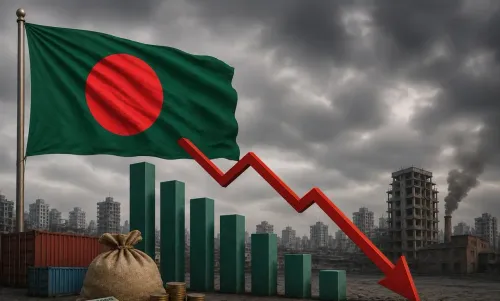
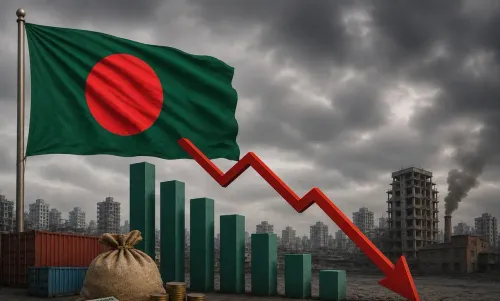
Two global banking giants — Standard Chartered and HSBC — are pulling back from retail banking in Bangladesh just as the country's sector hits a historic low, with nearly one-third of all loans turning non-performing by mid-2026. The exits may be part of wider global portfolio rebalancing, but Bangladesh's governance failures and depositor crisis mean the timing couldn't be worse.
Key Takeaways
Standard Chartered Bank has announced plans to sell its retail banking business in Bangladesh , following HSBC's earlier decision to exit retail banking there.
By mid- 2026 , nearly one-third of Bangladesh's total banking sector loans had become non-performing, according to Bangladesh Bank data.
The World Bank has flagged capital weaknesses in Bangladesh's banking system.
Structural problems include politically influenced lending, related-party loans, weak corporate governance, and a crisis of depositor confidence.
Analysts caution that exiting retail banking is distinct from a full country exit — both banks may retain corporate or institutional operations.
Restoring institutional credibility — through board reform, lending transparency, and independent oversight — is identified as the sector's most urgent challenge.
Standard Chartered Bank has announced plans to sell its retail banking business in Bangladesh, following HSBC's earlier decision to wind down its own retail banking operations in the country — a back-to-back retreat that is fuelling questions about international confidence in Bangladesh's financial sector. The developments, highlighted by Dhaka-based news portal Prothomalo.com, come as the country's banking system grapples with a deepening structural crisis.
The Scale of Bangladesh's Banking Crisis
According to data published by Bangladesh Bank, nearly one-third of the country's total banking sector loans had become non-performing by the middle of 2026 — a figure that underscores the severity of the rot. The World Bank has separately flagged capital weaknesses in the system, lending weight to concerns that institutional failures are systemic rather than isolated.
Analysts point to a toxic cocktail of problems: non-performing loans, capital shortfalls, weak corporate governance, politically influenced lending, loans to related parties, and the persistent failure to act against major loan defaulters. Together, these have eroded depositor confidence and created what observers describe as a crisis of credibility.
A Global Trend With Local Complications
The exits are not happening in a vacuum. Major international banks have increasingly been restructuring their retail operations across emerging markets, concentrating capital in segments that deliver higher returns on investment. Standard Chartered and HSBC have both undertaken similar portfolio rationalisation exercises in other countries.
Notably, however, the Prothomalo.com analysis cautions against conflating a retail banking withdrawal with a complete exit from Bangladesh. The two decisions carry different signals: scaling back consumer-facing branches is a commercial recalibration, not necessarily a verdict on a country's entire economy. Both banks may retain corporate or institutional banking presences.
Investor and Depositor Sentiment at Risk
Even if the exits are partly driven by global strategy, their optics matter in Bangladesh's current environment. The simultaneous withdrawal of two prominent international names from retail banking risks amplifying negative perceptions among investors and customers at a moment when confidence is already fragile. This is the second major international bank departure in quick succession — a pattern that domestic rivals and regulators cannot afford to dismiss.
What Bangladesh's Banking Sector Must Do Now
According to the Prothomalo.com report, the central challenge is restoring institutional credibility. That requires appointing qualified individuals to bank boards, enforcing transparency in lending, curbing related-party loans, recovering non-performing assets, and strengthening independent regulatory oversight.
Domestic banks, the analysis argues, must move beyond competing on branch counts and customer acquisition. Efficient capital allocation, robust risk management, adoption of financial technology, and compliance with international standards are now prerequisites — not differentiators — for sustainable banking in Bangladesh.
What Comes Next
The pace of regulatory reform at Bangladesh Bank will be closely watched by remaining international lenders and foreign investors. How swiftly Dhaka moves to address non-performing loans and governance lapses may determine whether these exits remain isolated events or become the beginning of a broader reappraisal of Bangladesh as a banking destination.
Point of View
International lenders are not simply chasing better returns elsewhere; they are pricing in institutional risk. What mainstream coverage underplays is the governance dimension: politically directed lending and the impunity of large defaulters have made Bangladesh's banking system structurally unsafe, and no amount of digital transformation rhetoric will fix that without a credible enforcement regime. The real question is not whether these exits damage perception — they clearly do — but whether Dhaka's regulators have the political will to act before more names follow.
NationPress
9 Nov 2026
Frequently Asked Questions
Why are Standard Chartered and HSBC withdrawing from retail banking in Bangladesh?
Both banks are exiting Bangladesh's retail banking segment amid a combination of global business restructuring — where major banks are concentrating capital in higher-return markets — and Bangladesh-specific concerns including non-performing loans, capital shortfalls, and weak governance. Standard Chartered has announced a sale of its retail unit, while HSBC had earlier decided to wind down its retail operations entirely.
How serious is Bangladesh's non-performing loan problem?
According to data from Bangladesh Bank, nearly one-third of the country's total banking sector loans had become non-performing by the middle of 2026 — an exceptionally high ratio by regional and global standards. The World Bank has also separately highlighted capital weaknesses in the banking system.
Does the exit of these banks mean international investors have lost confidence in Bangladesh?
Not necessarily in full. Analysts distinguish between withdrawing from retail banking and completely exiting a country — the two carry different signals. Both Standard Chartered and HSBC may retain corporate or institutional banking operations in Bangladesh. However, the back-to-back exits do risk amplifying negative perceptions at a time when depositor confidence is already fragile.
What reforms does Bangladesh's banking sector need?
According to the Prothomalo.com analysis, restoring institutional credibility requires appointing qualified individuals to bank boards, enforcing lending transparency, controlling related-party loans, recovering non-performing assets, and ensuring independent regulatory oversight. Domestic banks are also urged to prioritise efficient capital allocation and international compliance standards over branch expansion.
What are the root causes of Bangladesh's banking sector crisis?
The crisis stems from politically influenced lending, loans extended to related parties, failure to pursue major loan defaulters, weak corporate governance, and inadequate regulatory oversight. These structural failures have eroded depositor confidence and left the sector with significant capital shortfalls.