Mecca Pact exposes Pakistan's limits as Houthi strikes hit Riyadh airport
Synopsis
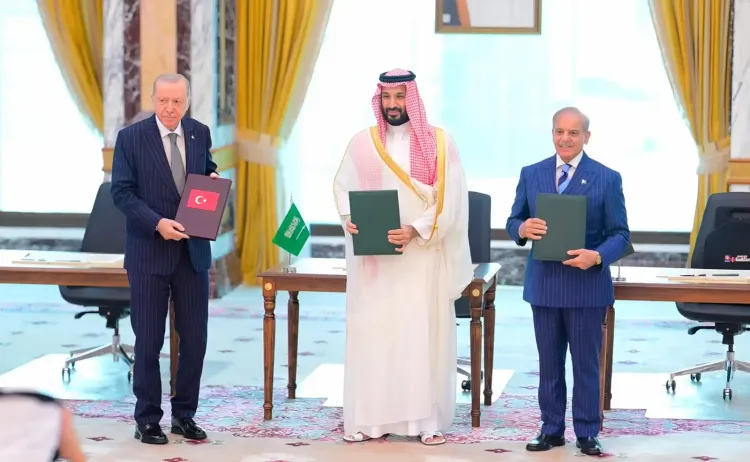
The Mecca Pact, activated on 5 October among Saudi Arabia, Turkey, and Pakistan, was tested within days — Houthi strikes killed 12 at Riyadh's airport and injured 300. A new analysis argues Pakistan is the pact's critical weak link: fighting the TTP, Baloch separatists, Afghan border clashes, and India contingencies all at once, Islamabad simply cannot be Riyadh's security guarantor.
Key Takeaways
Houthi strikes on Riyadh's international airport on 10–11 October killed 12 people and injured around 300 , days after the Mecca Pact was activated on 5 October .
Pakistan is fighting the TTP insurgency in Khyber Pakhtunkhwa , Baloch separatist violence, Afghan border tensions, and maintaining forces opposite India .
Pakistan conducted airstrikes inside Afghanistan on 1 October ; emergency rule was imposed in Khyber Pakhtunkhwa on 11 October .
A Pakistani driver was killed in a Houthi drone strike in Marib, Yemen , raising questions over Islamabad's combat role.
The report calls on Washington to provide targeting support, aerial refuelling, and counter-drone capabilities to Riyadh and Yemen's recognised government.
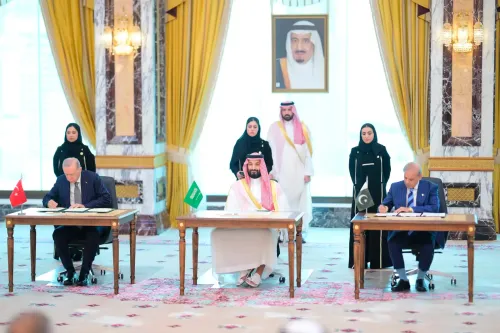
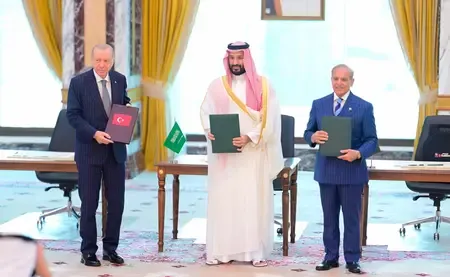
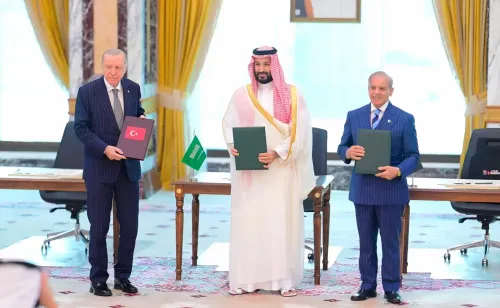
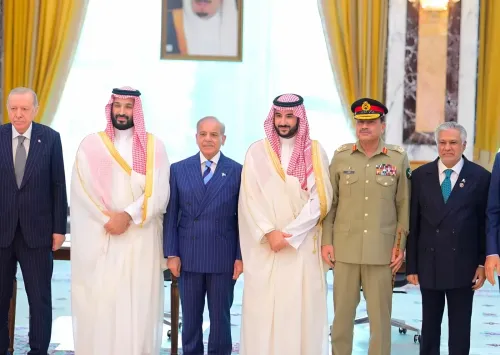
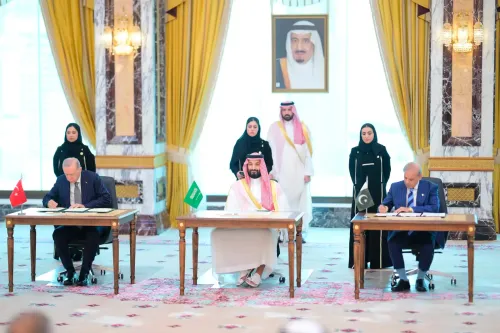
Pakistan, bogged down by domestic insurgencies and multi-front border tensions, lacks the military bandwidth to provide meaningful security support to Saudi Arabia under the Mecca Pact, according to a new analysis by The Cipher Brief. The assessment comes as escalating Houthi strikes expose the limits of the nascent collective-defence arrangement among Saudi Arabia, Turkey, and Pakistan.
Houthi Strikes Undermine the Pact's Credibility
Deadly Houthi missile and drone strikes on Riyadh's international airport on 10 and 11 October killed 12 people and injured approximately 300 others. Notably, these attacks occurred just days after the three-nation pact was formally activated on 5 October, signalling that the new security framework had done little to deter further aggression. The timing has drawn sharp scrutiny over whether the pact carries any credible deterrent weight.
Pakistan's Overstretch: The Pact's 'Most Acute Capacity Problem'
The analysis identifies Pakistan as the arrangement's weakest link. Islamabad is simultaneously managing the Tehrik-e-Taliban Pakistan (TTP) insurgency in Khyber Pakhtunkhwa, Baloch separatist violence, a contested frontier with Afghanistan, and standing forces opposite India. 'The pact's most acute capacity problem lies in Pakistan,' the report stated, adding that this 'threat landscape will create serious bandwidth issues for Pakistan's military in the immediate to near term, further limiting Islamabad's support for Riyadh.'
The strain was further illustrated by Pakistan's airstrikes inside Afghanistan on 1 October amid recurring border clashes, and the imposition of emergency rule in Khyber Pakhtunkhwa on 11 October — the same day as one of the Houthi airport strikes.
Questions Over Pakistan's Role in Yemen
While Islamabad has denied Western media reports of Pakistani troops being deployed in government-held areas of Yemen, the death of a Pakistani driver in a Houthi drone strike in Marib has raised questions over whether Pakistan has quietly assumed a direct combat role alongside Saudi-backed Yemeni forces. The report stopped short of drawing a firm conclusion but flagged it as a development warranting scrutiny.
Turkey Too Has Limits
The analysis cautions against over-relying on Turkey as well, noting that Ankara and Islamabad are both 'unwilling and probably unable' to strike Houthi infrastructure. 'Neither country should be dismissed as a partner, and neither should be treated as an unlimited strategic reserve for a war with no clear end date,' the report stated.
What the Report Recommends
The analysis urges Washington to step up direct military support to Riyadh and Yemen's internationally recognised government — through targeting support, aerial refuelling, air and missile defence, and counter-drone capabilities — without committing to an open-ended bombing campaign. 'The Mecca partners can share the burden, but they cannot yet carry it alone,' the report concluded. The findings suggest that unless the structural deficits within the pact are addressed, the framework risks becoming a diplomatic signal without operational substance.
Point of View
And there is no burden-sharing formula that changes that math. Washington's preference for partners-as-proxies has repeatedly run into this wall in the Middle East, and the Mecca arrangement risks repeating the same pattern unless the US provides the hard-power backbone the pact's signatories currently cannot.
NationPress
19 Oct 2026
Frequently Asked Questions
What is the Mecca Pact between Saudi Arabia, Turkey, and Pakistan?
The Mecca Pact is a collective-defence arrangement among Saudi Arabia, Turkey, and Pakistan that was formally activated on 5 October 2026. It is designed to coordinate security cooperation, though analysts argue its operational capacity is severely constrained by the domestic challenges facing both Pakistan and Turkey.
Why is Pakistan considered too overstretched to support Saudi Arabia?
Pakistan is simultaneously managing a TTP insurgency in Khyber Pakhtunkhwa, Baloch separatist violence, recurring border clashes with Afghanistan, and standing military commitments opposite India. According to the analysis, this multi-front threat landscape creates serious bandwidth issues that limit Islamabad's ability to deploy meaningful support to Riyadh.
What happened in the Houthi strikes on Riyadh's airport?
Houthi forces struck Riyadh's international airport on 10 and 11 October, killing 12 people and injuring approximately 300 others. The attacks came just days after the Mecca Pact was activated, raising doubts about the pact's deterrent effectiveness.
Is Pakistan militarily involved in Yemen?
Pakistan has denied Western media reports of its troops being deployed in government-held areas of Yemen. However, the death of a Pakistani driver in a Houthi drone strike in Marib has raised questions over whether Islamabad has taken on a direct or indirect combat role alongside Saudi-backed Yemeni forces.
What does the analysis recommend to strengthen Gulf security?
The analysis urges the United States to provide direct military support — including targeting assistance, aerial refuelling, air and missile defence, and counter-drone capabilities — to Saudi Arabia and Yemen's internationally recognised government. It stops short of endorsing an open-ended bombing campaign, noting that the Mecca Pact partners can share the burden but cannot carry it alone.