Shenzhen summit brought US no gains, Jake Sullivan says
Synopsis
Jake Sullivan says the Shenzhen summit gave Washington no practical gains and sent a troubling message to US allies. The former national security adviser nevertheless sees value in nuclear-risk dialogue with China, even as he warns about its expanding arsenal.
Key Takeaways
Jake Sullivan said the Shenzhen summit produced no practical gains for the United States .
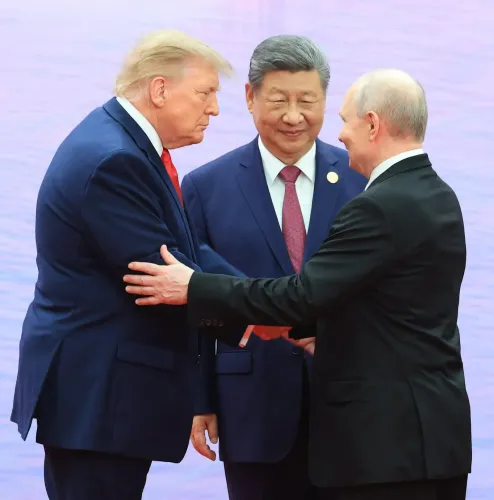
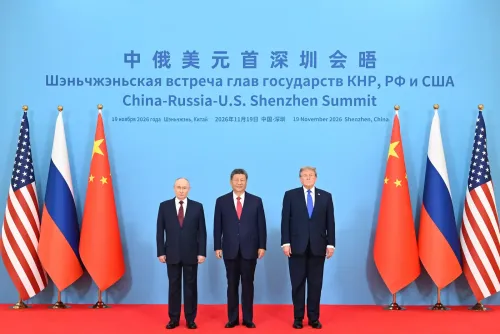
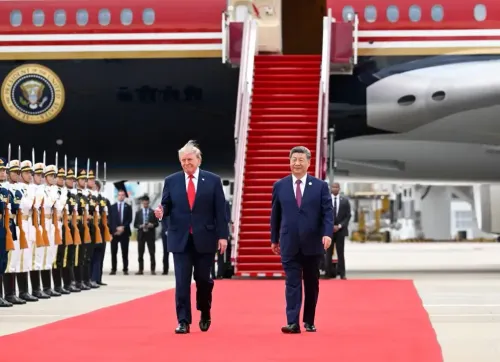
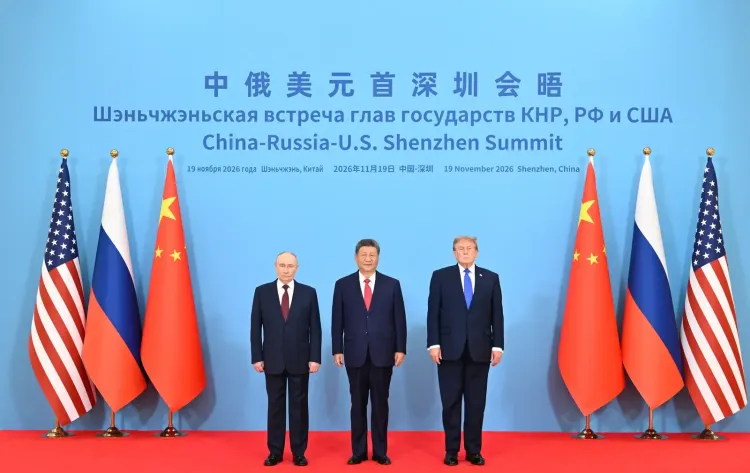
Donald Trump , Xi Jinping and Vladimir Putin met in Shenzhen on 19 November .
The leaders pledged nuclear-risk dialogue but announced no agreement limiting nuclear arsenals.
Sullivan estimated that China had around 600 nuclear weapons; he gave no timetable for further expansion.
Sullivan said continued European assistance and US intelligence sharing could help Ukraine remain in the fight.
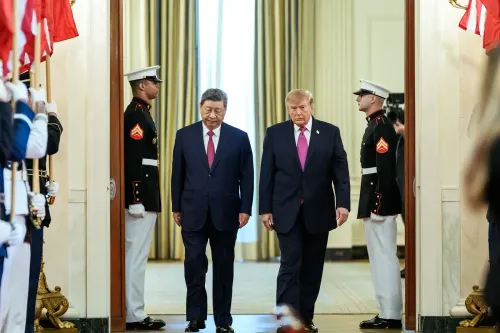
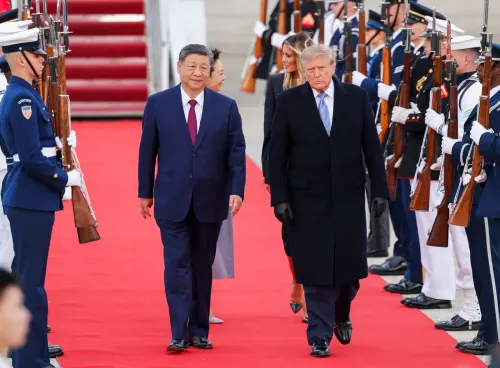
Former US National Security Advisor Jake Sullivan said the Shenzhen summit between US President Donald Trump, Chinese President Xi Jinping and Russian President Vladimir Putin delivered no practical gains for Washington. Speaking on Sunday, he also argued that the meeting sent a troubling message about US relations with its democratic allies.
At their 19 November meeting in Shenzhen, China, the leaders pledged dialogue on nuclear risks and non-proliferation, but announced no agreement limiting nuclear arsenals. Sullivan criticised the summit while acknowledging that discussions with Beijing on nuclear risks made sense.
Sullivan's assessment of the summit
Asked about the meeting on CNN's Fareed Zakaria GPS, Sullivan said: “Did the United States get anything out of it? I would say no. Were there any practical results? No.” Sullivan served as President Joe Biden's National Security Advisor from 2021 to 2025.
He argued that the meeting suggested the direction of US foreign policy was “to draw closer to the authoritarian leaders of Russia and China than to our democratic allies”. His assessment distinguished what he believed the leaders gained politically from any practical benefit to the United States.
According to Sullivan, Xi benefited by hosting and taking the central position, while Putin used the meeting to suggest that major powers could decide the fate of smaller countries, undermining Ukrainian confidence. He said Trump “Got the vanity project of being able to sit at a table with the men he considers to be his only equals in the world.”
Nuclear dialogue and China's arsenal
The leaders' joint declaration reaffirmed that “a nuclear war cannot be won and must never be fought” and pledged dialogue on reducing nuclear risks and preventing proliferation. It did not set out a deal limiting nuclear arsenals, leaving a distinction between a commitment to talk and an agreement to restrict weapons.
Sullivan recalled proposing talks with a senior Chinese foreign-affairs official in 2022 to reduce the risk of unintended escalation. “And he basically said to me, no,” Sullivan said, attributing the resistance to Beijing's determination to expand its arsenal before negotiating.
He estimated that China had gone from fewer than 300 nuclear weapons to around 600 and was heading towards 1,000, then 1,500 and beyond. Those figures and the assessment of Beijing's intentions were Sullivan's; he did not give a timetable for the projected expansion.
He said the United States and China lacked experience dealing with each other on nuclear arms control, making it important to begin conversations even if progress took time. Despite his criticism of the summit, he said there was “some logic to get them to the table to have these discussions”.
Ukraine war and allied support
Sullivan also criticised Trump's approach to ending Russia's war in Ukraine. He said the president had returned to the idea that Washington and Moscow could settle the conflict and require Kyiv to accept the outcome.
“He's decided he and Putin will settle this war, and Ukraine should have to take it,” Sullivan said. He argued that Putin was intensifying attacks on Ukrainian cities and civilian infrastructure to increase pressure during winter.
Sullivan said he believed Ukrainians would continue to show resilience but would suffer enormously. He added that Ukraine could remain in the fight if European countries kept providing assistance and the United States maintained intelligence sharing and other critical support.
Concerns over Iran policy
On Iran, Sullivan questioned whether a blockade intended to deprive Tehran of energy revenue would force it to capitulate. He said Iran retained ways to threaten Gulf energy infrastructure and US military facilities, disrupt shipping and keep fuel prices elevated.
He argued that it would be better for the United States to end the war, regroup and pursue a different approach. The next test for the summit's nuclear pledge will be whether the promised dialogue leads to further talks or specific agreements.
Point of View
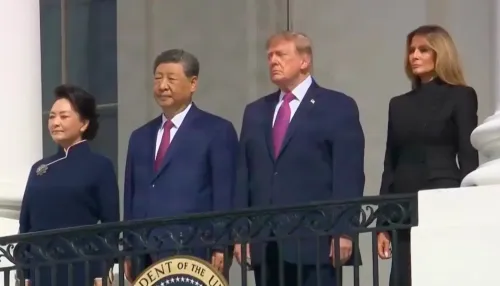
But their value to allies depends on whether those partners' security concerns are addressed. For India, the distinction matters because nuclear stability and the treatment of smaller countries both have consequences beyond the summit table. The measure of this meeting will be what follows, not the symbolism of the photograph.
NationPress
23 Nov 2026
Frequently Asked Questions
What did Jake Sullivan say about the Shenzhen summit?
Jake Sullivan said the summit produced no practical gains for the United States. He also argued that it sent a troubling signal about Washington's relationship with its democratic allies.
Who attended the Shenzhen summit?
US President Donald Trump, Chinese President Xi Jinping and Russian President Vladimir Putin met in Shenzhen on 19 November.
Did the Shenzhen summit produce a nuclear arms agreement?
The summit did not produce an announced agreement limiting nuclear arsenals. The leaders' declaration pledged dialogue on nuclear risks and preventing proliferation.
What did Sullivan say about China's nuclear arsenal?
Sullivan estimated that China had gone from fewer than 300 nuclear weapons to around 600 and was heading towards a larger arsenal. He did not provide a timetable for the projected expansion.
What happens next on nuclear talks after the summit?
The leaders pledged dialogue on reducing nuclear risks, but the source did not specify a timetable for further talks. Sullivan said there was logic in bringing China into such discussions.