US Supreme Court revives Trump voter database expansion ahead of midterms
Synopsis
The US Supreme Court's conservative majority has cleared the Trump administration to expand the SAVE immigration database into a nationwide voter-eligibility tool — just weeks before the November midterms. Three liberal justices dissented, warning that mass database searches risk wrongly stripping naturalised citizens, including Indian-Americans, of their voting rights before a single ballot is cast.
Key Takeaways
The US Supreme Court issued an unsigned interim order on 26 September 2026 allowing the Trump administration to expand the SAVE database for nationwide voter-eligibility checks.
The expansion integrates DHS immigration records with Social Security and other federal data, enabling bulk searches of voter rolls.
The court noted federal law limits large-scale voter-list changes close to an election, restricting the database's immediate impact on the November midterms .
Justice Ketanji Brown Jackson , joined by Justices Sotomayor and Kagan , dissented, warning of wrongful disenfranchisement of naturalised citizens.
Naturalised Americans, including those of Indian origin , could face eligibility scrutiny if their records are checked against immigration and Social Security information.
The ruling is an interim order; the broader legal dispute over the programme's legality continues in lower courts.
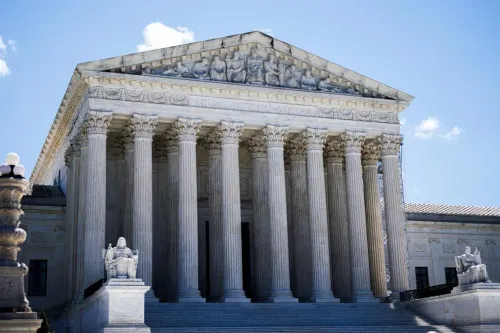
The US Supreme Court on 26 September 2026 allowed the Trump administration to resume expanding a federal immigration database into a nationwide voter-eligibility verification system, lifting a lower-court injunction that had cited privacy and data-accuracy concerns. The unsigned interim order permits the Department of Homeland Security (DHS) to integrate its Systematic Alien Verification for Entitlements (SAVE) system with Social Security and other government records covering American citizens — a move that could affect millions of voters ahead of the November midterm elections.
What the Court Ordered
The Supreme Court's order is interim in nature, not a final ruling on the legality of the administration's programme. It sets aside the lower court's injunction while the broader legal dispute continues. The court acknowledged that federal law restricts large-scale changes to voter-registration rolls close to an election, noting that this constraint 'limits the potential impact' of the expanded database during this year's midterms. States may still conduct individual searches using the SAVE system in the meantime.
In its reasoning, the court stated: 'The order below prevents the Federal Government from using the program it believes is best suited to the task.' The conservative majority found that blocking the expansion unduly constrained the federal government's preferred verification mechanism.
The Dissent and Its Warning
Justice Ketanji Brown Jackson dissented, joined by Justice Sonia Sotomayor and Justice Elena Kagan. Jackson argued that the lower court had correctly determined the expansion would likely violate federal law, and warned of serious consequences for lawful voters. She wrote: 'In my view, however, the harm caused by burdening or disenfranchising even a few lawful voters outweighs the nonexistent harm that the Government experiences when it is prevented from taking an action that it likely lacks the authority to take.'
Jackson specifically flagged that enabling mass searches — rather than one-record-at-a-time checks — significantly raises the risk that naturalised citizens could be wrongly flagged as noncitizens due to data errors or incomplete records.
Who Is Affected and Why It Matters
The ruling could have particular implications for naturalised American citizens, including those of Indian origin, whose records may now be cross-checked against immigration and Social Security databases. Critics contend that inaccurate or incomplete data could incorrectly identify eligible citizens as noncitizens, potentially burdening or disenfranchising them before the midterms.
The SAVE system was originally built to verify the immigration and citizenship status of individuals applying for certain public benefits and primarily held data on immigrants and naturalised citizens. The Trump administration sought to augment it with broader federal records and enable bulk searches — changes that a federal appeals court in Washington had blocked, finding they would likely violate federal privacy and administrative laws.
Broader Context: Trump's Election Integrity Push
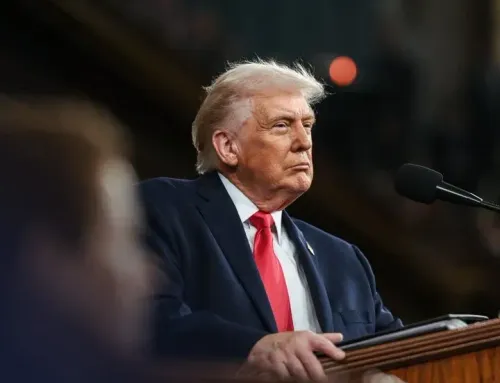
The database expansion flows from President Donald Trump's executive order of March 2025, titled 'Preserving and Protecting the Integrity of American Elections.' Several other elements of that order remain blocked by lower courts, including a nationwide requirement that voters provide documentary proof of citizenship at registration.
This ruling is also separate from a second Trump executive order issued in March 2026 that sought additional citizenship-verification measures. Earlier in September 2026, the Supreme Court had blocked a US Postal Service rule stemming from that later order, which would have restricted mail voting. In effect, the administration may now proceed with the SAVE expansion but cannot impose the separate postal voting restrictions for the upcoming midterms.
What Happens Next
The legal battle over the SAVE expansion is ongoing, and the Supreme Court's order does not resolve the underlying constitutional and statutory questions. Lower courts will continue to hear the case. Voting-rights groups are expected to pursue emergency relief, while the administration is likely to proceed with database integration. The November midterm elections now serve as the immediate stress test for the expanded system's accuracy and reach.
Point of View
Not mass voter-roll audits, and its accuracy for the latter purpose has never been independently validated. For Indian-origin and other naturalised American communities, the asymmetry is stark — a database error costs a citizen their vote, while the government's stated harm from a court block is administrative inconvenience. The dissent's logic is the harder one to dismiss.
NationPress
26 Sept 2026
Frequently Asked Questions
What did the US Supreme Court rule on the SAVE voter database?
The Supreme Court issued an interim order on 26 September 2026 allowing the Trump administration to expand the SAVE (Systematic Alien Verification for Entitlements) database into a nationwide voter-eligibility verification system. The order lifts a lower-court injunction while the broader legal dispute continues.
What is the SAVE database and how is it being expanded?
SAVE was originally created to verify immigration and citizenship status for people applying for public benefits, holding data mainly on immigrants and naturalised citizens. The Trump administration sought to combine that data with Social Security and other federal records and enable bulk searches of voter rolls rather than one-record-at-a-time checks.
How could this ruling affect Indian-origin voters in the US?
Naturalised American citizens of Indian origin could have their voter eligibility checked against immigration and Social Security records under the expanded system. Critics warn that incomplete or inaccurate data could wrongly flag eligible citizens as noncitizens, potentially burdening or disenfranchising them.
Why did three Supreme Court justices dissent?
Justices Ketanji Brown Jackson, Sonia Sotomayor, and Elena Kagan dissented, with Jackson arguing the lower court had correctly found the expansion would likely violate federal law. She warned that allowing mass database searches raised the risk of disenfranchising lawful voters due to data errors.
Will this affect the November midterm elections?
The court noted that federal law restricts large-scale voter-registration list changes shortly before an election, which limits the immediate impact of the expanded database on the November midterms. States may still conduct individual searches, but bulk changes to voter rolls face a statutory time constraint.