Modi at SCO Summit: Terrorism can't be a strategic asset for any nation
Synopsis
At the SCO Summit in Bishkek, PM Modi did not name Pakistan — he didn't need to. His demand that nations stop treating terrorism as a 'strategic asset,' paired with a hard sovereignty caveat on connectivity, put both Islamabad and Beijing on notice. The speech was less a multilateral address and more a precise diplomatic signal dressed in consensus language.
Key Takeaways
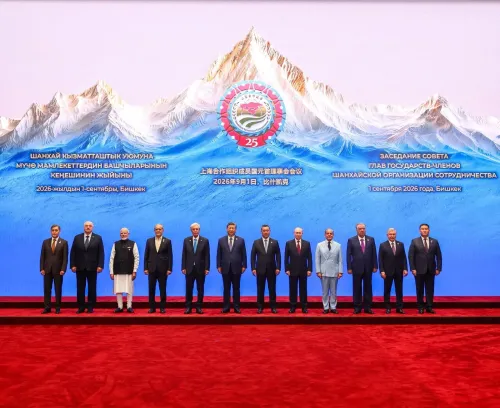
PM Modi addressed the 26th SCO Summit in Bishkek, Kyrgyzstan on 1 September .
He called for dismantling the full ecosystem of terror — financing, recruitment, radicalisation, and safe havens — and said terrorism cannot be a strategic asset for anyone .
Modi warned that the West Asia conflict is disrupting global energy security, maritime trade , and supply chains , with the Global South bearing the greatest burden.
He flagged drug trafficking as a serious threat and welcomed new SCO centres on organised crime and narcotics as a positive step .
India’s SCO engagement rests on three pillars: Security, Connectivity , and Opportunity — with connectivity explicitly conditioned on respect for sovereignty and territorial integrity .
The inaugural session of India’s proposed SCO Civilizational Dialogue Forum will be held in India this year.
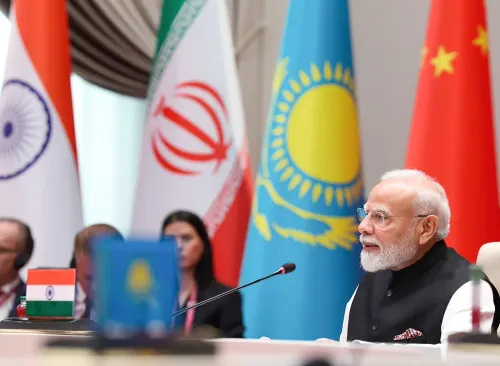
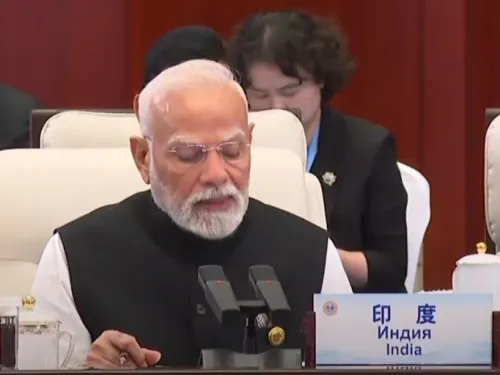
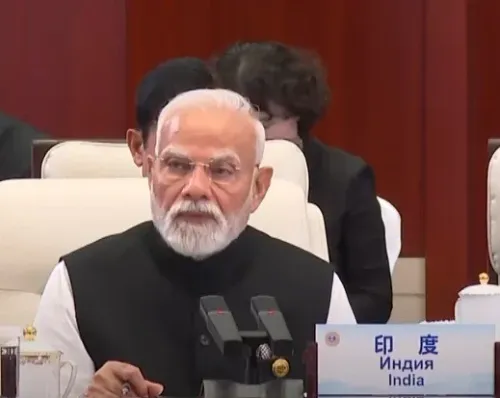
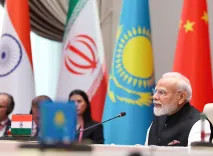
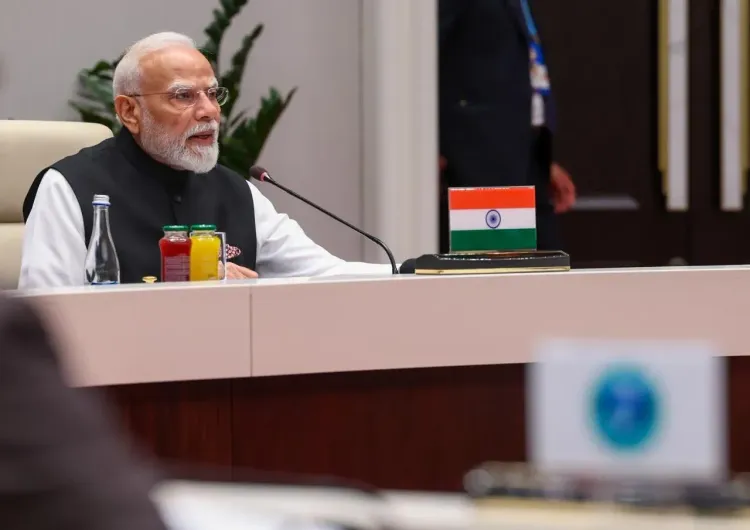
Prime Minister Narendra Modi delivered a pointed warning against state-sponsored terrorism at the 26th Shanghai Cooperation Organisation (SCO) Summit in Bishkek, Kyrgyzstan, on 1 September, demanding that countries harbouring or funding terror groups receive a unified and unambiguous message from the international community. Speaking at the 26th Meeting of the Council of Heads of State of the SCO, Modi asserted that terrorism cannot be treated as a “strategic asset for anyone” — a formulation widely read as a direct signal to Pakistan, a fellow SCO member.
The Core Warning on Terrorism
Modi called for dismantling what he described as the full “ecosystem” of terror — spanning financing, recruitment, radicalisation, and safe havens — rather than merely responding to individual attacks. “We cannot limit ourselves to a mindset of action and reaction,” he said. He pressed SCO members to “speak with one voice” and ruled out any tolerance for double standards on the issue.
“Those countries which make terrorism a tool of their policy, provide shelter and support to terrorists, will have to be given a strong message that terrorism cannot be a strategic asset for anyone,” Modi stated. The remarks carried particular weight given that India and Pakistan — long at odds over cross-border terrorism — both sit within the 10-member SCO bloc.
West Asia Conflict and Global Security Spillovers
Modi broadened his address to flag the cascading consequences of the West Asia conflict, arguing that regional wars no longer stay regional. He warned that the crisis is already disrupting energy security, maritime trade, and global supply chains, with nations in the Global South absorbing a disproportionate share of the fallout.
“Countries in the Global South bear the brunt of this. Therefore, India has been calling for the resolution of all tensions and wars through dialogue and diplomacy, not on the battlefield,” he said. The statement reaffirmed India’s consistent position of strategic non-alignment on the Russia-Ukraine and West Asia fronts while pressing for negotiated outcomes.
Drug Trafficking, Connectivity, and the Three Pillars
The Prime Minister flagged drug trafficking as a mounting threat to regional youth and security, welcoming new SCO centres being set up to tackle organised crime, information security, and narcotics as a “positive step.” He urged that these institutions be made into effective operational instruments rather than ceremonial bodies.
Modi outlined three pillars guiding India’s engagement with the SCO: Security, Connectivity, and Opportunity. On connectivity, he expressed India’s support for trade-facilitating infrastructure while attaching a firm condition: “Respect for the sovereignty and territorial integrity of all countries is essential in these efforts. This is also the core spirit of the SCO Charter.” The caveat is widely understood as India’s standing objection to the China-Pakistan Economic Corridor (CPEC), which passes through Pakistan-administered Kashmir.
People-Driven Cooperation and India’s SCO Initiatives
Modi argued that SCO cooperation must move beyond government-to-government channels and become genuinely people-driven. He highlighted India’s contributions including the Start-up Forum, the Young Authors’ Conclave, and the Young Scientists’ Forum. He also noted that India had proposed the SCO Civilizational Dialogue Forum last year, and confirmed that its inaugural session would be held in India in the current year.
The SCO currently comprises 10 member states — Belarus, India, Iran, Kazakhstan, China, Kyrgyzstan, Pakistan, Russia, Tajikistan, and Uzbekistan — along with two observer states and 15 dialogue partners. As India’s diplomatic footprint within the bloc deepens, Modi’s Bishkek address signals that New Delhi intends to use the SCO platform to press its counterterrorism agenda with renewed urgency.
Point of View
Not boilerplate multilateralism. The phrase ‘strategic asset’ is a known reference to how Pakistani military doctrine has historically framed non-state armed groups — and every delegation in that room understood it. The sovereignty caveat on connectivity is equally pointed: India has consistently refused to endorse CPEC, and embedding that objection in SCO Charter language gives it institutional weight. What the speech does not resolve is the structural tension of India sitting at the same table as both China and Pakistan while pressing an agenda that directly challenges both. The SCO’s consensus-driven architecture means Modi’s words will carry moral force — but little enforcement.
NationPress
1 Sept 2026
Frequently Asked Questions
What did PM Modi say about terrorism at the SCO Summit?
PM Modi called for dismantling the entire ecosystem of terrorist financing, recruitment, radicalisation, and safe havens, asserting that terrorism cannot be treated as a 'strategic asset for any nation.' He urged all SCO members to speak with one voice and reject double standards on the issue.
Where was the SCO Summit held and who attended?
The 26th SCO Summit was held in Bishkek, Kyrgyzstan, on 1 September. The SCO comprises 10 member states including India, China, Pakistan, Russia, and six others, along with observer states and 15 dialogue partners.
What is India's position on connectivity within the SCO?
India supports connectivity initiatives that facilitate trade and open development pathways, but has made clear that respect for the sovereignty and territorial integrity of all nations is a non-negotiable condition. This position is widely understood as India's objection to infrastructure projects passing through disputed territories.
Why did Modi raise the West Asia conflict at the SCO?
Modi argued that the West Asia conflict is no longer a regional issue — it is disrupting global energy security, maritime trade, and supply chains, with Global South nations absorbing a disproportionate share of the impact. He reiterated India's call for resolving all conflicts through dialogue and diplomacy.
What new initiatives did India highlight at the SCO Summit?
India highlighted the Start-up Forum, Young Authors' Conclave, and Young Scientists' Forum as people-driven SCO initiatives. Modi also confirmed that the inaugural session of the SCO Civilizational Dialogue Forum — proposed by India last year — will be held in India in the current year.