Trump Announces Allied Defense Surge at 2026 NATO Summit
Synopsis
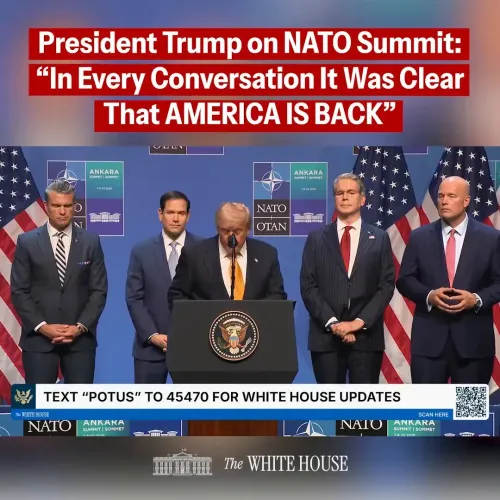
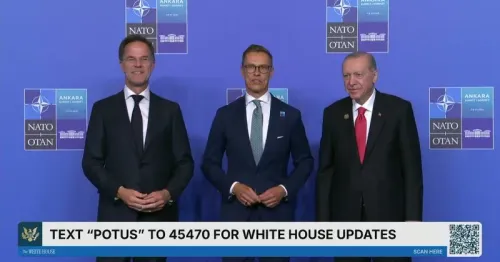
President Donald J. Trump announced a surge in Allied defense investment at the 2026 NATO Summit, the White House said on 10 July 2026, citing new opportunities for American companies and thousands of high-paying jobs as key outcomes of the gathering.
Key Takeaways
The White House declared the 2026 NATO Summit a success on 10 July 2026 .
Trump announced a 'surge in Allied defense investment' at the summit.
The administration framed the outcome as creating 'new opportunities for American companies and thousands of high-paying jobs.' NATO allies first pledged to target 2 percent of GDP on defense at the 2014 Wales Summit .
Trump has consistently linked higher Allied spending to procurement from US defense firms since his first term.
Follow-on bilateral meetings and Congressional defense bills will determine whether summit pledges translate into concrete contracts.
The White House announced on Friday, 10 July 2026 that President Donald J. Trump declared a major surge in Allied defense investment at the 2026 NATO Summit, framing the development as a win for American industry and employment.
Context
The White House posted that the summit was 'successful' and that President Trump 'announced a surge in Allied defense investment, creating new opportunities for American companies and thousands of high-paying jobs.' The statement positions the outcome as both a geopolitical achievement and a domestic economic dividend.
NATO, the North Atlantic Treaty Organization founded in 1949, binds its members to collective defense under Article 5. The alliance has long debated burden-sharing, with the United States consistently holding the largest share of aggregate defense expenditure among members.
Policy Backdrop
The push for higher Allied spending has deep roots. At the 2014 Wales Summit, NATO heads of state pledged to move toward a defense spending target of 2 percent of GDP within a decade. Progress among European members was uneven for years, drawing repeated criticism from Washington.
During his first term from 2017 to 2021, President Trump made Allied defense spending a signature demand, at times publicly conditioning US alliance commitments on higher outlays from partner nations. He also consistently linked increased Allied spending to procurement from American defense firms, tying alliance obligations to US industrial and employment outcomes.
Successive administrations have pressed European NATO members to reduce dependence on US security guarantees. The 2026 summit announcement suggests that pressure has yielded a fresh round of commitments, with Trump framing the result in terms of American economic benefit.
Stakeholders and Impact
US defense contractors stand to be among the most immediate beneficiaries if Allied nations channel increased spending toward American-made platforms, weapons systems, and technology. The White House framing of 'thousands of high-paying jobs' signals that the administration intends to present the outcome to domestic audiences as an economic achievement alongside a security one.
NATO allies, particularly in Europe, face the practical challenge of translating summit pledges into actual budget allocations and procurement decisions, a process that typically runs through national parliaments and multi-year defense plans. American workers in the defense manufacturing sector, concentrated in states with major aerospace and armaments facilities, could see demand increases if procurement agreements follow.
What's Next
Attention will now shift to the specifics of any investment pledges made at the summit — the precise figures, timelines, and procurement commitments that underpin the White House's characterisation of a 'surge.' Congressional defense authorization and appropriations bills may incorporate provisions related to new Allied procurement arrangements, making Capitol Hill a key venue for translating summit outcomes into binding policy.
Follow-on bilateral meetings between the United States and individual NATO members on spending timelines and weapons purchases will be closely watched. The degree to which Allied nations convert summit language into signed contracts and budget lines will determine whether the 2026 summit is remembered as a turning point in NATO burden-sharing or another round of aspirational pledges.
Point of View
Which engages with both NATO members and the US defense industry on its own procurement, the direction of Allied spending — and the American firms that benefit — carries indirect but real implications for the global defense market. Whether the 2026 summit produces durable budget commitments or remains at the level of political signaling will be the defining test of this announcement.
NationPress
10 Jul 2026
Frequently Asked Questions
What happened at the 2026 NATO Summit?
The White House announced that President Donald J. Trump declared a surge in Allied defense investment at the 2026 NATO Summit, framing it as a success that creates new opportunities for American companies and thousands of high-paying jobs.
What is NATO's defense spending target?
NATO members pledged at the 2014 Wales Summit to aim for defense spending of 2 percent of GDP within a decade. Meeting this target has been a persistent point of contention, with the US pressing European allies to increase their contributions.
How does Trump's NATO stance benefit American workers?
The White House argues that higher Allied defense investment translates into procurement contracts for US defense firms, supporting thousands of high-paying manufacturing and technology jobs domestically.
What is Article 5 of NATO?
Article 5 is the collective defense clause of the NATO treaty, under which an attack on one member is considered an attack on all. It is the foundational commitment binding the alliance's 30-plus member states.
What comes after the 2026 NATO Summit?
Follow-on bilateral meetings on spending timelines and procurement are expected, along with Congressional action on defense authorization bills that may incorporate new Allied procurement provisions.