Trump claims Strait of Hormuz is US territory, vows Iran will never get nuclear weapon
Synopsis
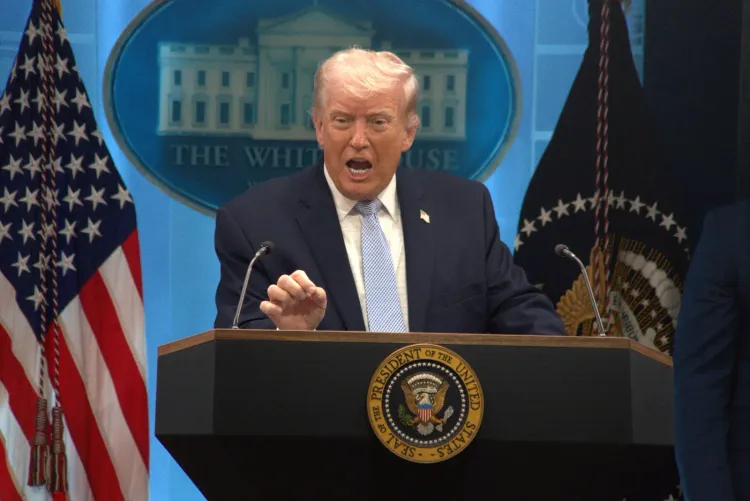
At a South Carolina campaign rally, Trump declared the Strait of Hormuz — one of the world's most vital oil transit chokepoints — to be 'American territory,' without offering any legal basis. Combined with sweeping claims about Iran's military destruction and a casual quip about bombing Iran 'a little bit more,' the remarks mark a striking escalation in rhetoric, even by Trump's own standards.
Key Takeaways
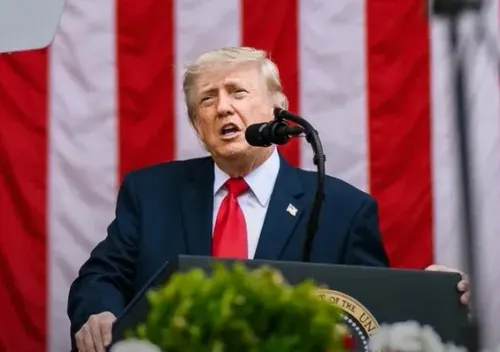
Donald Trump claimed the Strait of Hormuz is 'American territory' at a rally in Myrtle Beach, South Carolina on 22 August .
Trump vowed Iran would 'never' acquire a nuclear weapon, saying US action had already stopped it.
He claimed Iran no longer has an effective navy, air force, radar capability, or manufacturing base .
Trump predicted oil and petrol prices would fall once the Iran confrontation concluded.
The rally was organised to support Darlene Graham , Republican Senate candidate in Tuesday's South Carolina runoff.
The White House has not issued any formal clarification on the Strait of Hormuz territorial claim.
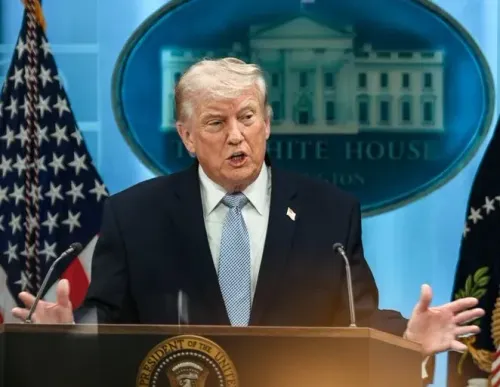
US President Donald Trump claimed at a campaign rally on 22 August that the Strait of Hormuz is American territory, while declaring that Iran would never be permitted to acquire a nuclear weapon. The remarks, made without any legal or territorial explanation, drew immediate attention given the waterway's status as one of the world's most critical maritime energy corridors.
What Trump Said at the Rally
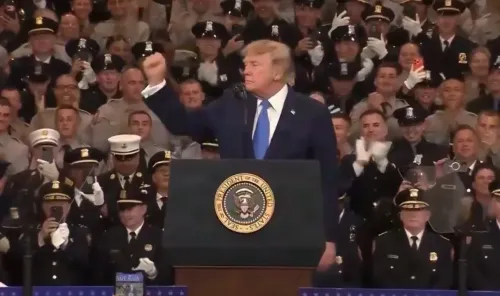
Speaking in Myrtle Beach, South Carolina, Trump told supporters: 'They wanna make a deal so badly,' before pivoting to the Strait of Hormuz and asserting, 'It's an American territory.' He offered no legal basis for the claim. The rally was primarily organised to rally Republican voters behind Darlene Graham, the party's Senate candidate ahead of Tuesday's runoff election.
Trump also framed the Iran confrontation as an unwanted detour from his domestic economic agenda. 'I hate to do this, but we're gonna have to take a little detour down to the Islamic Republic of Iran, and we're gonna have to put out the nuclear weapons stuff because they're gonna have a nuclear weapon and we cannot let them have a nuclear weapon,' he said.
Claims About Iran's Military Losses
Trump claimed that US action had severely degraded Iran's military capacity, asserting the country no longer possessed an effective navy, air force, radar capability, or manufacturing base. 'Their leaders are gone. Their second set of leaders are gone. Parts of their third set of the leaders are gone,' he said.
He acknowledged the scale of the reported damage had complicated potential negotiations. 'In fact, it's actually one of my biggest problems. I don't know who the hell to deal with,' Trump said.
Remarks on Oil Prices and Iran
Trump linked the Iran standoff directly to global energy markets, predicting a drop in oil and petrol prices once the confrontation concluded. 'As soon as we're finished with the Islamic Republic of Iran, as soon as we're finished, oil is gonna be down at lower than it was even just a little while ago,' he said.
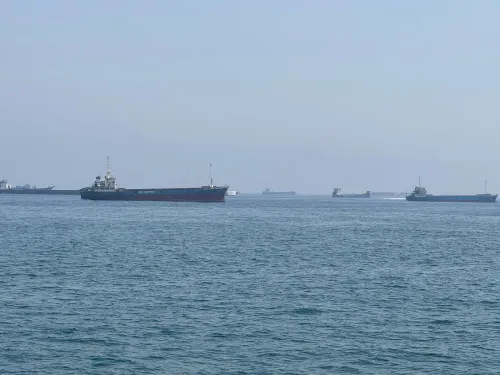
This comes amid broader volatility in global crude markets, where any disruption to the Strait of Hormuz — through which roughly 20% of the world's oil supply passes — carries significant consequences for energy prices worldwide.
The Rally's Political Context
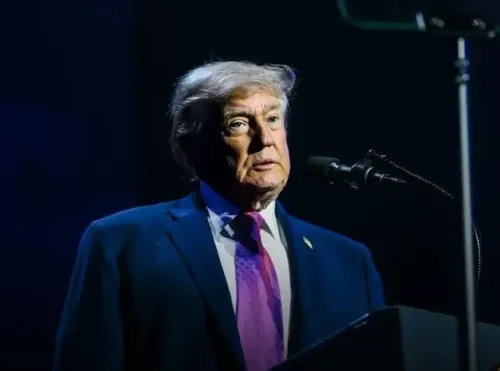
The event was primarily a mobilisation drive for Darlene Graham, who received Trump's endorsement for the South Carolina Senate runoff. Trump repeatedly urged supporters to treat the vote as though his own name were on the ballot. 'I am on the ballot. We're all on the ballot. Our country's on the ballot,' he said.
Graham, in turn, pledged unconditional support: 'I will have President Trump's back 100 per cent,' she told supporters.
Trump also returned to his signature rally staple, reciting 'The Snake' — a song he regularly deploys to underscore his immigration stance — before making an offhand remark about Iran: 'Go back, bomb Iran a little bit more. What the hell?'
Whether the Strait of Hormuz remarks reflect a deliberate policy shift or campaign-trail improvisation remains unclear; the White House has not issued any formal clarification.
Point of View
And neither Iran nor Oman, which share its shores, would accept such a framing. What is notable is that the remark was made without any policy apparatus behind it: no White House statement, no legal rationale, no diplomatic preparation. The offhand quip about bombing Iran 'a little bit more' at the same rally underscores how the line between campaign performance and foreign policy signalling has effectively collapsed. For India, which depends heavily on Gulf oil transiting the Strait, the geopolitical uncertainty carries real economic risk — a dimension almost entirely absent from the domestic US coverage of these remarks.
NationPress
22 Aug 2026
Frequently Asked Questions
Why did Trump call the Strait of Hormuz US territory?
Trump made the claim at a campaign rally in Myrtle Beach on 22 August, offering no legal or territorial explanation. The Strait of Hormuz is an internationally recognised maritime passage shared by Iran and Oman, and the assertion has no basis in international law.
What did Trump say about Iran's nuclear programme?
Trump declared that Iran would 'never' be allowed to acquire a nuclear weapon and claimed US action had already eliminated that threat. He said the US 'went down and stopped them,' though no independent verification of the claimed military outcomes was available at the time of the rally.
What claims did Trump make about Iran's military?
Trump claimed Iran no longer has an effective navy, air force, radar capability, or manufacturing base, and that multiple tiers of its leadership had been eliminated. He acknowledged these losses had made it difficult to identify who to negotiate with.
How significant is the Strait of Hormuz?
The Strait of Hormuz is one of the world's most critical maritime energy corridors, through which roughly 20% of global oil supply passes. Any disruption to the waterway has immediate and significant consequences for international energy prices.
What was the main purpose of Trump's Myrtle Beach rally?
The rally was primarily organised to mobilise Republican voters for Darlene Graham, the party's Senate candidate in South Carolina's Tuesday runoff election. Trump repeatedly urged supporters to treat the vote as if his own name were on the ballot.