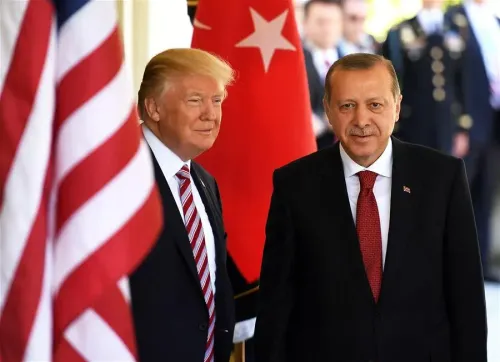
Trump Holds Bilateral Meeting with Turkey's Erdogan
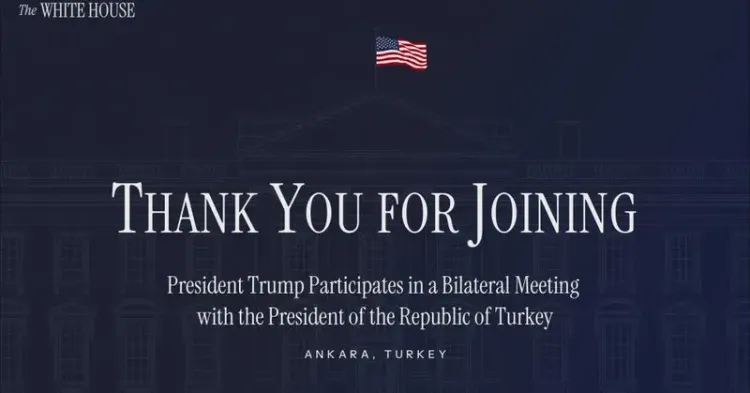
Synopsis
US President Donald Trump held a bilateral meeting with Turkish President Recep Tayyip Erdogan on July 7, 2026, the White House announced. The meeting continues a pattern of direct personal diplomacy between the two leaders, with NATO burden-sharing, Syria policy, and unresolved CAATSA sanctions among the key issues in focus.
Key Takeaways
President Trump participated in a bilateral meeting with Turkish President Recep Tayyip Erdogan on July 7, 2026 , confirmed by the White House.
Turkey has been a NATO member since 1952 and holds strategic importance at the crossroads of Europe, Asia, and the Middle East.
The United States imposed CAATSA sanctions on Turkey in December 2020 over its purchase of the Russian S-400 missile defence system, a dispute that remains unresolved.
Trump and Erdogan have a history of direct bilateral engagement, including a White House meeting in May 2017 and a phone call in October 2019 on Syria.
NATO allies and regional actors are closely watching for any joint statement on sanctions relief, Syria policy, or alliance spending commitments.
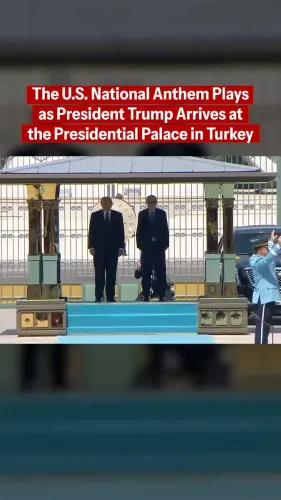
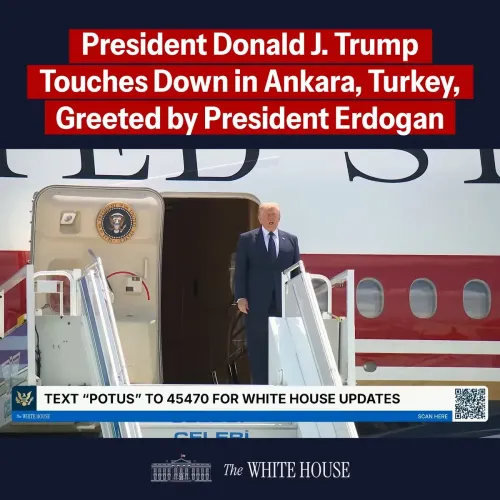
US President Donald Trump participated in a bilateral meeting with President Recep Tayyip Erdogan of the Republic of Turkey on Tuesday, July 7, 2026, as confirmed by an official White House communication. The meeting marks another chapter in the long-running personal diplomacy between the two leaders, who have engaged directly on a range of alliance and regional security issues since Trump's first term.
Context
The White House announced the bilateral meeting via its official communications channel, sharing a live broadcast of the event. Bilateral meetings at this level signal a deliberate effort to engage directly on issues where the two countries have both shared interests and persistent disagreements.
Turkey and the United States share a decades-long alliance through NATO, which Turkey joined in 1952. Ankara occupies a strategically critical position at the crossroads of Europe, Asia, and the Middle East, giving it outsized influence over regional security dynamics and migration flows into Europe.
Policy Backdrop
Trump's engagement with Erdogan has a well-documented history. The two leaders met at the White House in May 2017 to discuss counter-ISIS cooperation and bilateral trade. In October 2019, they coordinated by phone on a US troop withdrawal and a subsequent Turkish military operation in northern Syria.
A significant friction point emerged in December 2020, when the United States imposed CAATSA sanctions on Turkey following Ankara's acquisition of the Russian S-400 missile defence system — a purchase that drew sharp criticism from other NATO allies. The sanctions question has remained unresolved and is a recurring subject in US-Turkey diplomatic contacts.
Trump's broader approach to alliance management has consistently favoured direct personal summits with leaders like Erdogan over multilateral institutional formats, a pattern this meeting continues.
Stakeholders and Impact
NATO allies will be closely watching the outcome of this meeting, particularly on questions of burden-sharing, the S-400 dispute, and the alliance's posture on Russia. European partners have long been concerned about the durability of Turkey's alignment with Western security frameworks.
Regional actors in the Middle East and Central Asia also have a stake in any shifts in US-Turkey relations, especially regarding Syria policy and energy transit routes. US diplomats and defence officials will be monitoring any joint readouts for signals on sanctions relief or new security cooperation frameworks.
What's Next
Analysts will look for an official joint statement or readout from the White House following the meeting, which would clarify whether any concrete agreements were reached on NATO spending commitments, Syria, or the long-standing sanctions dispute. The next scheduled NATO foreign ministers' meeting could provide an early indicator of how any outcomes from this bilateral translate into alliance-level policy.
This meeting reinforces a recurring pattern in Trump-era diplomacy: managing alliance friction through high-level personal engagement rather than through institutional channels, a method that has produced both breakthroughs and ambiguity in equal measure.
Point of View
Bosphorus access, and southern-flank security — gives it significant bargaining power. A meeting of this nature, without a pre-announced agenda, typically signals that both sides see value in keeping channels open even amid unresolved disputes like the S-400 sanctions. For India, which watches US-Russia-Turkey triangulation closely in the context of its own defence procurement decisions, the outcome of this meeting carries indirect but real strategic relevance.
NationPress
7 Jul 2026
Frequently Asked Questions
Why did Trump meet Erdogan in July 2026?
The White House confirmed President Trump participated in a bilateral meeting with Turkish President Recep Tayyip Erdogan on July 7, 2026, though the specific agenda has not been publicly detailed. US-Turkey meetings at this level typically address NATO commitments, Syria policy, and outstanding disputes such as CAATSA sanctions over Turkey's S-400 purchase.
What are CAATSA sanctions and why do they matter for Turkey?
CAATSA, or the Countering America's Adversaries Through Sanctions Act, was used by the United States to impose sanctions on Turkey in December 2020 after Ankara acquired the Russian S-400 missile defence system. The sanctions remain a central point of friction in US-Turkey relations and are frequently raised in bilateral diplomatic contacts.
Is Turkey still a NATO member?
Yes, Turkey has been a NATO member since 1952 and remains a key part of the alliance's southern flank. Despite periodic tensions with other allies over its Russia ties and domestic governance, Turkey has not left NATO and continues to participate in alliance activities.
What was the outcome of the Trump-Erdogan meeting?
As of the White House announcement on July 7, 2026, no joint statement or detailed readout of outcomes has been confirmed. Analysts are watching for any follow-up communications on NATO spending, Syria, or sanctions relief.
How have Trump and Erdogan worked together before?
Trump and Erdogan met at the White House in May 2017 to discuss counter-ISIS cooperation and trade. In October 2019, they coordinated by phone on a US troop withdrawal and Turkish military operation in northern Syria, reflecting a pattern of direct personal diplomacy between the two leaders.