Trump Hosts Farmers at White House Rose Garden Dinner

Synopsis
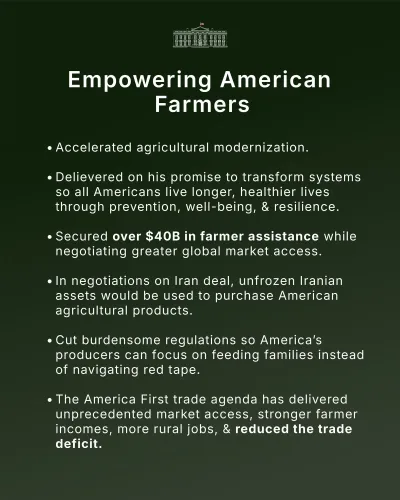
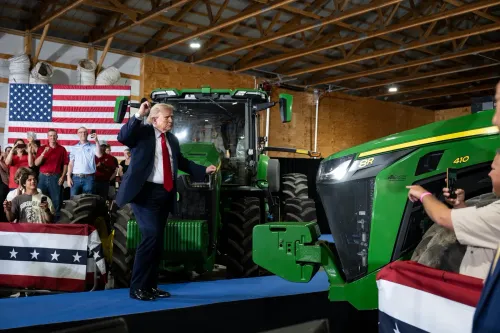
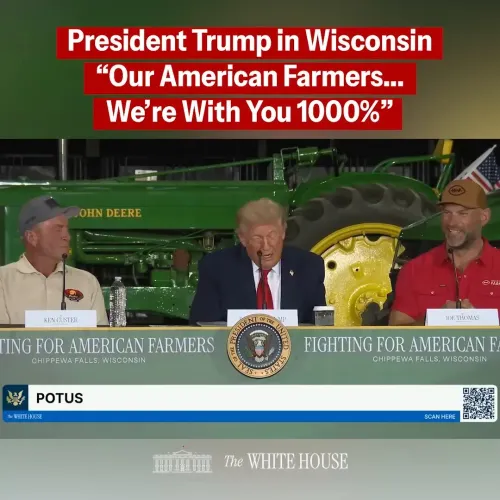
President Trump hosted farmers and ranchers at a farm-to-table dinner in the White House Rose Garden on June 26, 2026. The White House shared video of producers speaking about the administration's agricultural record, citing it as the strongest in favour of American farmers in recent history.
Key Takeaways
President Trump hosted a farm-to-table dinner for farmers and ranchers at the White House Rose Garden on June 26, 2026 .
The White House released a video featuring producers speaking about the administration's impact on American agriculture.
The Agricultural Improvement Act of 2018 reauthorised crop insurance, commodity supports, and conservation funding during Trump's first term.
The January 2020 Phase One US-China trade agreement secured expanded Chinese purchases of US soybeans, pork, and other farm exports.
Congressional reauthorisation of the next five-year farm bill remains a key pending legislative item for the sector.
US farm commodity prices carry indirect relevance for India , influencing global benchmarks for wheat, soybean, and cotton.
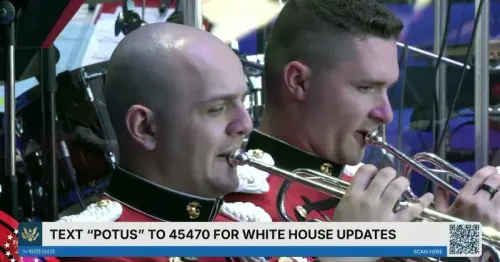
President Donald Trump welcomed farmers and ranchers to a special farm-to-table dinner at the White House Rose Garden on Friday, June 26, 2026, in an event staged to underscore the administration's commitment to America's agricultural community. The White House posted a video of the gathering on X, inviting the public to hear directly from the producers who attended.
The official post declared that 'no one has delivered more for America's farmers than President Trump,' framing the dinner as a moment of recognition for the people who 'feed America.' The event brought ranchers and crop producers inside one of Washington's most symbolic outdoor venues to share their views on the administration's agricultural record.
Context
The Rose Garden has long served as a backdrop for White House outreach to key stakeholder groups, and farm-focused events have been a recurring feature of Trump-era political messaging. By hosting producers at the executive residence itself, the administration sought to reinforce its image as a champion of rural America. The video shared in the post featured farmers and ranchers speaking in their own words about what the administration has meant for their livelihoods.
Policy Backdrop
The Trump administration's agricultural record spans two terms. During the first term, the Agricultural Improvement Act of 2018 reauthorized major federal farm programmes including crop insurance, commodity price supports, and conservation funding. A landmark moment came in January 2020 when the Phase One US-China trade agreement secured commitments for expanded Chinese purchases of US soybeans, pork, and other agricultural exports, providing a significant demand boost to American producers who had been hurt by earlier tariff escalation.
Trade policy has remained central to the administration's relationship with the farm sector. Tariffs and bilateral purchase agreements directly affect commodity prices and export volumes, making the White House's posture on trade among the most consequential policy levers for American agriculture.
Stakeholders and Impact
American farmers and ranchers represent a politically and economically significant constituency, particularly across the Midwest, Great Plains, and Southern states. Agricultural producers have navigated a volatile decade marked by trade disputes, pandemic-era supply disruptions, and shifting commodity markets. White House events of this kind serve both a symbolic and a substantive function — signalling executive attention to rural concerns while providing producers a direct platform to voice their experience of federal policy.
For Indian observers, the health of the US agricultural export sector carries indirect relevance: American farm policy shapes global commodity prices for wheat, soybean, and cotton, all of which affect Indian import costs and domestic price signals.
What's Next
Congressional action on the next five-year farm bill reauthorisation remains a key legislative priority for the agricultural sector. The omnibus legislation, which governs everything from crop insurance to nutrition programmes, has faced repeated delays in recent sessions. Any follow-on trade negotiations affecting major export commodities — particularly with large buyers such as China — will also be closely watched by producers seeking stable export markets. The Rose Garden dinner signals that the White House intends to keep agricultural outreach prominent as these legislative and diplomatic processes unfold.
Point of View
The challenge is translating symbolic gestures into durable policy wins, particularly on trade market access and farm bill funding levels. How Congress responds to the administration's agricultural priorities will be the real test of whether this outreach translates into legislative outcomes.
NationPress
27 Jun 2026
Frequently Asked Questions
Why did Trump host a dinner for farmers at the White House?
The White House hosted the farm-to-table dinner in the Rose Garden on June 26, 2026, to highlight the administration's record on agricultural policy and allow farmers and ranchers to speak directly about the impact of federal support on their livelihoods.
What has Trump done for American farmers?
During his first term, Trump signed the Agricultural Improvement Act of 2018, which reauthorised major farm programmes including crop insurance and commodity supports. His administration also negotiated the January 2020 Phase One trade deal with China, which included commitments for expanded purchases of US soybeans and pork.
What is the US farm bill and why does it matter?
The farm bill is a comprehensive five-year federal law governing crop insurance, commodity price supports, conservation programmes, and nutrition assistance. Its reauthorisation is a major legislative priority for American farmers and is currently pending in Congress.
How does US farm policy affect India?
US agricultural export policy influences global commodity prices for crops such as wheat, soybean, and cotton. Changes in American trade agreements or domestic production incentives can shift global supply and pricing benchmarks that Indian importers and farmers track closely.
What is the White House Rose Garden used for?
The Rose Garden is a formal outdoor space at the White House traditionally used for official ceremonies, press conferences, and stakeholder events. Presidents have historically used it to host groups whose support they wish to publicly acknowledge.