Trump warns Iran: Any move at Pickaxe Mountain site triggers US strike
Synopsis
Trump publicly warned Iran that any movement at the Pickaxe Mountain nuclear site — even minor — would trigger an immediate US military strike, while satellite images shown on live television revealed fresh activity at the previously bombed Taleghan facility. With Operation Epic Fury already on the books and B-2 bombers previously deployed, Washington's threshold for action appears lower than at any point in recent memory.
Key Takeaways
President Trump warned on 15 July that any activity at Iran's Pickaxe Mountain nuclear site would prompt an immediate US military strike.
US Space Force surveillance systems are actively monitoring Pickaxe Mountain, though Trump acknowledged it is unclear whether Iran is conducting nuclear-related work there.
Satellite images from 22 June and 7 July shown during the Fox News interview revealed trucks, cranes, and apparent fresh concrete at the Taleghan facility near Tehran .
Trump claimed Iran was within two weeks of a nuclear weapon before he ordered Operation Epic Fury on 28 February , involving B-2 bomber strikes on three nuclear sites.
Weapons experts have questioned whether US bunker-buster bombs can penetrate deeply enough to destroy Pickaxe Mountain; Trump disputed this.
Iran maintains its nuclear programme is for peaceful purposes; enrichment activities and monitoring restrictions remain the core of the US-Iran dispute.
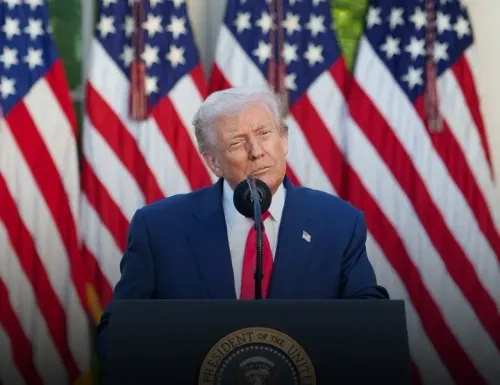
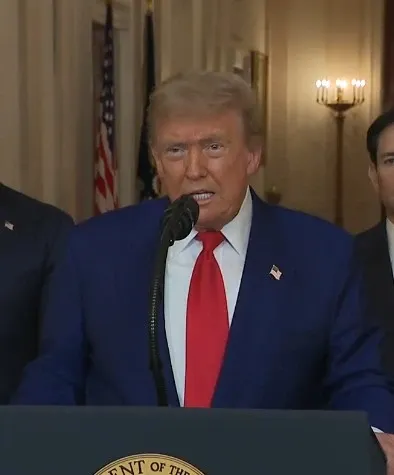
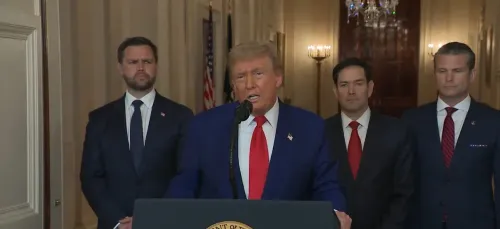
US President Donald Trump on 15 July warned that any activity at Iran's Pickaxe Mountain nuclear site would prompt an immediate American military response, saying the United States Space Force was actively surveilling the facility. The warning, delivered in a Fox News interview, marks one of the sharpest public threats from Washington toward Tehran since the earlier US strikes on Iranian nuclear infrastructure.
The Pickaxe Mountain Warning
Trump said Space Force surveillance systems were trained on the facility following reports of possible activity. 'We're looking at Pickaxe because somebody said there's a little activity,' he said. He added that the surveillance cameras were powerful enough to read a person's name badge from space, and that other previously struck Iranian nuclear sites also remained under observation.
Despite the warning, Trump acknowledged uncertainty about what, if anything, was occurring at the location. 'Nobody knows about Pickaxe. By the way, nobody knows if they even are doing anything in Pickaxe,' he said. 'It's just something that comes up.' He nonetheless made clear that even a minor indication of activity would be enough to act: 'If there's even just a small amount, we'll hit it and we'll hit it hard.'
Satellite Images and the Taleghan Facility
During the interview, Fox News correspondent Trey Yingst presented Trump with satellite images of the Taleghan facility, located outside Tehran, taken on 22 June and 7 July. The later image reportedly showed trucks, cranes, and what appeared to be freshly poured concrete — signs of renewed activity at a site previously targeted in US strikes.
Trump said he had been told that Iran poured concrete to seal the entrances to the facility. 'That they poured concrete to close up the entrances so we couldn't get into it,' he said, attributing the information to what he had been told rather than confirming it independently. He added that the United States could strike Taleghan again with minimal notice: 'We can hit that one very easily. You know, it only takes a matter of minutes for us to do it and do major damage.'
Operation Epic Fury and the Nuclear Timeline Claim
Trump referenced Operation Epic Fury, which he said he ordered on 28 February, involving B-2 bomber strikes against three Iranian nuclear sites. He claimed Iran had been within two weeks of obtaining a nuclear weapon at the time. 'They were going to have a nuclear weapon within two weeks,' he said. 'Had we not done the B2 bombers, had we not bombed their nuclear sites, their three nuclear sites.'
Weapons experts interviewed by Fox News separately questioned whether US bunker-buster bombs could penetrate deeply enough to destroy the Pickaxe Mountain site. Trump dismissed the concern: 'They can go deep. We have good, good stuff,' he said.
Iran's Position and the Broader Standoff
Iran has consistently maintained that its nuclear programme is intended for peaceful purposes. Its uranium enrichment activities and restrictions on international monitoring have, however, remained the central points of contention in its prolonged dispute with the United States and other Western nations. The latest exchange raises fresh questions about the durability of any diplomatic off-ramp, particularly as satellite imagery suggests continued movement at key sites despite prior strikes.
As both sides harden their public positions, the trajectory of US-Iran nuclear tensions will depend heavily on what intelligence assessments of Pickaxe Mountain and Taleghan ultimately conclude — and whether Washington chooses to act on ambiguous signals.
Point of View
Or a willingness to lower the evidentiary threshold for military action to a degree that alarms arms-control experts. The Taleghan satellite images, shown on live television, blur the line between intelligence briefing and political theatre. Meanwhile, the two-week nuclear weapon claim — unverified by independent assessors — does significant work in the domestic political framing of Operation Epic Fury, and deserves scrutiny that a primetime interview format rarely provides.
NationPress
13 Oct 2026
Frequently Asked Questions
What did Trump say about Iran's Pickaxe Mountain nuclear site?
Trump warned on 15 July that any activity at Pickaxe Mountain would trigger an immediate US military strike. He said Space Force surveillance cameras were monitoring the site, but also acknowledged uncertainty, stating 'nobody knows if they even are doing anything in Pickaxe.'
What is Operation Epic Fury?
Operation Epic Fury is a US military operation Trump said he ordered on 28 February, involving B-2 bomber strikes against three Iranian nuclear sites. Trump claimed the strikes prevented Iran from obtaining a nuclear weapon, which he said was as little as two weeks away at the time.
What did satellite images of the Taleghan facility show?
Satellite images taken on 22 June and 7 July, shown during Trump's Fox News interview, revealed trucks, cranes, and what appeared to be freshly poured concrete at the Taleghan facility near Tehran — a site previously targeted in US strikes. Trump said he was told Iran poured concrete to seal the facility's entrances.
Can US bunker-buster bombs destroy the Pickaxe Mountain site?
Weapons experts cited during the Fox News interview questioned whether US bunker-buster bombs could penetrate deeply enough to destroy Pickaxe Mountain. Trump disputed this, saying 'they can go deep' and that the US has 'good stuff,' without providing specifics.
What is Iran's official position on its nuclear programme?
Iran has long maintained that its nuclear programme is intended exclusively for peaceful purposes. However, its uranium enrichment activities and restrictions on international monitoring have remained the central points of its dispute with the United States and Western nations.