Iran nuclear talks taking longer than expected, Trump warns of tougher options
Synopsis
Trump openly acknowledged on 20 May that Iran talks are running behind schedule — and in the same breath floated the use of limited force, pointed to internal Iranian unrest as leverage, and made the unexplained claim that the US had ‘essentially taken over Iran.’ The remarks, unscripted and unelaborated, raise real questions about where the diplomatic process stands and what Washington’s fallback actually looks like.
Key Takeaways
President Donald Trump said on 20 May that US-Iran negotiations were taking longer than expected.
Trump warned he could pursue tougher options if diplomacy with Iran fails.
He referenced the Strait of Hormuz and suggested a preference for limited rather than large-scale conflict.
Trump cited rising public anger inside Iran over worsening living conditions as a factor in the situation.
In an unelaborated remark, Trump claimed the US had ‘essentially taken over Iran,’ without providing further detail.
He compared the current negotiations to past US military engagements in Afghanistan , Iraq , and Korea .
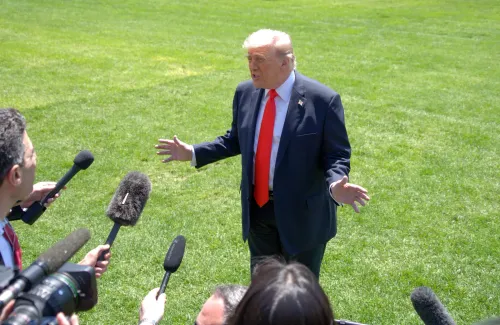
US President Donald Trump said on Wednesday, 20 May that negotiations with Iran were taking longer than anticipated, and warned that he could pursue harder measures if diplomatic efforts fail. The remarks, made to reporters at the White House, signal growing impatience in Washington over the pace of the talks.
Trump's Warning on Diplomacy
Trump indicated a preference for a limited, contained outcome over a broader regional conflict. “Ideally, I’d like to see a few people kill as opposed to a lot,” he said when asked about a possible arrangement linked to the Strait of Hormuz, adding, “We do it another way, but I’d like to see a few.” The remarks drew immediate attention for their bluntness regarding the use of force.
Iran’s Internal Conditions, According to Trump
Trump pointed to what he described as mounting public frustration inside Iran, attributing it to deteriorating living standards. “There’s a lot of anger now in Iran, cause people are living so badly,” he said. “There’s a lot of foment that we haven’t seen so much.” The assessment, offered without citing intelligence sources, suggests Washington is watching Iran’s domestic situation closely as leverage in the negotiations.
Trump Compares Talks to Past US Military Engagements
When asked directly whether the negotiations had run longer than expected, Trump drew a comparison with prolonged US military presences in Afghanistan, Iraq, and Korea. “You were in Afghanistan, these other places, 10 years,” he said. “You were in Iraq. How long were you in Iraq?… You were in Korea for seven years.”
He also argued that recent US operations had resulted in far fewer American casualties than earlier conflicts. “In other wars, you lost hundreds of thousands of people. Here we lost 13 people. Now, 13 people were too much?” he said.
Claim of Strategic Gains
In a notably unelaborated remark, Trump claimed the US had achieved significant strategic gains without a prolonged military occupation. “We essentially took over Iran,” he said, without providing further detail or context. The statement has not been independently verified and stands at odds with the acknowledged ongoing nature of the diplomatic process.
What This Means for the Region
The comments come amid a sensitive phase of US-Iran engagement, with the Strait of Hormuz — through which roughly 20% of global oil supply transits — central to any security arrangement. A breakdown in talks could have significant implications for global energy markets and regional stability. Analysts have long cautioned that escalation involving Iran carries outsized risk given its geographic position and proxy network across the Middle East. The next round of diplomatic contacts, if any, has not been publicly confirmed.
Point of View
Claimed a diplomatic process is ongoing, and asserted the US had ‘essentially taken over Iran’ — three positions that do not sit easily together. The reference to internal Iranian unrest as leverage is a familiar Washington framing, but it has historically overstated the speed at which economic pressure translates into political concession. Most notably, the absence of any elaboration on the ‘taken over’ claim is itself a signal: either it was rhetorical overreach, or it refers to something the administration is not yet prepared to disclose. Either way, it muddies the diplomatic picture at a moment when clarity is precisely what markets and regional actors need.
NationPress
7 Oct 2026
Frequently Asked Questions
What did Trump say about Iran talks on 20 May 2025?
President Trump told reporters at the White House on 20 May that US-Iran negotiations were taking longer than expected. He warned that tougher options remained available if diplomacy failed, and referenced the Strait of Hormuz as a focal point of any potential arrangement.
Did Trump threaten military action against Iran?
Trump did not issue a formal military threat, but he indicated a preference for ‘a few people killed as opposed to a lot,’ suggesting he views limited force as a possible fallback. He stopped short of announcing any specific military plans.
What did Trump mean by saying the US ‘essentially took over Iran’?
Trump made the claim without elaborating further, and it has not been independently verified. It appears to have been an unscripted remark; the US and Iran are, by the administration’s own account, still engaged in ongoing negotiations.
Why did Trump compare Iran talks to Afghanistan and Iraq?
Trump used past US military engagements — in Afghanistan, Iraq, and Korea — to contextualise the length of the current Iran negotiations, suggesting that extended timelines are not unusual in US foreign policy. He also argued that recent operations resulted in far fewer American casualties than earlier wars.
What is the significance of the Strait of Hormuz in US-Iran talks?
The Strait of Hormuz is a critical global oil chokepoint through which roughly 20% of world oil supply passes. Any security arrangement with Iran would likely involve commitments around freedom of navigation through the strait, making it central to the diplomatic and strategic calculus.