Trump vows 'tremendous' pardons before exit, refuses to forgive Comey and Pelosi
Synopsis
In a revealing CBS News 60 Minutes sit-down, Trump pledged 'tremendous numbers of pardons' to shield administration allies, defended his January 6 pardons, and flatly refused to forgive political enemies Comey and Pelosi — saying he 'hates' them and 'always will.' It is the clearest window yet into how Trump intends to use his final days in office.
Key Takeaways
Donald Trump told CBS News' 60 Minutes he intends to issue 'tremendous numbers of pardons' before leaving office.
Trump said he does not expect to pardon himself, while maintaining he has the power to do so.
He defended pardons granted to January 6 rioters, saying they were treated 'exceptionally unfairly.' When asked about forgiving James Comey and Nancy Pelosi , Trump said: 'The answer is no… I do hate some of my enemies and I always will.' Asked how he wants his presidency remembered, Trump replied: 'That I made America great again.'
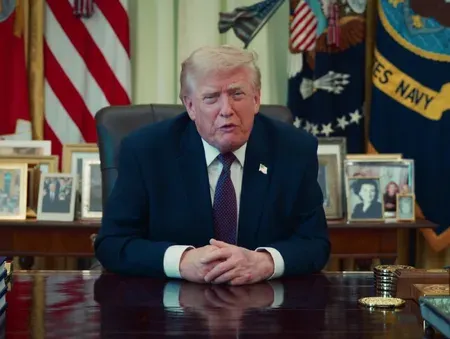
US President Donald Trump has declared his intention to issue a sweeping wave of pardons before leaving office, saying in a televised interview that people who served his administration deserved protection from what he described as politically motivated investigations and prosecutions. The remarks, made during a sit-down with journalist Ross Douthat on CBS News' 60 Minutes, mark Trump's most explicit public statement yet on the pardon question as his tenure winds down.
The Pardon Pledge
When asked directly whether he planned to issue large numbers of pardons before departing the White House, Trump replied: 'Yes, I do.' He elaborated on his reasoning, arguing that people who had served the country should not be forced to spend years — or the rest of their lives — defending themselves against political opponents. 'I intend to issue tremendous numbers of pardons,' Trump said during the interview.
On the question of a self-pardon, Trump said he did not expect to pardon himself, though he maintained that he had the constitutional power to do so. Legal scholars remain divided on whether a presidential self-pardon would withstand judicial scrutiny, a question that has never been tested before the courts.
Defending January 6 Pardons
Trump also reiterated his defence of the pardons he granted to individuals involved in the January 6 attack on the US Capitol, saying he believed those participants had been treated 'exceptionally unfairly.' When Douthat pressed him specifically on those who had attacked police officers, Trump acknowledged that some individuals had become violent but argued that force had also been used against the rioters.
'Well, there — there were some that — there were some that got rough, but, you know, they were rough to them too,' Trump said. When asked whether police had the right to use force against people attacking them, Trump pivoted to his claimed support among law enforcement, asserting that the Capitol Police backed him broadly.
On Forgiveness and Political Enemies
The interview took a more personal turn when Douthat raised the subject of forgiveness, naming former FBI Director James Comey and former House Speaker Nancy Pelosi as examples. Trump described both as dishonest and harmful to the country. Pressed on whether he could forgive them, he was unequivocal.
'The answer is no. I want to be honest: no,' Trump said. When Douthat pointed to Trump's long and successful life and again asked whether he could find it in himself to forgive, Trump replied: 'I probably cannot do that, no, because I do hate some of my enemies and I always will.'
How He Wants to Be Remembered
Asked what legacy he hoped to leave behind, Trump offered a characteristically brief answer: 'That I made America great again.' This comes amid ongoing debate among historians and political analysts about the long-term impact of his two non-consecutive presidential terms on American institutions, foreign policy, and the rule of law.
The 60 Minutes interview is likely to draw renewed scrutiny over the scope and intent of the anticipated pardons, particularly regarding January 6 defendants and former aides who face potential legal jeopardy. How the incoming administration and Congress respond — and whether any pardon actions face legal challenges — will shape the closing chapter of Trump's presidency.
Point of View
He effectively ties the hands of any successor investigation and rewards loyalty in a way that will shape who chooses to work with him in any future capacity. The refusal to forgive Comey and Pelosi, stated with such bluntness, underscores that Trump's presidency never transitioned from campaign mode to governance mode. Most striking is the January 6 defence: by framing the Capitol attack as mutual confrontation, Trump continues to rehabilitate a moment that most legal systems — including his own Justice Department at the time — classified as an insurrection. That framing, now hardened by pardons, sets a troubling precedent for how future administrations may treat political violence.
NationPress
9 Nov 2026
Frequently Asked Questions
What pardons is Trump planning before leaving office?
Trump has said he intends to issue 'tremendous numbers of pardons' to protect people who served his administration from politically motivated investigations and prosecutions. He made the statement in a CBS News 60 Minutes interview, though he has not publicly named specific individuals who will be pardoned.
Will Trump pardon himself before leaving office?
Trump said in the CBS News interview that he does not expect to pardon himself, though he maintained that he has the constitutional power to do so. The question of whether a sitting US president can legally pardon himself has never been tested in court.
Why did Trump defend the January 6 pardons?
Trump argued that those involved in the January 6 Capitol attack had been treated 'exceptionally unfairly.' When pressed on those who attacked police officers, he acknowledged some violence occurred but claimed force was also used against the rioters — a framing critics have strongly disputed.
What did Trump say about forgiving James Comey and Nancy Pelosi?
Trump flatly refused, saying 'The answer is no' and adding that he 'hates' some of his enemies and 'always will.' The remarks came in response to interviewer Ross Douthat raising the subject of forgiveness during the CBS News 60 Minutes sit-down.
How does Trump want his presidency to be remembered?
Trump told Ross Douthat he wants to be remembered for having 'made America great again' — the slogan that has defined both of his presidential campaigns and his broader political identity.