Trump Pushes Save America Act: Voter ID and Mail-In Ballot Curbs
Synopsis
President Trump promoted the Save America Act in a televised interview, demanding mandatory voter ID, proof of citizenship at polls, and elimination of mail-in ballots — escalating a Republican election-security push that dates back to the disputed 2020 results.
Key Takeaways
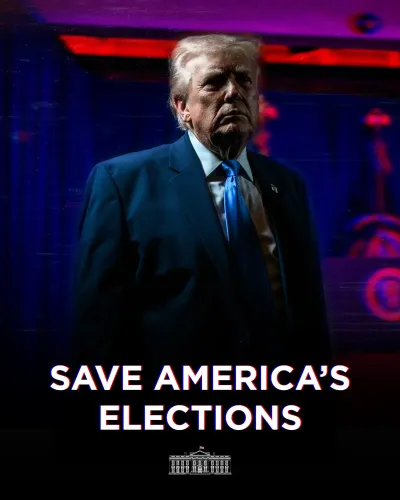
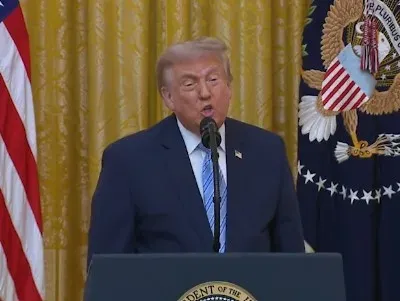
The White House promoted the Save America Act via a Fox5 Las Vegas interview with President Trump .
The act centres on three demands: mandatory voter ID , proof of citizenship , and ending mail-in ballots.
Trump has championed voter ID and mail-ballot restrictions since his first term (2017–2021) and through the post- 2020 election period.
More than 35 US states already have some form of voter ID law; a federal standard would override existing state frameworks.
Nevada , a swing state with automatic mail-ballot delivery, was the chosen media market — a pointed strategic choice.
Congressional passage and potential executive orders are the next milestones to watch.
Election security is back at the centre of American politics. President Donald J. Trump used a televised interview to champion the Save America Act, a legislative push built around three pillars: mandatory voter ID, proof of citizenship at the polls, and an end to what he calls corrupt mail-in ballots.
What the Save America Act Demands
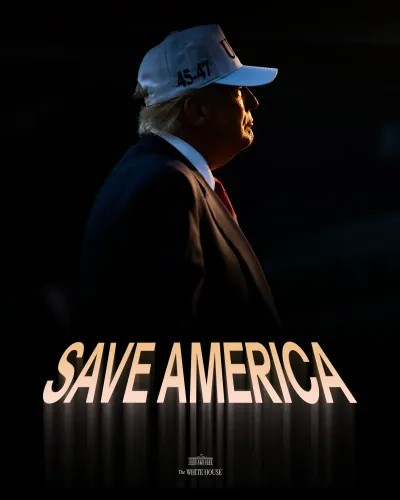
The White House framed the initiative in blunt, three-point terms: 'Voter ID. Proof of Citizenship. End Corrupt Mail In Ballots.' Each demand maps onto a long-running Republican argument — that American elections need tighter identity verification at every stage, from registration to the final count. Proof-of-citizenship requirements would go further than most existing state laws, which typically ask voters to attest to citizenship rather than document it.
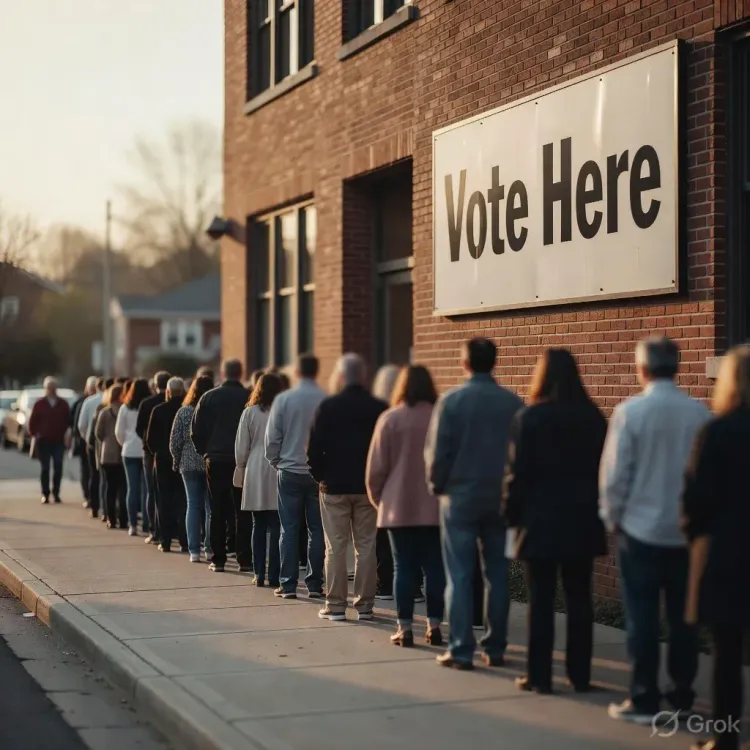
Mail-in voting sits at the sharpest edge of the debate. Trump has consistently argued since 2020 that large-scale postal balloting opens the door to fraud. Democrats and election administrators in many states counter that mail-in systems have strong audit trails and that documented fraud remains rare.
Trump's Long Campaign for Voter ID
This is not a new fight for Trump. During his first term (2017–2021), he convened a now-disbanded Presidential Advisory Commission on Election Integrity that sought data on voter-roll irregularities. That commission dissolved without producing major federal legislation, but it seeded the political ground for exactly the kind of push the Save America Act represents. The 2020 election and its contested aftermath turned what was a policy preference into a defining cause for the Republican base.
State-level action has moved faster than Congress: more than 35 states have some form of voter ID law on the books, ranging from strict photo-ID requirements to softer alternatives. A federal standard, if enacted, would override that patchwork — a step that would face immediate constitutional and legal challenges from voting-rights advocates.
Why This Moment, Why This Interview
Choosing a local Las Vegas television platform to carry the message is deliberate. Nevada is a perennial swing state with a large mail-in voting tradition — the state moved to automatic mail ballot delivery for all active registered voters. Pushing the Save America Act in that media market signals the White House is targeting competitive ground, not just the converted base. Congressional action and any related executive orders will be the next pressure points to watch.
The stakes are real: federal voter ID legislation would reshape how tens of millions of Americans cast ballots. Whether the Save America Act can clear the Senate's procedural bar is the question that will define whether this is a governing agenda or a campaign rallying cry.
Point of View
Meaning the bill functions simultaneously as a governing proposal and a base-mobilisation tool. The choice of a Nevada media market is analytically significant: it targets a state where mail-in voting is structural, signalling that the White House wants this fight on competitive terrain, not just in safe-red states. How Senate Democrats and voting-rights litigants respond will determine whether this becomes law or becomes the defining campaign contrast heading into the next election cycle.
NationPress
6 Aug 2026
Frequently Asked Questions
What is the Save America Act?
The Save America Act is a Trump-backed legislative initiative focused on election security, specifically requiring voter ID, proof of citizenship to vote, and restricting or eliminating mail-in ballots in US federal elections.
What does proof of citizenship mean for US voters?
Under such a requirement, voters would need to provide documentary evidence of citizenship — such as a passport or birth certificate — rather than simply attesting to it, which is the current standard in most states.
Why does Trump oppose mail-in ballots?
Trump has argued since the 2020 presidential election that large-scale mail-in voting is vulnerable to fraud and manipulation. Election officials and courts have repeatedly found that documented fraud in mail-in systems is rare.
How many US states already have voter ID laws?
More than 35 US states have some form of voter ID law, ranging from strict photo-ID requirements to softer alternatives. A federal law would set a uniform national standard above these existing state rules.
Why did Trump give this interview to a Las Vegas station?
Nevada is a competitive swing state that uses automatic mail-ballot delivery for all active registered voters, making it a strategically pointed venue to promote legislation aimed at ending mail-in voting.