Trump says Meloni 'made a mistake' on Iran, NATO ties strained
Synopsis
At a NATO Summit appearance in Ankara, Trump broke publicly with Meloni — one of his closest European allies — over Italy’s refusal to back the US during its Iran operation. His admission that he was ‘testing’ allies, and his naming of Germany, France, Italy, and the UK as having failed that test, is the sharpest public fracture in transatlantic relations since the summit began.
Key Takeaways
President Trump said Italian PM Giorgia Meloni ‘made a mistake’ by refusing US support during its Iran military operation.
Trump said his relationship with Meloni ‘became a little bad’ over Italy’s refusal to engage with the Strait of Hormuz situation.
Germany , France , Italy , and the United Kingdom all reportedly declined to participate in the US-led Iran operation.
Trump said he had been ‘testing people’ to see which allies would stand with Washington .
Turkish President Erdogan was praised for Ankara’s constructive, non-military role during the Iran crisis.
The remarks were made in Ankara on 7 July , ahead of the NATO Summit .
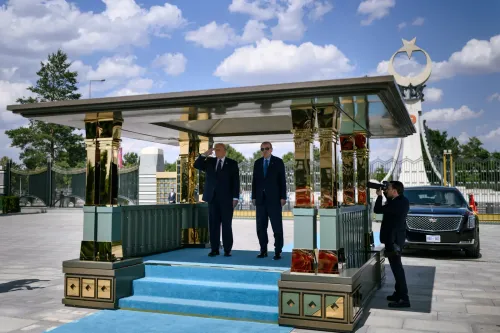
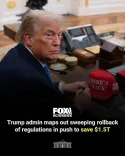
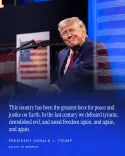
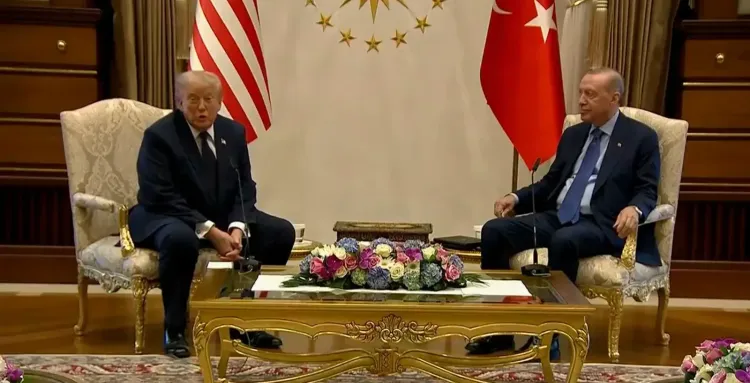
US President Donald Trump on Tuesday, 7 July publicly declared that Italian Prime Minister Giorgia Meloni had “made a mistake” by refusing to back Washington during its military operation involving Iran, saying the decision had soured what was once a warm bilateral relationship. Trump made the remarks in Ankara alongside Turkish President Recep Tayyip Erdogan, ahead of the North Atlantic Treaty Organisation (NATO) Summit.
What Trump Said About Meloni
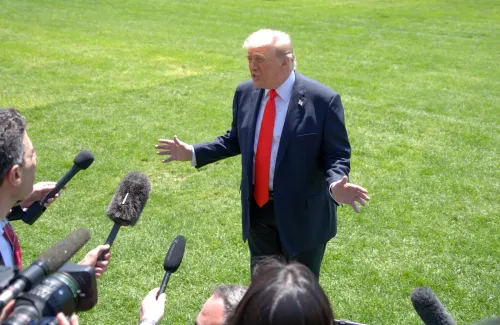
Speaking to reporters before a bilateral meeting with Erdogan, Trump said his relationship with Meloni had “became a little bad” after Italy declined to participate in efforts related to the Strait of Hormuz and Iran. “She refused to get involved with the Hormuz Strait, or you could also say, just Iran. She refused to get involved,” Trump said.
Despite the diplomatic friction, Trump was careful to separate his view of the policy decision from his personal opinion of the Italian leader. “I like her. I think she’s a nice person, actually, but I think she made a mistake,” he said.
The Hormuz Argument: Why Trump Pushed Allies
Trump argued that European nations had a direct strategic interest in keeping the Strait of Hormuz open, given their dependence on Middle Eastern energy supplies — a dependency he contrasted sharply with the United States. “We don’t need the straits. We do this because we think it’s an important thing to do,” Trump said, adding that Washington’s energy self-sufficiency meant it was acting out of commitment rather than necessity.
This framing positions Trump’s Iran operation as a test of allied loyalty rather than a shared strategic imperative — a significant rhetorical shift in how the US has historically justified collective security arrangements under NATO.
Broader NATO Criticism: Germany, France, UK Also Named
Trump broadened his criticism beyond Italy, stating that Germany, France, Italy, and the United Kingdom had all declined to support the United States during the Iran operation. He said he had been “testing people” to gauge whether allies would stand with Washington when called upon — a candid admission that alliance solidarity was under active evaluation at the highest level.
The remarks land at a sensitive moment: NATO leaders are convening at a summit where burden-sharing and collective defence commitments are already top-agenda items. Trump’s public naming of four major European allies as having fallen short is likely to inject fresh tension into those discussions.
Erdogan Praised for Turkey’s Role
In contrast to his criticism of European allies, Trump praised Erdogan and Turkey for their conduct during the Iran crisis. He said Ankara had chosen not to intervene militarily despite having the capability to do so, and had instead played a constructive role in efforts to bring the conflict to a close. The praise is notable given Turkey’s historically complex position within NATO, and comes as Trump and Erdogan met bilaterally on the sidelines of the summit.
What This Means for NATO Cohesion
The public rebuke of Meloni and other European leaders signals a growing rift between Washington and its traditional European partners over the scope of allied obligations — particularly when US military actions extend beyond NATO’s defined treaty area. Italy, under Meloni, has positioned itself as broadly aligned with the Trump administration on several issues; the public fallout over Iran suggests that alignment has limits. With the NATO Summit now underway in Ankara, the episode is expected to shape backroom conversations on the terms of transatlantic burden-sharing going forward.
Point of View
Not a treaty guarantee. Naming four major European allies as having failed that test, on the eve of a NATO Summit, is not a slip — it is a pressure tactic. The question is whether European capitals read it as a negotiating position or as a structural withdrawal of US commitment to collective defence.
NationPress
7 Jul 2026
Frequently Asked Questions
Why did Trump say Meloni ‘made a mistake’?
Trump said Meloni made a mistake because Italy refused to support the United States during its military operation involving Iran and the Strait of Hormuz. He said the decision strained what had previously been a good personal and diplomatic relationship between the two leaders.
Which NATO allies did Trump criticise over the Iran operation?
Trump named Germany, France, Italy, and the United Kingdom as countries that declined to participate in or support the US during its Iran operation. He said he had been ‘testing people’ to see which allies would stand with Washington.
What did Trump say about Turkey and Erdogan?
Trump praised Turkish President Erdogan and said Ankara had played a constructive role during the Iran crisis by choosing not to intervene militarily despite having the capability, and by helping efforts to end the conflict.
Where and when did Trump make these remarks?
Trump made the remarks on 7 July in Ankara, Turkey, while speaking to reporters alongside President Erdogan ahead of their bilateral meeting and the NATO Summit.
What is the Strait of Hormuz and why does it matter?
The Strait of Hormuz is a critical global shipping chokepoint through which a significant share of the world’s oil supply passes. Trump argued that European nations, being more dependent on Middle Eastern energy than the US, had a direct interest in keeping it open — making their refusal to help all the more pointed in his view.