Trump administration seeks sweeping UN reforms, sidesteps India's Security Council bid
Synopsis
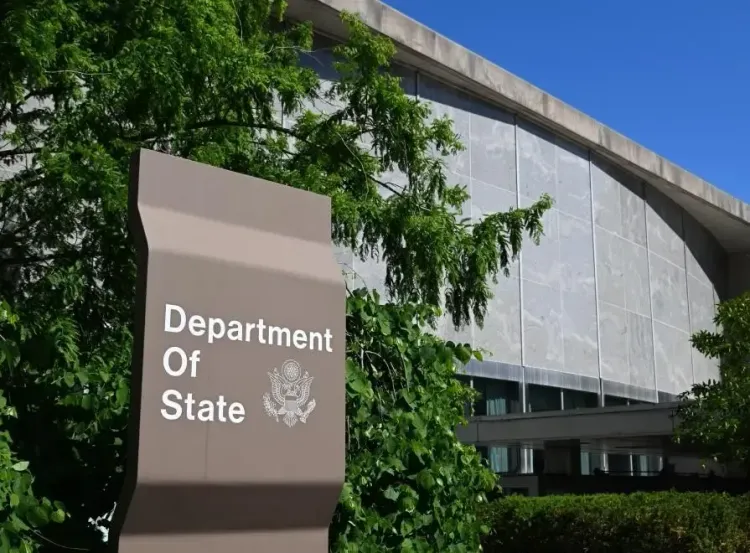
The Trump administration wants a leaner, cheaper UN — but on India's bid for a permanent Security Council seat, Washington is deliberately saying nothing. Deputy State Department spokesman Luke Ortega's careful non-answer at the General Assembly may be the most telling diplomatic signal of the week.
Key Takeaways
Luke Ortega , deputy spokesman for the State Department , declined on 26 September 2026 to endorse India's permanent Security Council seat bid despite being asked directly.
The Trump administration has cut the UN budget by more than $1 billion , identified 4,000 positions for elimination, and claims savings of over $260 million a year .
Secretary of State Marco Rubio met with the Indian side during the UN General Assembly period; details were not disclosed.
Ortega affirmed the US-India partnership across the UN , the Quad , and bilateral channels, but stopped short of any commitment on council reform.
Expanding permanent Security Council membership requires amendments to the UN Charter and agreement among all member states — a high political bar.
The Trump administration is pushing for sweeping reforms at the United Nations, but has declined to take a clear position on whether those changes should include a permanent seat for India on the Security Council. Luke Ortega, deputy spokesman for the State Department, addressed the question on the sidelines of the UN General Assembly on 26 September 2026, stopping short of endorsing India's decades-long bid while affirming the broader US-India partnership.
What the US Said — and Didn't Say
When asked directly about India's candidature for a permanent Security Council seat, Ortega sidestepped with a broad statement about reform. 'We certainly respect the desires for reform that are gonna come from all different elements of, of the world,' he said. 'It's really about getting to that potential that the United Nations could have.'
Pressed further on whether Security Council restructuring ranked among Washington's top priorities, Ortega again spoke in general terms. 'We're looking at the question from a much more holistic perspective of trying to make sure that the overall organization is moving in the correct direction to be able to meet the expectations of people around the world,' he said. He gave no specific US position on India's candidature or on changes to the council's permanent membership.
Washington's Core UN Agenda
Ortega outlined the Trump administration's priorities as refocusing the UN on what he called its 'core responsibilities' — peace, prosperity, and respect for national sovereignty. 'This is a top priority for the United States to get the United Nations back to basics, back to its real core responsibilities, to have the United Nations doing less, and to be doing it better,' he said.
On the budget front, Ortega said Washington had worked over approximately six months to cut the UN's budget by more than $1 billion and identify around 4,000 positions for elimination — efforts he said had saved American taxpayers more than $260 million a year. The administration is also pressing the Security Council to take a more active role in conflict resolution, citing what Ortega described as the council's support for measures addressing attacks on shipping and a peace plan for Gaza.
India's Role and the Rubio Meeting
Separately asked about India's standing at the UN, Ortega acknowledged the strength of the bilateral relationship without committing to a position on council reform. 'We, of course, do have a strong partnership with India, and that plays out in many different fora, whether that be at the United Nations, through the Quad, and in our bilateral relationship as well. And it's something that we value,' he said.
Ortega also confirmed that Secretary of State Marco Rubio had met with the Indian side during the General Assembly period, describing the engagement as important. He declined to disclose what was discussed, noting that the US sometimes keeps details of diplomatic exchanges private to preserve space for further negotiations. Notably, the deliberate silence on India's Security Council bid — even after a bilateral meeting at the highest diplomatic level — will be closely watched in New Delhi.
The Stakes for India
India was a founding member of the United Nations and has sought a permanent Security Council seat for decades, anchoring its case on demographic weight, democratic credentials, and the argument that the council's current composition reflects the post-Second World War order rather than today's geopolitical realities. The five existing permanent members — China, France, Russia, the United Kingdom, and the United States — each hold a veto. Any expansion of permanent membership would require amendments to the UN Charter and consensus among member states, a formidable political hurdle.
This comes amid a broader moment of flux at the UN, with multiple countries and blocs — including the African Union and the G4 (India, Japan, Germany, Brazil) — pressing for structural reform. Washington's studied ambiguity on membership changes, even as it aggressively pursues budget and staffing cuts, signals that the Trump administration sees UN reform primarily through a fiscal and efficiency lens rather than a geopolitical one. Whether that posture holds as India pushes its case through multilateral channels remains to be seen.
Point of View
Trim the staff, demand efficiency. Expanding permanent membership is a geopolitical question that complicates that agenda, particularly given China's veto and its own rivalry with India. India's strategists will note that 'we value our partnership' is diplomatic boilerplate, not an endorsement — and that the gap between the two matters enormously at the Security Council.
NationPress
26 Sept 2026
Frequently Asked Questions
Did the US support India's permanent Security Council seat at the 2026 UN General Assembly?
No. State Department deputy spokesman Luke Ortega declined to take a clear position on India's bid when asked directly on 26 September 2026. He acknowledged the US-India partnership but spoke only in broad terms about UN reform without endorsing or opposing India's candidature.
What are the Trump administration's main demands for UN reform?
The administration is focused on budget reduction, workforce cuts, and refocusing the UN on peace, prosperity, and national sovereignty. Over roughly six months, it has worked to cut the UN budget by more than $1 billion, identify 4,000 positions for elimination, and save American taxpayers over $260 million annually.
Why does India want a permanent Security Council seat?
India argues that the current five-member permanent structure — China, France, Russia, the UK, and the US — reflects the post-Second World War order and no longer represents today's geopolitical realities. As a founding UN member and one of the world's most populous democracies, India has pressed for expansion for decades.
What did Secretary of State Rubio discuss with India at the General Assembly?
Ortega confirmed that Marco Rubio met with the Indian side during the General Assembly period and described it as an important engagement, but did not disclose the substance of the talks, citing the US practice of keeping some diplomatic exchanges private.
How hard is it to expand permanent Security Council membership?
Extremely difficult. Any change to permanent membership requires amendments to the UN Charter and agreement among all member states, including the existing five permanent members — each of whom holds a veto. China, which has its own strategic rivalry with India, is a key obstacle.