Timor-Leste President backs India's UNSC permanent membership bid
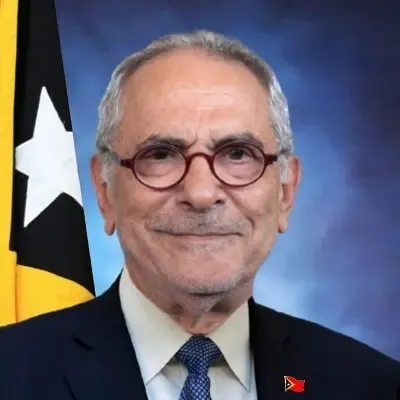
Synopsis
Timor-Leste's President Ramos-Horta isn't just offering diplomatic platitudes — he's making a detailed civilisational, democratic, and developmental case for India's permanent UNSC seat, calling its exclusion 'absolutely' senseless. Coming from a Nobel Peace laureate and longtime independence advocate, the endorsement carries weight beyond its geography.
Key Takeaways
Timor-Leste President José Manuel Ramos-Horta renewed support for India's permanent UNSC membership in remarks made in Washington on 24 September 2026 .
Ramos-Horta cited India's democratic continuity , civilisational depth, and development record — not just size or GDP — as grounds for membership.
He praised India's record of assisting African nations during its own period of poverty as early proof of Global South solidarity .
Bilateral cooperation in healthcare , agriculture , and education was identified as a priority, with hundreds of Indian medical students already studying in Timor-Leste.
Ramos-Horta called for the G20 to replace the G7 as the principal global economic forum, citing the weight of India, China, and Brazil.
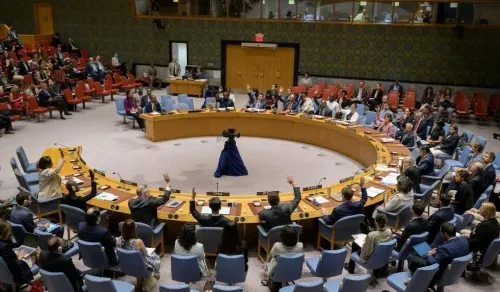
The UN Security Council currently has 5 permanent members ; India has long sought membership as part of broader council reform.
Timor-Leste President José Manuel Ramos-Horta has renewed his strong backing for India to secure a permanent seat on the UN Security Council, arguing that the country's size, democratic credentials, and civilisational depth make its continued exclusion from the council's permanent membership 'difficult to justify.' The remarks were made in an interview in Washington on 24 September 2026.
Ramos-Horta's Case for India
'I will always support India's aspirations for being a permanent member of the Security Council,' Ramos-Horta said. He added that he had been making this argument for years. 'It makes absolutely no sense that a country of the dimensions of India should remain outside its permanent membership,' he said.
His argument extended beyond the conventional metrics of population, territory, and economic output. 'India in itself is a living civilisation,' he said, pointing to the country's linguistic, religious, and cultural plurality. He also highlighted India's unbroken democratic record since independence — 'Never a coup. Never a reversal of democracy through military coups' — as a distinguishing factor among nations of comparable size and influence.
From Poverty to Global Standing
Ramos-Horta traced India's trajectory from widespread poverty in the 1950s and 1960s to its current prominence in science, technology, and medicine. He suggested that India had, if anything, understated its own global significance even as its economy expanded and its nationals rose to leadership positions in fields such as information technology. He credited Mahatma Gandhi's legacy as a possible factor behind India's peaceful, civilian-led political continuity.
India–Timor-Leste Ties: Health, Agriculture and Education
On the question of bilateral cooperation, Ramos-Horta identified healthcare and food security as priority areas. He pointed to India's pharmaceutical and medical equipment industries as natural partners for Timor-Leste's development needs, and flagged opportunities in agriculture.
Education links between the two countries are already active, the president said. Timorese students currently pursue studies in India, while several hundred Indian medical students attend a medical school in Timor-Leste, accompanied by Indian teachers. Ramos-Horta described this arrangement as mutually beneficial and called for expanded cooperation in multilateral forums.
India and the Global South
The president contextualised India's global role through the lens of solidarity among developing nations. He noted that India had extended assistance to African countries — particularly in East Africa — even during periods of severe domestic poverty, calling that record an early expression of South-South cooperation.
Ramos-Horta also weighed in on global governance more broadly. He argued that the G7 no longer adequately represents the world economy and called for the G20 to take on a more central role. 'G7 on its own does not really represent the world economy,' he said, citing the economic weight of India, China, and Brazil.
Background: India and UNSC Reform
The UN Security Council currently has five permanent members — China, France, Russia, the United Kingdom, and the United States — each holding veto power. India has long campaigned for a reformed council that reflects contemporary geopolitical and economic realities. Timor-Leste, which became independent in 2002, is one of several nations that have publicly endorsed India's bid. Ramos-Horta, who has served as the country's foreign minister, prime minister, and president, is among the more prominent international voices to back New Delhi's case.
India's bid for UNSC permanent membership remains a long-term diplomatic priority, with reform efforts gaining renewed attention as the council's composition increasingly appears out of step with the 21st-century global order.
Point of View
Civilisation, and South-South solidarity, not just realpolitik weight. That framing is precisely the language India needs to build a normative case for UNSC reform, not just a numerical one. The harder reality is that Security Council reform has stalled for decades, blocked by P5 veto interests that no amount of endorsements from small-to-mid-sized nations can override. India's path to permanency runs through Washington, Beijing, and Moscow — not Dili — and the geopolitical calculus there remains unchanged.
NationPress
24 Sept 2026
Frequently Asked Questions
Why does Timor-Leste support India's UN Security Council permanent membership?
Timor-Leste President José Manuel Ramos-Horta has cited India's democratic record, civilisational diversity, and history of supporting developing nations as reasons its exclusion from permanent UNSC membership makes 'absolutely no sense.' He has been making this case for several years, framing it as both a moral and geopolitical argument.
What is India's current status at the UN Security Council?
India is not a permanent member of the UN Security Council, which currently has five permanent members — China, France, Russia, the United Kingdom, and the United States. India has long advocated for council reform to include new permanent members that better reflect 21st-century global realities.
What bilateral cooperation did Ramos-Horta propose between India and Timor-Leste?
Ramos-Horta identified healthcare, food security, and agriculture as priority areas for cooperation, pointing to India's pharmaceutical and medical equipment industries. He also noted existing education ties, including Timorese students studying in India and Indian medical students attending a medical school in Timor-Leste.
What did Ramos-Horta say about the G7 and G20?
Ramos-Horta argued that the G7 no longer adequately represents the world economy and called for the G20 to become the principal global economic forum. He cited the growing economic weight of India, China, and Brazil as evidence that the G7's composition is outdated.
Who is José Manuel Ramos-Horta?
José Manuel Ramos-Horta is the President of Timor-Leste, a Nobel Peace Prize laureate, and a longtime advocate for his country's independence. He has previously served as Timor-Leste's foreign minister and prime minister; Timor-Leste itself became independent in 2002.