Trump Threatens to Bomb Iran Infrastructure Over Hormuz Attacks
Synopsis
President Trump warned via the White House on 22 July 2026 that the US will bomb and destroy one Iranian bridge or power plant each time Iran attacks a ship in the Strait of Hormuz — one of the most explicit infrastructure-targeting threats issued against Tehran in recent memory.
Key Takeaways
The White House posted President Trump's warning on 22 July 2026 threatening to destroy Iranian infrastructure in response to Hormuz attacks.
Trump stated the US will 'bomb and destroy ONE BRIDGE OR POWER PLANT ' for every Iranian attack on a ship in the Strait of Hormuz .
The warning covers attacks by ' Missile, Rocket, Drone, or any other device or weapon .' The Strait of Hormuz is a critical global oil chokepoint between Iran and Oman .
The statement revives Trump's maximum-pressure posture, which previously included JCPOA withdrawal in 2018 and the killing of Qasem Soleimani in 2020 .
Any escalation risks significant disruption to global oil supplies, with direct consequences for import-dependent nations including India .
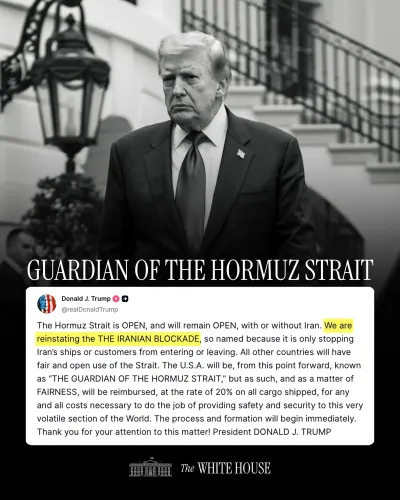
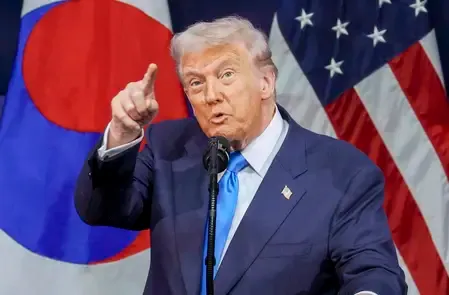
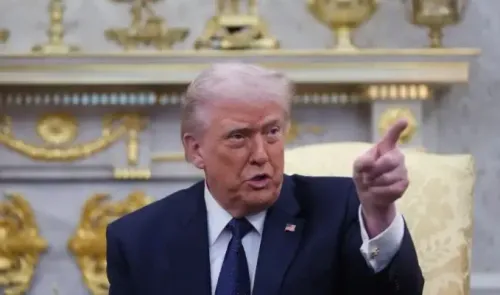
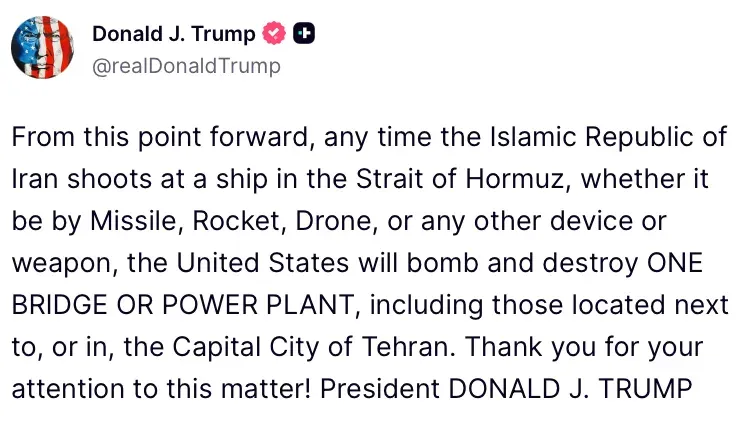
The White House on Wednesday, 22 July 2026 posted a direct warning from President Donald J. Trump stating that any attack by the Islamic Republic of Iran on ships in the Strait of Hormuz would trigger US strikes on Iranian bridges or power plants.
In the post, President Trump stated: 'From this point forward, any time the Islamic Republic of Iran shoots at a ship in the Strait of Hormuz, whether it be by Missile, Rocket, Drone, or any other device or weapon, the United States will bomb and destroy ONE BRIDGE OR POWER PLANT.'
Context
The Strait of Hormuz is a narrow waterway between Iran and Oman through which a significant share of global oil shipments transit. It has been the site of repeated naval incidents, including a series of tanker attacks in 2019 that the United States attributed to Iran, prompting increased US naval deployments in the region.
The warning marks one of the most explicit infrastructure-targeting threats issued by a sitting US president against Iran, framing the destruction of bridges and power plants as a direct and automatic consequence of any Hormuz attack.
Policy Backdrop
The statement revives the hardline deterrence posture that defined Trump's first term. In May 2018, the United States withdrew from the Joint Comprehensive Plan of Action (JCPOA) nuclear agreement and reimposed sweeping sanctions on Tehran. In January 2020, a US drone strike near Baghdad killed Iranian Revolutionary Guard commander Qasem Soleimani, marking the sharpest escalation of that era.
US protection of freedom of navigation in the Persian Gulf has been a consistent policy thread across multiple administrations since the tanker war of the 1980s. Trump's latest warning, however, introduces an explicit infrastructure-destruction formula tied directly to each individual attack — a departure from the ambiguous deterrence language typically used by Washington.
Stakeholders and Impact
Global oil shippers and energy markets face immediate uncertainty, as the Strait of Hormuz is a critical chokepoint for crude oil exports from the Persian Gulf. Any escalation that disrupts transit could send oil prices sharply higher, with downstream effects on fuel costs in import-dependent economies including India.
US naval forces already deployed in the region would likely be at the centre of any enforcement action. Iranian energy infrastructure — bridges and power plants — would face direct targeting risk under the stated formula, raising humanitarian and geopolitical concerns among US allies and international bodies.
What's Next
Observers will watch for follow-on guidance from US Central Command and any formal response from Iranian officials at the United Nations or in regional diplomatic forums. Tehran has historically responded to US red-line declarations with a mix of defiance, proxy signalling, and back-channel diplomacy.
Whether this warning translates into a standing operational order or remains a political deterrence signal will become clearer in the days ahead, particularly if any incident occurs in the strait.
Point of View
Formulaic retaliation — one bridge or power plant per attack — a calibration designed to raise Iran's cost calculus without committing to full-scale war. The statement fits a broader pattern of maximum-pressure signalling that has defined Trump's Iran policy across both terms, though the infrastructure-targeting formula is notably more specific than past red-line language. For India, which imports significant crude through the Persian Gulf, any Hormuz escalation carries direct economic risk, making New Delhi a quiet but deeply interested stakeholder. The real test of the warning's credibility will come if Iran or its proxies test it — a scenario that could rapidly reshape energy markets and regional security architecture.
NationPress
22 Jul 2026
Frequently Asked Questions
What did Trump say about Iran and the Strait of Hormuz?
President Trump warned that the United States will bomb and destroy one Iranian bridge or power plant every time Iran attacks a ship in the Strait of Hormuz, using any weapon including missiles, rockets, or drones.
Why is the Strait of Hormuz important?
The Strait of Hormuz is a narrow waterway between Iran and Oman through which a large share of the world's oil exports pass, making it a critical global energy chokepoint.
How will Trump's Iran warning affect oil prices?
Any military escalation in the Strait of Hormuz risks disrupting oil shipments, which could push global crude prices higher and increase fuel costs in import-dependent countries like India.
What is the history of US-Iran tensions in the Strait of Hormuz?
Tensions date to the 1980s tanker war. In 2019, the US attributed multiple tanker attacks in the strait to Iran and deployed additional naval forces. In 2020, the US killed Iranian commander Qasem Soleimani in a drone strike near Baghdad.
What happens next after Trump's warning to Iran?
Observers are watching for a response from US Central Command and Iranian officials at the United Nations. Whether the warning becomes a standing military order or serves as a political deterrent will depend on events in the strait in the coming days.