Erdogan fuelling Islamic caliphate ambitions via Syria, warns Israeli politician Einat Wilf

Synopsis
Israeli politician Einat Wilf has drawn a sharp line: Israel's strikes in Syria are not a new war — they are a warning. Her characterisation of Erdogan's ambitions as 'Islamic caliphate-style' rather than neo-Ottoman reframes the Turkey-Syria dynamic as an ideological threat, not just a geopolitical one, and signals that Jerusalem will act pre-emptively to prevent a Turkish-backed militant state on its border.
Key Takeaways
Einat Wilf , Israeli diplomat and politician, said on 25 August that Israel's Syria strikes were a deliberate message to Turkey and the Ahmed Al-Sharaa regime — not the start of a full-blown front.
Wilf cited two concerns: Al-Sharaa's militant jihadi background and alleged massacres of Alawite, Druze, and Christian minorities in Syria.
She accused Turkish President Erdogan of harbouring 'Islamic caliphate-style' ambitions, using Syria as a launchpad toward Iraq and beyond.
Senior Syrian and Israeli delegations held US-mediated de-escalation talks in Jordan on Sunday, per Syria's SANA news agency.
Wilf said Israel's strategy is to 'address threats when they're small' rather than allow a Turkish-backed jihadi state to consolidate on its borders.
Israeli diplomat and politician Einat Wilf said on Tuesday, 25 August that Israel's recent military strikes in Syria were not the opening of a full-blown new front, but a calculated signal directed at Turkey and the Ahmed Al-Sharaa-led regime in Damascus. Wilf, speaking to reporters, framed the strikes as a preemptive message — not an escalation.
Two Core Concerns Driving Israeli Anxiety
Wilf outlined two distinct but interconnected worries shaping Israel's posture toward Syria. The first centres on the nature of the Damascus regime itself. 'We are concerned about two elements. The first is that Syria itself requires a major leap of faith in the sense that it is ruled by a person who has a long history as a militant jihadi. They have massacred some of their minority populations like the Alawites and the Druze and the Christians. It seems that they are not exactly heading in the direction of a modern secular democracy that will uphold human rights,' Wilf said.
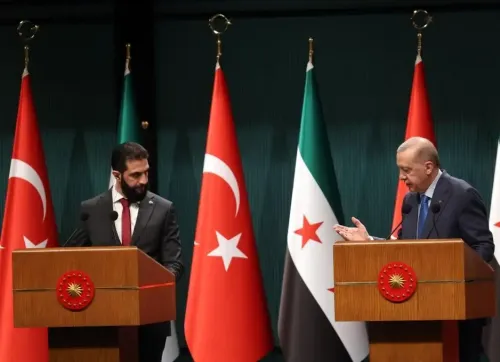
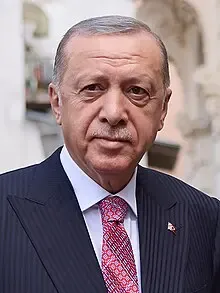
The second concern, she argued, is the role of Turkish President Recep Tayyip Erdogan in backing the Damascus administration. 'The second concern is that all of this will be backed by Erdogan's Turkey, which also seems to be propping up the Muslim Brotherhood, essentially jihadi forces. Israel did not fight Iran and its proxies across the region to get Turkey and its proxies on our borders,' she added.
Erdogan's Imperial Ambitions: Beyond Neo-Ottomanism
Wilf was pointed in her characterisation of Erdogan's strategic vision, arguing that it transcends the commonly used 'neo-Ottoman' label. 'They're not neo-Ottoman, they're not the old Ottoman Empire. They're new Islamic caliphate-style, jihadi-style ambitions. And Syria for him is a key element, like he needs to secure Syria in order to continue from there to Iraq and other places,' she said.
This framing is significant: it positions Turkey not merely as a regional power seeking historical influence, but as an ideological actor with expansionist designs — a characterisation that Ankara has consistently rejected. Notably, this is not the first time Israeli officials have raised alarms over Turkey's growing footprint in post-Assad Syria; the concern has deepened since the fall of Bashar al-Assad's government.
Israel's Stated Strategy: Address Threats Early
Wilf was clear that Israel does not view the current situation as a precursor to a full-scale conflict with Syria. 'I don't think we're likely to see it as a full-blown front, but there's definitely a notion that Israel is trying to manage the security risk. What we've learned from history is that it's better to try to address those threats when they're small rather than let them build and build and ultimately enjoy the full power of a state,' she said.
She added that the underlying Israeli objective is to prevent the consolidation of what she described as a 'jihadi state' on its northern border — a scenario Jerusalem views as categorically unacceptable. 'Israel is not turning a blind eye and that we will not allow Turkey and a jihadi state to be established on our borders,' Wilf noted.
Syria-Israel Talks Under US Mediation
The remarks came amid active diplomatic engagement. Senior Syrian and Israeli delegations held talks in Jordan on Sunday under US mediation, according to Syria's state news agency SANA. The discussions focused on de-escalation and efforts to revive negotiations toward a formal security agreement — a rare channel of communication between the two sides.
Whether these back-channel talks can coexist with Israel's periodic military signalling in Syrian territory remains an open question. Analysts have noted that Jerusalem has historically used strikes to set red lines even while pursuing parallel diplomatic tracks.
Point of View
Designed to delegitimise Turkey's Syria role in Western eyes by linking it to jihadism rather than historical revisionism. What mainstream coverage underplays is the contradiction at the heart of Israel's position: Jerusalem is simultaneously striking Syria and negotiating with Damascus under US auspices in Jordan. That dual-track approach is sustainable only so long as the strikes remain calibrated; one miscalculation could collapse the diplomatic channel entirely. More broadly, Israel's framing of Turkey as an existential proxy threat — rather than a NATO ally gone rogue — has significant implications for how the West navigates the Turkey-Israel-Syria triangle in the months ahead.
NationPress
25 Aug 2026
Frequently Asked Questions
Why did Israel strike Syria recently?
According to Israeli politician Einat Wilf, the strikes were not the opening of a new full-scale front but a deliberate message to Turkey and the Ahmed Al-Sharaa-led regime in Damascus. Israel's stated goal is to pre-empt the consolidation of what it views as a Turkish-backed militant state on its northern border.
What are Israel's specific concerns about Syria under Ahmed Al-Sharaa?
Einat Wilf cited Al-Sharaa's history as a militant jihadi and alleged massacres of Alawite, Druze, and Christian minority populations in Syria. She argued the regime is not moving toward a modern secular democracy that upholds human rights.
What did Einat Wilf say about Erdogan's ambitions?
Wilf said Erdogan is 'constantly reviving imperial ambitions' that are not neo-Ottoman but 'Islamic caliphate-style, jihadi-style.' She argued that Syria is a key stepping stone for Erdogan, who she claims seeks to extend influence from Syria into Iraq and other territories.
Are Israel and Syria engaged in any diplomatic talks?
Yes. Senior Syrian and Israeli delegations met in Jordan on Sunday under US mediation, according to Syria's state news agency SANA. The talks focused on de-escalation and reviving negotiations toward a security agreement.
Does Israel expect a full-scale war with Syria?
No, according to Wilf. She said Israel is not likely to open a full-blown front with Syria, but is focused on managing security risks by sending early signals rather than allowing threats to grow into larger conflicts.