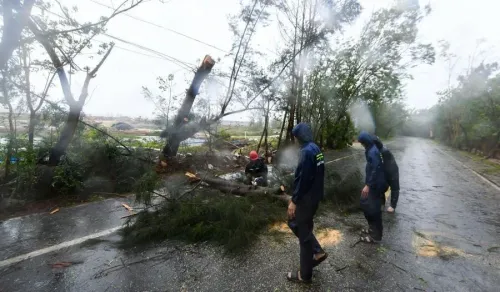
Typhoon Dolphin forces 380,000 evacuations in eastern China, disrupts transport

Synopsis
Typhoon Dolphin — the 13th of China's 2025 season — made two landfalls in Zhejiang and forced more than 380,000 evacuations across Fujian and Shanghai. With Beijing now bracing for extreme rain through Thursday and over 10 provinces in the storm's path, Dolphin's inland track may yet prove more damaging than its coastal punch.
Key Takeaways
Typhoon Dolphin made two landfalls in Zhejiang Province on Sunday, 10 August , becoming the 13th typhoon of China's 2025 season.
More than 380,000 people were evacuated — 167,900 in Fujian Province and 215,600 in Shanghai .
Fujian suspended 686 road passenger routes , 658 train services , and closed 234 tourist attractions .
Legoland Shanghai Resort shut temporarily; the district issued the highest-level rainstorm alert .
Beijing issued an orange rainstorm alert and plans to activate a Level II flood control emergency response from Tuesday morning.
The storm is expected to bring heavy precipitation to more than 10 provincial-level regions as it moves inland.
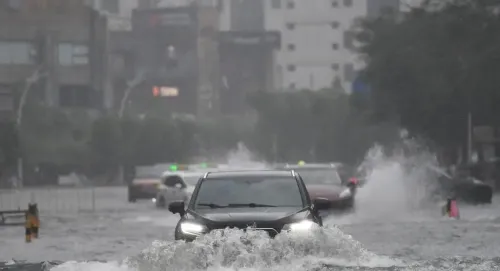
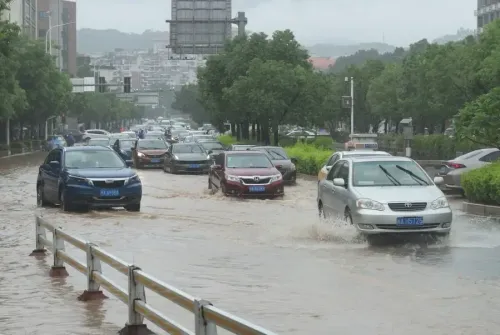
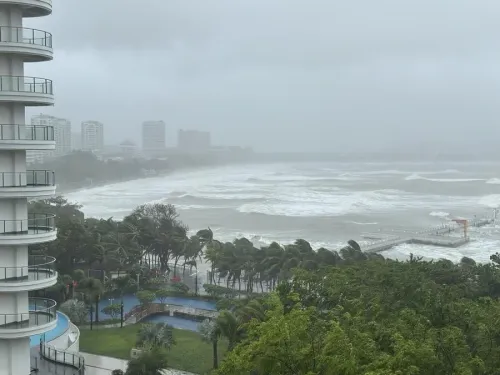
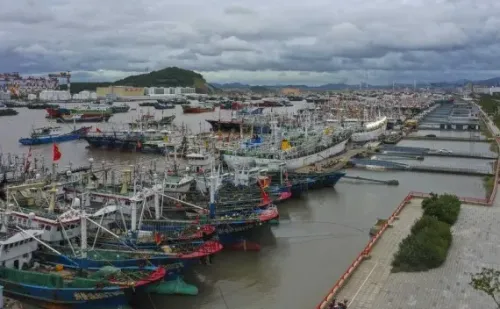
Typhoon Dolphin forced the evacuation of more than 380,000 people across eastern China's coastal provinces on Sunday and Monday, 10 August, triggering widespread transport shutdowns, tourist attraction closures, and flood alerts stretching as far north as Beijing. Authorities warned that risks persisted even as the storm weakened after making landfall.
Scale of Evacuations
In Fujian Province, approximately 167,900 people had been relocated from vulnerable areas on land and at sea as of 7 am Monday. By late Sunday, Shanghai had separately evacuated around 215,600 residents from zones deemed at risk. Combined, the two regions account for the bulk of the more than 380,000 people displaced by the storm's approach.
Landfall and Track
Dolphin, designated the 13th typhoon of the year, made two landfalls along the coast of Zhejiang Province on Sunday, according to China's National Meteorological Centre (NMC). The storm subsequently moved inland, with the NMC projecting heavy precipitation across more than 10 provincial-level regions. Heavy rain was forecast to persist into Monday in parts of Fujian, including the cities of Ningde and Nanping, with the potential for torrential downpours in localised areas, according to state media.
Disruptions to Transport and Tourism
The storm caused sweeping disruptions across the affected provinces. In Fujian, authorities suspended 686 road passenger routes and 658 train services. A total of 234 major tourist attractions were shut down, and dozens of cultural and tourism events were cancelled. In Shanghai, Legoland Shanghai Resort temporarily closed around noon Monday as heavy rain lashed the city. Authorities in the resort's district issued the highest-level rainstorm alert and warned of possible urban waterlogging.
Beijing on Alert
The meteorological observatory of Beijing issued an orange rainstorm alert on Monday morning, predicting heavy to extreme rainfall from Tuesday evening through Thursday. The alert cited the combined influence of warm airflow from Dolphin's periphery and an incoming cold air mass. The city plans to activate a Level II flood control emergency response from Tuesday morning, advising residents to stay away from rivers and avoid mountain excursions.
What Comes Next
With Dolphin tracking inland and its moisture field extending northward, the storm's secondary impact on Beijing and surrounding regions in the coming days could prove as consequential as the initial coastal hit. Authorities across multiple provinces remain on elevated alert, and the full extent of damage and displacement is yet to be assessed.
Point of View
000 people across two provinces before the storm even fully cleared the coast — reflects how dramatically China has upgraded its disaster-response machinery over the past decade. Yet the more telling test is what comes next: Dolphin's inland track toward Beijing, historically vulnerable to flash flooding, is where the real risk now sits. Orange alerts and Level II emergency responses are the right signals, but urban waterlogging in a megacity like Shanghai or a flood surge along Beijing's river corridors can outpace even well-drilled systems. The 13th typhoon of the season arriving in August also fits a pattern of intensifying storm activity in the South China Sea, a trend that disaster planners across the region cannot afford to treat as routine.
NationPress
24 Sept 2026
Frequently Asked Questions
How many people were evacuated due to Typhoon Dolphin in China?
More than 380,000 people were evacuated across eastern China. Fujian Province relocated approximately 167,900 residents as of 7 am Monday, while Shanghai had evacuated around 215,600 people by late Sunday.
Where did Typhoon Dolphin make landfall?
Typhoon Dolphin made two landfalls along the coast of Zhejiang Province on Sunday, 10 August, according to China's National Meteorological Centre. It subsequently moved inland, affecting more than 10 provincial-level regions.
What disruptions did Typhoon Dolphin cause in Fujian and Shanghai?
In Fujian, authorities suspended 686 road passenger routes and 658 train services, and shut 234 major tourist attractions. In Shanghai, Legoland Shanghai Resort temporarily closed and the highest-level rainstorm alert was issued for parts of the city.
Why is Beijing on alert if Typhoon Dolphin made landfall in Zhejiang?
As Dolphin moves inland, its warm airflow is interacting with a cold air mass, pushing heavy to extreme rainfall northward toward Beijing. The capital issued an orange rainstorm alert on Monday, forecasting severe rain from Tuesday evening through Thursday, and plans to activate a Level II flood control emergency response.
What is the significance of Typhoon Dolphin being the 13th typhoon of the year?
Being the 13th named typhoon of China's 2025 season by early August indicates an active typhoon season in the western Pacific. Meteorologists track cumulative storm counts as an indicator of seasonal intensity, and a high early count can signal elevated risk for the remainder of the peak season.